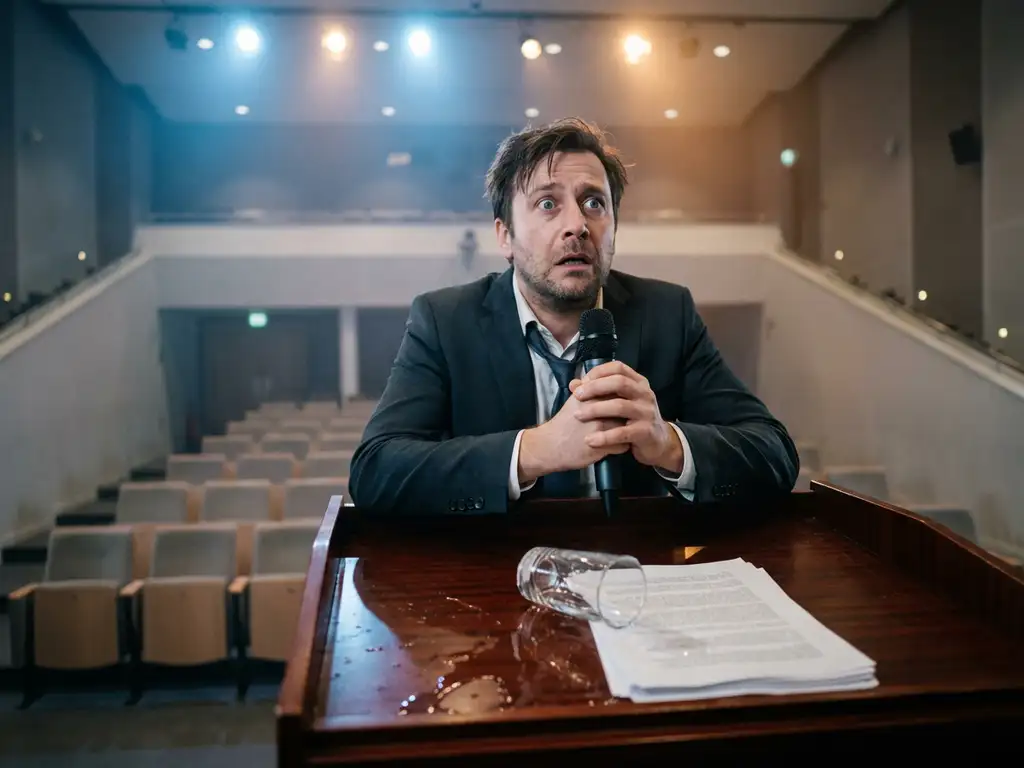
You’ve spent weeks planning the perfect corporate event. The venue is booked, the agenda is polished, and the catering is sorted. But when the day arrives, something feels off. The energy is flat, the audience is disengaged, and the whole experience falls short of what you envisioned. More often than not, the culprit isn’t the logistics. It’s the hosting.
A professional corporate event host can make or break the experience for your audience. Whether you’re organizing a company conference, a product launch, or team-building events in Amsterdam, the host is the glue that holds everything together. Here are nine common event host mistakes that quietly sabotage even the most carefully planned corporate events—and what to look out for when choosing your next host.
When a great event plan falls flat on the day
Corporate event planning involves dozens of moving parts, and it’s tempting to focus most of your energy on what’s visible: the stage design, the speakers, the schedule. But the host is the constant thread running through your entire event. They set the tone, manage the pace, and keep the audience connected to the content.
When hosting goes wrong, it rarely announces itself loudly. Instead, it shows up as a gradual loss of energy, moments of awkward silence, or an audience that checks their phones more than they check in with the stage. Understanding the most common event host mistakes helps you identify red flags early and make smarter decisions for your next event.
1: Failing to read the room from the start
The first few minutes of any event set the emotional temperature for everything that follows. A host who walks on stage without gauging the mood of the audience immediately creates a disconnect. Some groups arrive buzzing with energy; others need warming up. Treating both the same way is a critical event-planning mistake.
Skilled corporate event hosts read body language, listen to the ambient noise in the room, and adjust their opening accordingly. They understand that the audience’s current state is the starting point, not an inconvenience to push through.
2: Sticking too rigidly to the script
Preparation is essential, but overrehearsed rigidity kills spontaneity. A host who reads from a script or sticks too closely to a prepared outline misses the natural rhythm of the room. Audiences can feel when someone is reciting rather than connecting, and it creates an invisible wall between the stage and the seats.
The best professional event hosts treat their preparation as a foundation, not a cage. They know the material well enough to deviate when the moment calls for it, respond to something unexpected, or simply let a genuine moment breathe.
3: Neglecting transitions between segments
Transitions are the most underestimated element of corporate event hosting. Moving from a keynote to a panel, or from a break back into a session, requires active management. A host who simply announces, “And now, our next speaker,” without bridging the content leaves the audience mentally stranded.
Strong transitions do three things: they close one chapter, they create anticipation for the next, and they remind the audience why they’re all in the room together. Without this, even the best individual segments feel disconnected from the overall event narrative.
4: Making the host the center of attention
A common mistake among less experienced hosts is confusing visibility with value. The host’s role is to serve the event and the audience, not to outshine the speakers or steal the spotlight. When a host overperforms, tells too many personal stories, or competes for laughs at the expense of the program, the event loses focus.
The most effective corporate event hosts are invisible in the best possible way. The audience feels guided, energized, and engaged without always being able to pinpoint why. The host’s ego stays offstage.
5: Using humor that alienates the audience
Humor is one of the most powerful tools in a host’s kit, but it’s also one of the easiest to misuse. Jokes that rely on cultural assumptions, inside references that not everyone shares, or humor that punches down at any group in the room can create immediate discomfort and erode trust.
Business-friendly humor works because it brings people together rather than dividing them. It finds the universal in the specific, keeps things light without being frivolous, and never comes at anyone’s expense. This is especially important in international corporate environments where audiences come from diverse cultural backgrounds.
6: Ignoring the energy levels in the room
Energy is not static during a corporate event. It rises after a strong speaker, dips after lunch, and fluctuates throughout the day based on content, comfort, and context. A host who runs at the same pace and intensity regardless of the room’s energy level will eventually lose the audience entirely.
Reading and responding to energy is an active skill. It might mean injecting a moment of lightness after a heavy segment, slowing down to let something land, or picking up the pace when attention starts to drift. The host acts as the event’s thermostat, not just its timer.
7: Failing to prepare for technical failures
Microphones cut out. Slides fail to load. Video links drop at the worst possible moment. Technical issues are a reality of live events, and how a host handles them determines whether they become minor hiccups or full derailments.
An unprepared host freezes, apologizes awkwardly, or fills the silence with nervous chatter that makes everyone more uncomfortable. A prepared host keeps the audience at ease, maintains the atmosphere, and bridges the gap with confidence until the issue is resolved. This kind of composure under pressure is a hallmark of experienced corporate event hosting.
8: Not aligning with the event’s core message
Every corporate event exists for a reason: a strategic announcement, a cultural shift, a celebration of achievement, or a call to action. The host should understand and embody that core message throughout the program. When a host hasn’t been properly briefed or doesn’t take the time to understand the event’s purpose, their words and energy can actually undermine the message.
This alignment requires preparation and genuine collaboration between the host and the event organizers. The host should know not just the schedule, but the story the event is trying to tell.
9: Treating all corporate audiences the same
A financial services company holding its annual leadership summit has a very different audience from a tech startup celebrating a product launch. The tone, the humor, the level of formality, and the pacing that works for one group may completely miss the mark for another.
Experienced professional event hosts invest time in understanding the specific audience before they step on stage. They ask questions about the company culture, the mix of seniority levels, the nationalities represented, and the emotional context of the event. This research is what separates a generic performance from a genuinely resonant experience.
How Boom For Business helps you avoid these corporate event hosting mistakes
At Boom For Business, we’ve spent over 30 years helping organizations create corporate events that genuinely land. We understand that a great event isn’t just about logistics. It’s about the human experience in the room—and that starts with the right host and the right approach.
Here’s how we help you get it right:
- Experienced professional hosts who know how to read a room, manage energy, and keep audiences engaged from the first moment to the last
- Custom-built programs tailored to your specific audience, company culture, and event objectives, so nothing feels generic or off-brand
- Business-friendly humor rooted in improv and storytelling techniques that bring people together without alienating anyone
- Seamless transitions and narrative flow that connect every segment of your event into a coherent, memorable experience
- Masterclass workshops that go beyond the event itself, equipping your teams with communication and presentation skills they can apply immediately in their day-to-day roles
- Full preparation and collaboration with your team before the event, ensuring our hosts are fully aligned with your core message and goals
Whether you’re planning team-building events, a large-scale conference, or an internal change communication moment, we bring the energy, expertise, and creativity to make it work. Explore what we offer at Boom For Business, discover our Masterclass Workshops, take a look at our team-building programs, or find out how we help organizations build a positive culture through every event we host.
Frequently Asked Questions
How far in advance should we brief our corporate event host before the event?
Ideally, you should begin collaborating with your host at least two to four weeks before the event. This gives them enough time to understand your company culture, the event's core message, the audience demographics, and any sensitivities to be aware of. A thorough briefing session, followed by a run-through of the full agenda, ensures the host can show up fully prepared rather than just familiar with the schedule.
What's the difference between a corporate event host and a regular MC?
A traditional MC primarily handles announcements and keeps the program on track, while a professional corporate event host plays a much more active role in shaping the audience experience. They manage energy levels, craft meaningful transitions, align with the event's strategic narrative, and adapt in real time to the room. Think of an MC as a traffic controller and a corporate event host as the event's creative and emotional engine.
How do we evaluate whether a host is the right fit for our specific audience?
Start by sharing as much context as possible: the industry, the seniority mix, the cultural backgrounds represented, and the emotional tone of the event. Then ask the host directly how they would approach your specific audience and what adjustments they would make. Reviewing footage from previous corporate events they've hosted — ideally in similar contexts — is one of the most reliable ways to assess fit before committing.
What should we do if our event host underperforms on the day?
If you notice early signs of disengagement from the audience — increased phone use, restlessness, or flat energy — try to communicate with the host during a break. A brief, direct conversation about adjusting the pace, tone, or energy level can course-correct things quickly. For future events, this experience is a strong signal to invest more time in the pre-event briefing process and to vet hosts more thoroughly based on live event references.
Can the same host work for both large conferences and smaller internal team events?
A skilled professional host can adapt to different event scales, but it's worth discussing this explicitly before booking. Large conferences require broad audience management and high-energy presence, while smaller internal events often demand a more intimate, conversational style. Ask your host how they adjust their approach based on group size and event format to make sure their skillset genuinely covers both contexts.
How do we handle last-minute program changes without throwing the host off?
The best way to prepare for last-minute changes is to establish a clear communication channel between the host and a designated point of contact on your event team — someone the host can quickly check in with backstage or during breaks. Brief your host in advance on which parts of the agenda are fixed and which are flexible, so they know where they have room to improvise if something shifts unexpectedly on the day.
Is it worth investing in a professional host for smaller internal corporate events, or is that only necessary for large-scale conferences?
Professional hosting adds value at any event size, but the return on investment is especially high for events where culture, morale, or strategic messaging is at stake — regardless of headcount. A poorly hosted internal event can leave employees feeling disengaged or undervalued, while a well-hosted one reinforces company culture and builds collective energy. Even for a team of 30, the right host can be the difference between a forgettable afternoon and a genuinely motivating experience.