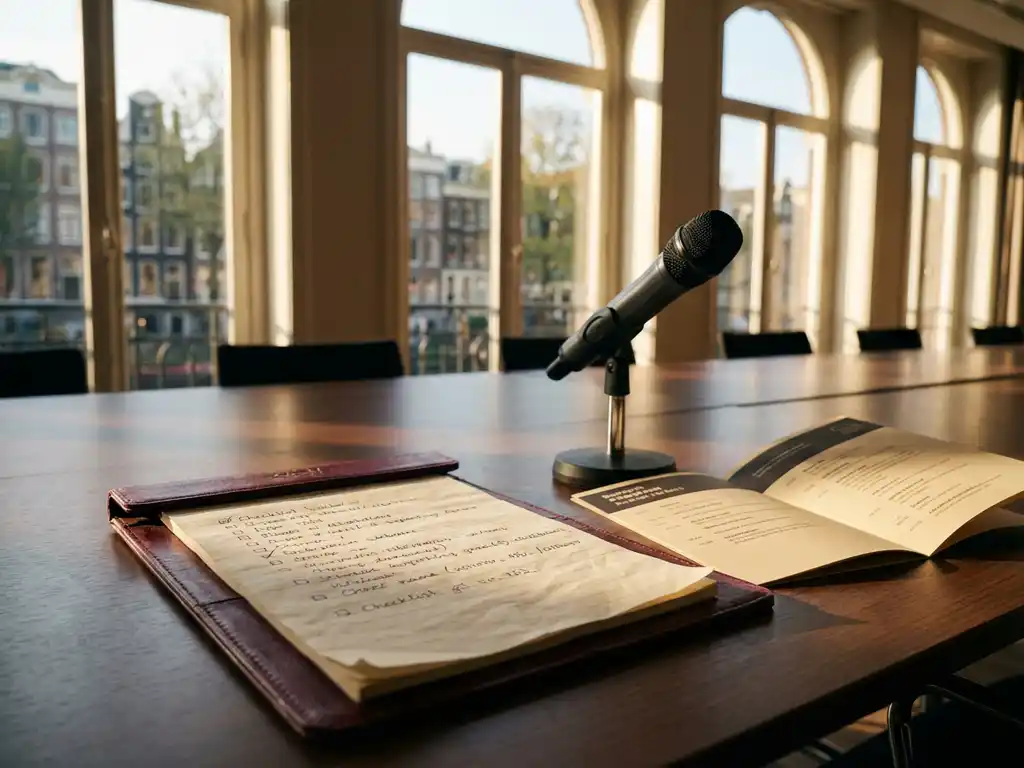
You have found the perfect venue, locked in your speakers, and sent out the invitations. But there is one preparation step that many event planners underestimate until it is too late: briefing your corporate event host. A professional host can be the difference between an event that crackles with energy and one that quietly loses the room. The quality of that experience depends almost entirely on how well you prepare them before they step on stage.
Whether you are organizing a company conference, a product launch, or a team-building event, getting your briefing right sets everything else in motion. Here are nine things to prepare before you sit down with your professional event host.
Why a great brief makes or breaks your event
A corporate event host is not just a warm body with a microphone. They are the connective tissue of your entire event, holding the agenda together, reading the room, and keeping energy high when transitions threaten to sap momentum. But even the most experienced professional host cannot do their best work without the right information going in.
A thorough brief gives your host the context they need to make smart, in-the-moment decisions. It helps them personalize their delivery, anticipate awkward moments, and represent your organization with confidence. Think of the brief not as a formality, but as a creative collaboration that directly shapes your event’s success.
1: Define the goal and tone of your event
Start with the most fundamental question: what do you actually want this event to achieve? Whether the goal is to inspire, inform, celebrate, or align a team around a new strategy, your host needs to understand the purpose behind every element of the program. A host who knows the destination can steer the audience toward it.
Tone is equally important. Is this a formal leadership summit or a relaxed end-of-year celebration? Should the atmosphere feel energizing and playful, or thoughtful and reflective? Giving your host a clear sense of the emotional register you are aiming for allows them to calibrate their language, humor, and pacing accordingly from the very first moment they take the stage.
2: Share your audience profile in detail
Your host needs to know who is in the room. Share details such as the professional backgrounds of attendees, their seniority levels, the mix of nationalities or languages present, and whether participants know each other well or are meeting for the first time. This information shapes everything from the vocabulary a host uses to the cultural references they draw on.
Consider also the emotional state your audience is likely to arrive in. Are they coming off a stressful quarter? Are they excited about a new direction? A skilled host can meet an audience where they are, but only if they know what to expect. The more specific you can be, the more tailored and effective the hosting will feel.
3: Clarify the event agenda and flow
Walk your host through the full run of show, not just the moments they are on stage. Share the sequence of sessions, the timing of breaks, and where transitions happen. Understanding the full arc of the day allows a host to build energy strategically rather than treating each segment in isolation.
Flag any moments in the agenda that are likely to be challenging, such as a dense presentation after lunch, a long panel discussion, or a segment that runs the risk of overrunning. A prepared host can plan how to re-energize the room after a slow stretch or gracefully manage time without making speakers feel rushed.
4: Introduce key speakers and stakeholders
Provide your host with background on every speaker and key stakeholder they will be working alongside. This means more than just job titles. Share how each person prefers to be introduced, any professional achievements worth highlighting, and whether they tend to be comfortable on stage or might need a little extra support from the host.
It is also worth flagging the internal dynamics. Is there a senior leader whose presence sets the tone for the whole room? Is there a speaker who is known for running long? Understanding the human context around your lineup helps your host build rapport quickly and manage the flow with confidence rather than guesswork.
5: Explain any off-limits topics or sensitivities
Every organization has areas that require careful handling, whether that is an ongoing restructuring, a sensitive personnel change, a recent public controversy, or simply topics that are off-brand for the occasion. Your host needs to know these boundaries clearly so they can navigate around them without hesitation.
This is not about restricting creativity. It is about giving your host the information they need to be professionally confident in every moment. A brief conversation about what is off the table actually frees a host to be bolder and more spontaneous in the areas where there is room to play.
6: Provide the venue and tech setup details
The physical environment shapes how a host performs. Share details about the stage layout, the size of the room, the seating arrangement, and whether the audience will be at round tables, in theater-style rows, or standing. Each setup calls for a different approach to engagement and projection.
Cover the technical side too: microphone type, teleprompter availability, clicker access, screen visibility from the stage, and how the AV team communicates cues. If there are any known quirks with the venue, such as poor acoustics in a particular area or a stage that is difficult to move around on, flag them in advance. Small technical details can have a big impact on performance when they surface as surprises.
7: Share your brand voice and key messages
Your host will be speaking on behalf of your organization for the duration of the event. That means their language, framing, and emphasis should align with how your company communicates. Share your brand voice guidelines if you have them, and highlight any specific phrases, values, or themes that should come through consistently.
Identify the two or three key messages you want the audience to walk away with. A good host will find natural moments to reinforce these messages throughout the day, weaving them into introductions, transitions, and closing remarks. This kind of intentional repetition helps messages land with real impact rather than getting lost in the noise of a busy agenda.
8: Set expectations around audience participation
Decide in advance how much interaction you want your host to facilitate and what form it should take. Are you expecting the host to take questions from the floor, run live polls, invite volunteers on stage, or lead a group activity? Or should participation be kept light and low-pressure throughout?
Share any relevant context about your audience’s comfort level with participation. Some groups are energized by being put on the spot; others find it uncomfortable, particularly in cross-cultural settings. Giving your host a clear picture of the participation dynamic lets them design engagement that feels natural and inclusive rather than forced.
9: Confirm logistics, contacts, and backup plans
Practical logistics matter more than people expect. Make sure your host knows who to contact on the day for different types of issues, from technical problems to schedule changes. Provide a clear point of contact for each area of the event, and share mobile numbers rather than relying on email during live production.
Talk through contingency plans for common scenarios: what happens if a speaker drops out, if a session runs significantly over time, or if the technology fails at a critical moment. A host who knows the backup plan in advance can respond calmly and professionally in the moment rather than improvising blindly. That preparation is what separates a good event from a great one.
A well-briefed host is your event’s secret weapon
The nine steps above are not just administrative checkboxes. They are the foundation of a genuine creative partnership between you and your host. When a host walks into your event fully briefed, they can focus entirely on reading the room, connecting with your audience, and delivering the experience you envisioned.
At Boom For Business, we bring over 30 years of experience in corporate event hosting and interactive programming to every brief we receive. Our professional hosts are trained in improvisation and storytelling, which means they know how to stay sharp, adapt in real time, and keep your audience genuinely engaged from the opening welcome to the final close. Here is how we support your event from the very start:
- Tailored pre-event consultation to align on your goals, tone, and audience before a single word is scripted
- Experienced professional hosts who understand corporate environments and can handle sensitive topics with skill and confidence
- Interactive formats and team-building activities that go beyond passive listening and create real moments of connection
- Masterclass Workshops that combine professional development with humor-infused learning, building skills in communication, storytelling, and collaboration
- Full-program customization to ensure your brand voice, key messages, and event goals are reflected throughout the entire experience
Ready to make your next corporate event one that people actually remember? Explore what we do at Boom For Business, discover our Masterclass Workshops, browse our team-building programs, or learn how we help organizations build a positive culture through business-friendly humor and human connection. Get in touch, and let us help you build the brief that makes your event extraordinary.
Frequently Asked Questions
How far in advance should I brief my corporate event host?
Ideally, you should schedule your briefing at least two to three weeks before the event. This gives your host enough time to research speakers, internalize your brand voice, prepare tailored transitions, and flag any questions or concerns before it is too late to address them. For larger or more complex events, an initial briefing a month out followed by a shorter check-in call closer to the date is an even stronger approach.
What if my event agenda changes after the briefing has already taken place?
Agenda changes are extremely common in live event production, and a professional host expects them. The key is to communicate updates as soon as they are confirmed, no matter how minor they seem. Establish a single point of contact responsible for keeping the host informed, and share a revised run of show document whenever significant changes occur. Last-minute adjustments on the day itself should be communicated directly and verbally, not via email.
How much creative freedom should I give my host versus scripting everything in detail?
The most effective approach is to brief thoroughly on goals, tone, audience, and boundaries, and then trust your host to work within that framework. Over-scripting can make a host sound robotic and removes their ability to respond naturally to the room. Provide key messages and any mandatory phrasing you need included, but leave room for your host to bring their own energy, timing, and spontaneity to the delivery.
What are the most common mistakes event planners make when briefing a host?
The most frequent mistakes are sharing logistics without context, skipping the audience profile entirely, and forgetting to communicate off-limits topics until it is too late. Another common oversight is treating the briefing as a one-way information dump rather than a conversation. The best briefings are collaborative — your host will ask questions that surface details you had not thought to include, so leave time for that dialogue.
Do I need a professional host for smaller internal events, or is this only relevant for large conferences?
A skilled host adds value at any scale. For smaller internal events, a host can actually have an even greater impact because the atmosphere is more intimate and the audience dynamic is easier to read and respond to. Town halls, leadership offsites, team-building days, and departmental kick-offs all benefit from a host who can keep energy up, manage participation, and ensure the event flows without the organizer having to step out of the room to handle it.
How do I handle a situation where my host and a senior internal stakeholder have conflicting ideas about tone or content?
This is best resolved before the event, not on the day. During the briefing process, make sure your host speaks directly with key stakeholders where possible, or that you clearly communicate the hierarchy of decision-making upfront. Establish who has final sign-off on tone and messaging, and brief your host accordingly. A professional host will always defer to the client's direction while offering their expertise to find solutions that work for everyone.
What should I prepare if my event includes a multilingual or culturally diverse audience?
Share as much detail as possible about the nationalities, languages, and cultural backgrounds represented in the room. Let your host know whether simultaneous interpretation will be used, as this significantly affects pacing and the use of humor or idiomatic language. Your host can then adjust their vocabulary, slow their delivery where needed, and choose references and examples that are inclusive and accessible to the full audience rather than just a familiar subset.
Related Articles
- What long-term benefits result from investing in professional event hosting?
- What are team building activities for building emotional intelligence?
- How do you measure the impact of leadership skills training on team performance?
- 7 brand storytelling mistakes that disconnect employees from your company mission
- How does an event MC differ from a regular presenter?