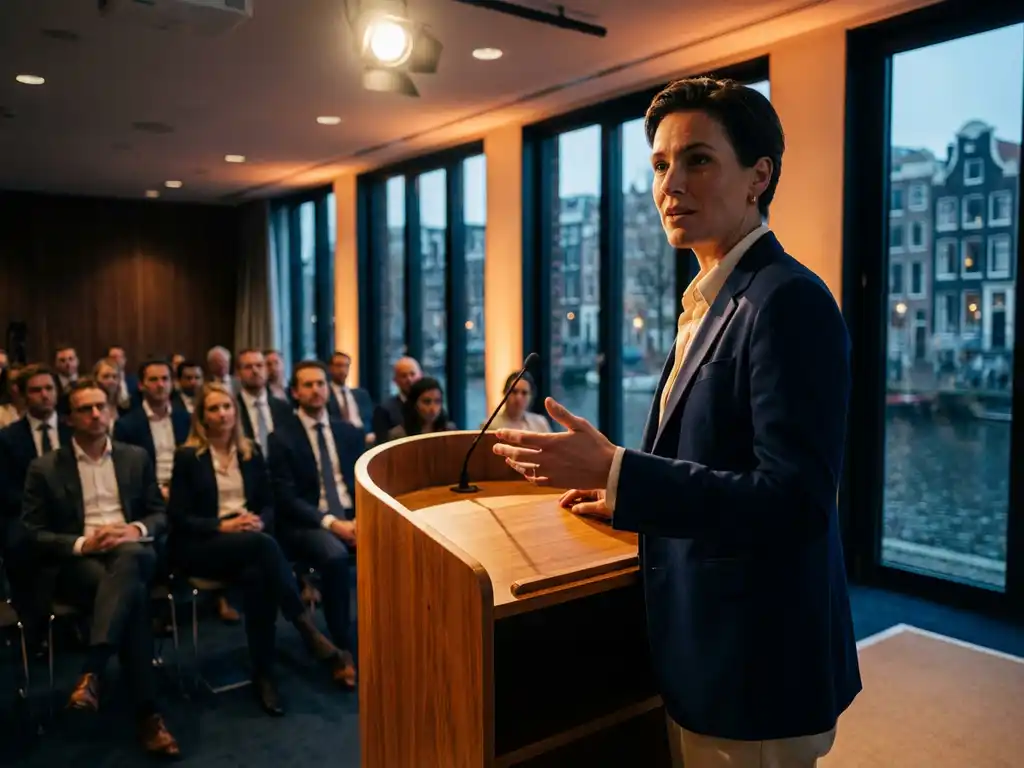
Public speaking remains one of the most sought-after professional skills, yet it is also one of the most commonly avoided. For corporate teams, the stakes are high: presentations, pitches, town halls, and panel discussions all demand confident, clear, and engaging communication. A well-designed public speaking workshop can transform how teams communicate—not just on stage, but in every meeting room, video call, and client interaction.
The challenge is that not all workshop formats deliver the same results. Different teams have different needs, and the right format depends on your goals, your audience, and the specific communication challenges you face. Here are seven proven public speaking workshop formats that work for corporate teams in 2026.
Why public speaking training matters for corporate teams
Strong communication is not a nice-to-have for modern organizations. It is the foundation of leadership credibility, team alignment, and stakeholder engagement. Research consistently shows a significant gap between how leaders perceive their own communication and how employees actually experience it. When that gap goes unaddressed, it leads to disengagement, confusion, and missed opportunities.
Investing in public speaking training for corporate teams closes that gap. It gives professionals the tools to structure their thinking, manage their nerves, and deliver messages that genuinely land. Whether someone is presenting in a boardroom, facilitating a team session, or appearing on camera, speaking confidence is a skill that can be developed with the right guidance and practice.
1: Improv-based workshops for spontaneous speakers
Improv-based public speaking workshops are ideal for teams that struggle with thinking on their feet. Rooted in the principles of improvisational theater, these sessions train participants to listen actively, respond quickly, and stay present under pressure. The core rule of improv—accepting what comes and building on it—translates directly into better real-time communication skills.
These workshops use exercises and games that feel playful but teach serious skills: how to recover from an unexpected question, how to stay calm when a presentation goes off script, and how to connect with an audience in the moment. For teams that face unpredictable environments, from client negotiations to live Q&A sessions, improv training builds the kind of spontaneous speaking confidence that rehearsed scripts simply cannot provide.
2: Storytelling workshops that make messages stick
Storytelling workshops focus on one of the most powerful tools in any communicator’s toolkit: narrative. Facts and figures inform, but stories move people. These workshops teach participants how to structure a compelling narrative, find the human angle in complex information, and deliver a message that audiences remember long after the presentation ends.
In a corporate context, storytelling skills are especially valuable for leaders communicating change, teams pitching new ideas, or anyone responsible for internal communications. A well-crafted story creates emotional resonance and clarity at the same time. Participants learn frameworks for building narratives, techniques for opening with impact, and methods for connecting data to human experience in a way that makes abstract ideas concrete and relatable.
3: Pitch training for high-stakes presentations
Pitch training is designed for moments when the stakes are highest: investor presentations, new business pitches, executive briefings, and product launches. This format zeroes in on the specific demands of persuasive communication, where every minute counts and every word needs to earn its place.
Participants work on structuring arguments for maximum impact, anticipating objections, and delivering with authority and conviction. Pitch workshops typically include structured feedback rounds, where participants present and then receive targeted coaching on both content and delivery. The goal is not just to refine what someone says, but to build the kind of composed, credible presence that makes audiences want to say yes. This format works especially well for sales teams, product managers, and senior leaders who regularly need to win over demanding audiences.
4: Panel facilitation and moderation skills training
Panel facilitation is a distinct communication skill that is often overlooked in standard presentation skills training. Moderating a panel requires a different set of competencies than presenting solo: managing multiple voices, keeping discussions on track, drawing out quieter participants, and handling the unexpected with grace.
This workshop format is particularly valuable for event hosts, HR professionals, and senior leaders who regularly chair discussions, town halls, or external conferences. Participants learn how to prepare smart questions, create engaging dynamics between panelists, read the room, and guide a conversation toward a meaningful conclusion. Strong panel facilitation elevates the entire event experience, and teams that invest in this skill often see a noticeable improvement in the quality of their internal and external events.
5: What does a hybrid speaking workshop look like?
Hybrid speaking workshops address the specific challenge of communicating effectively across in-person and virtual environments simultaneously. As hybrid work becomes the norm, many professionals find themselves presenting to a room where half the audience is physically present and the other half is on a screen. This split-attention dynamic requires deliberate technique.
In a hybrid workshop, participants learn how to divide their attention equitably between in-room and remote audiences, how to use eye contact and body language effectively in mixed settings, and how to use digital tools to keep remote participants engaged. These sessions often include live practice with actual hybrid setups, giving participants the chance to experience and troubleshoot the format in a safe environment. For organizations with distributed teams or international stakeholders, this format is increasingly essential.
6: Humor and tone workshops for engaging delivery
Humor and tone workshops focus on one of the most underutilized elements of professional communication: the ability to be genuinely engaging. Many corporate presentations are technically competent but fail to hold attention because they lack personality, warmth, and energy. This workshop format teaches participants how to use appropriate humor, vary their tone, and inject genuine personality into their delivery without losing professionalism.
These sessions are not about turning everyone into a comedian. They are about helping communicators understand how tone, timing, and lightness can make difficult messages more digestible and important information more memorable. Participants explore techniques for reading an audience’s energy, choosing the right register for different contexts, and using humor as a tool for connection rather than distraction. The result is speakers who feel more human, more relatable, and more effective.
7: Video and on-camera presentation training
On-camera presentation training has become one of the most in-demand workshop formats in recent years. Whether recording internal updates, hosting webinars, appearing in brand videos, or presenting in virtual meetings, professionals are increasingly expected to communicate confidently through a lens. The camera changes everything: posture, eye contact, energy, and pacing all behave differently on screen.
This workshop format gives participants hands-on experience with camera presence, teaching them how to project energy without overacting, maintain natural eye contact with the lens, and structure short-form video content for clarity and impact. Participants typically record themselves and review the footage with a facilitator, which accelerates learning dramatically. For organizations investing in video as a communication channel, this training ensures that their people show up on screen with the same confidence they bring to a live room.
Choosing the right format for your team’s needs
The best public speaking workshop format is the one that addresses your team’s specific challenges. Start by identifying the communication gaps that matter most: Is the issue spontaneity and nerves? Message clarity and structure? Engagement and tone? On-camera confidence? Each format on this list targets a distinct set of skills, and many organizations benefit from combining two or more formats into a broader corporate training program.
Consider also the context in which your team communicates most often. A sales team pitching clients needs different preparation than an HR team facilitating town halls or a leadership group managing change communication. Matching the format to the real-world use case ensures that the skills participants develop are immediately applicable and genuinely useful.
How Boom For Business helps with public speaking workshops
We bring over 30 years of expertise in performance, communication, and improvisation to every workshop we design. Our Masterclass Workshops are built on the proven methodologies of Boom Chicago, combining professional development with humor-infused, interactive learning that participants actually enjoy and remember. We do not offer off-the-shelf programs. Every workshop is customized to your team’s specific goals, communication challenges, and organizational context.
Here is what sets our approach apart:
- Workshops led by experienced facilitators who understand both comedy and corporate environments
- Techniques drawn from improv, storytelling, and performance that translate directly into business communication skills
- Fully customized programs that address your team’s real challenges, not generic presentation tips
- Interactive, energizing formats that break down barriers and build genuine speaking confidence
- Delivery in the Netherlands and internationally, for teams of all sizes and seniority levels
Whether you are looking to sharpen presentation skills across your organization, build speaking confidence in your leadership team, or create a more engaging communication culture, we are ready to help. Explore our Masterclass Workshops to see what is possible, or visit Boom For Business to learn more about our full range of services. If you are also exploring ways to strengthen team building or build a positive organizational culture, we have programs designed to support those goals too. Get in touch, and let us build something memorable together.
Frequently Asked Questions
How long should a corporate public speaking workshop typically run to see real results?
The ideal duration depends on your goals, but most teams see meaningful progress with a half-day or full-day workshop that allows time for both instruction and repeated practice. For deeper skill development—particularly around storytelling, pitch training, or on-camera presence—a series of shorter sessions spread over several weeks tends to produce more lasting results than a single intensive day. The key is building in enough practice time so participants can apply, reflect, and refine their skills rather than just absorbing theory.
What if some team members are significantly more experienced speakers than others—will a mixed-level group hold back the workshop?
Mixed-ability groups are actually very common in corporate workshops and, when facilitated well, can be an asset rather than a challenge. Experienced speakers benefit from structured feedback and peer observation, while less confident participants gain confidence by seeing colleagues navigate the same exercises. A skilled facilitator will differentiate the level of challenge for each participant, ensuring everyone is stretched appropriately. If the gap in experience is very wide, splitting into two groups or running a tiered program may be worth discussing with your workshop provider.
How do we measure the ROI of a public speaking workshop for our organization?
ROI can be measured both qualitatively and quantitatively. On the qualitative side, look for improvements in post-presentation feedback scores, increased volunteer participation in meetings, and manager observations of communication clarity. Quantitatively, you can track metrics like pitch conversion rates, employee engagement scores following town halls, or the number of internal presentations delivered after training. Setting clear baseline measurements before the workshop begins makes it much easier to demonstrate impact afterward.
Which workshop format is the best starting point for a team that has never done public speaking training before?
For teams new to public speaking training, an improv-based workshop is often the most effective entry point because it lowers psychological barriers and creates a safe, playful environment where participants build confidence without the pressure of formal presentations. It quickly addresses the root causes of speaking anxiety—fear of judgment, overthinking, and loss of control—in a way that feels engaging rather than intimidating. Once teams have that foundational confidence, they are much better prepared to benefit from more specialized formats like pitch training or storytelling workshops.
Can these workshop formats be delivered remotely, or do they require in-person attendance?
Most of these formats can be adapted for virtual delivery, though some—like hybrid speaking training and on-camera workshops—are naturally well-suited to an online format. Improv-based and storytelling workshops do benefit from the energy of an in-person setting, but experienced facilitators can recreate much of that dynamic in a well-structured virtual session using breakout rooms and live exercises. If your team is distributed across locations, it is worth discussing with your provider which format adaptations will best preserve the interactive, practice-heavy elements that make these workshops effective.
What are the most common mistakes companies make when organizing a public speaking workshop?
The biggest mistake is treating a workshop as a one-time event rather than part of an ongoing communication development strategy—skills built in a single session fade quickly without reinforcement. Another common pitfall is choosing a generic, off-the-shelf program that does not reflect the specific communication challenges, seniority levels, or industry context of the team. Finally, many organizations underestimate the importance of psychological safety during sessions; if participants feel judged or embarrassed, learning shuts down. Choosing a facilitator who can create a genuinely supportive environment is just as important as the curriculum itself.
How soon after the workshop can participants expect to apply what they have learned in real-world situations?
Participants can typically begin applying core techniques immediately—skills like structuring a message clearly, using pauses effectively, and managing nervous energy are practical from day one. Many teams find it helpful to schedule a real presentation or meeting shortly after the workshop so participants have a natural opportunity to put their new skills into practice while the learning is still fresh. Following up with a brief coaching session or peer feedback exchange a few weeks later significantly reinforces retention and helps participants refine their approach based on real experience.