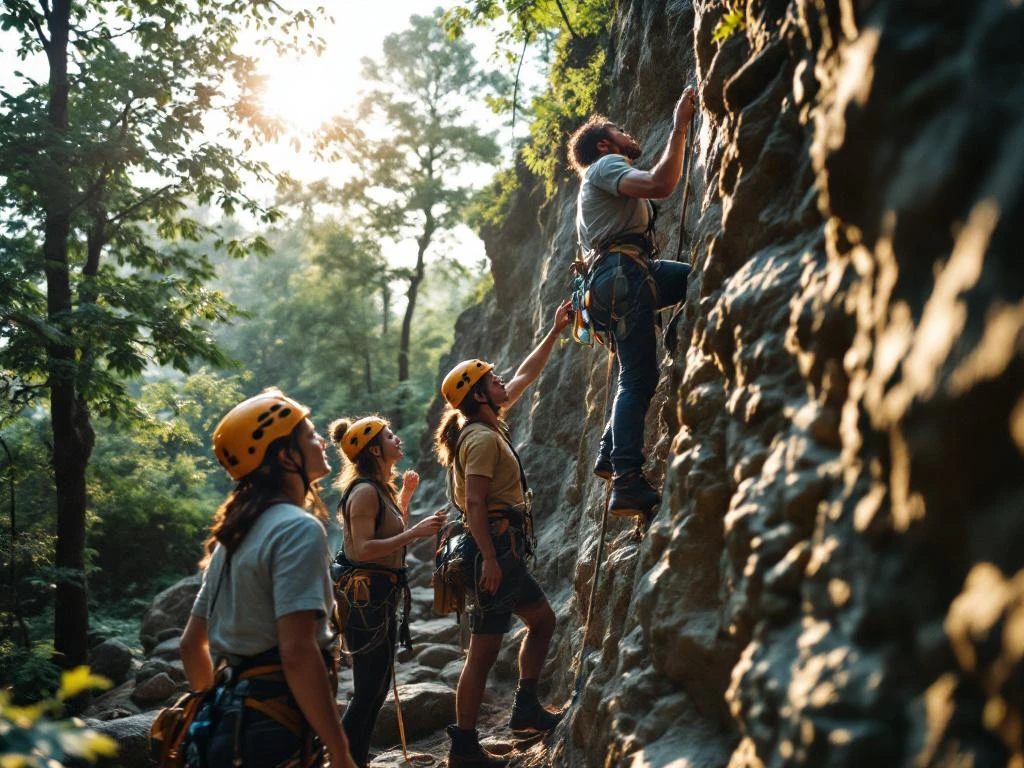
Experiential team building programs engage participants through hands-on activities that promote learning by doing rather than through passive instruction. These programs use interactive challenges, reflection, and practical application to build stronger workplace relationships and improve collaboration. Unlike traditional team activities, they create lasting behavioral changes through immersive experiences that mirror real workplace dynamics.
What are experiential team building programs and how do they work?
Experiential team building programs are interactive learning experiences in which participants engage in hands-on activities that simulate real workplace challenges. These programs operate on the principle that people learn best through direct experience, reflection, and practical application rather than by listening to presentations or simply following instructions.
The core methodology involves four key stages: concrete experience through team building activities, reflective observation in which teams discuss what happened, abstract conceptualization to identify patterns and lessons, and active experimentation to apply new skills in workplace situations. This cycle ensures that learning moves beyond the activity itself and leads to meaningful behavioral change.
Participants work together to solve problems, overcome obstacles, or complete challenges that require communication, trust, and collaboration. The facilitator guides reflection sessions in which teams analyze their performance, identify successful strategies, and discuss how to apply these insights to their daily work environment.
How do experiential team building programs differ from traditional team activities?
Traditional team building often focuses on fun activities with limited connection to workplace skills, whereas experiential programs deliberately mirror actual work challenges and dynamics. The key difference lies in the depth of learning and long-term application rather than in temporary entertainment.
Conventional activities such as trust falls or icebreaker games provide momentary engagement but rarely translate into improved workplace performance. Experiential programs create scenarios that require the same skills teams need at work: problem-solving under pressure, clear communication, conflict resolution, and collaborative decision-making.
The learning approach also differs significantly. Traditional activities often involve following instructions or competing for prizes, whereas experiential programs encourage participants to discover solutions organically. This discovery-based learning creates stronger retention because teams develop their own strategies rather than being told what to do.
Most importantly, experiential programs include structured reflection and application planning. Participants do not just complete activities; they analyze their performance, identify areas for improvement, and create specific plans for implementing new behaviors in their workplace.
What types of activities are included in experiential team building programs?
Experiential team building programs include problem-solving challenges that require teams to work together under realistic constraints, such as limited time, resources, or information. These activities mirror actual workplace pressures while providing a safe environment for experimentation and learning.
Interactive workshops focus on specific skills such as communication, conflict resolution, or creative thinking. Teams might engage in role-playing scenarios in which they practice difficult conversations, negotiate solutions to complex problems, or collaborate on creative projects that require diverse perspectives and skills.
Collaborative projects often involve teams completing multi-stage challenges in which success depends on effective coordination, clear communication, and shared accountability. These might include strategy simulations, innovation challenges, or community service projects that require sustained cooperation.
Immersive experiences take teams outside their comfort zones through activities such as escape rooms designed around workplace themes, outdoor challenges that require strategic planning, or improvisation exercises that build spontaneous collaboration skills. The key is that all activities connect directly to workplace competencies through guided reflection and application planning.
Why are experiential team building programs more effective for workplace collaboration?
Experiential learning creates deeper understanding because participants discover insights through their own actions rather than being told what to think. This personal discovery leads to stronger retention and more sustainable behavioral changes than traditional training methods.
The hands-on nature of experiential programs engages multiple learning styles simultaneously. Visual learners see team dynamics in action, auditory learners participate in discussions and reflection, and kinesthetic learners engage through physical activities. This multisensory approach ensures that insights resonate with all team members.
These programs also provide immediate feedback through real-time consequences and results. When communication breaks down during an activity, teams experience the impact directly rather than hearing about it in theory. This immediate cause-and-effect relationship accelerates learning and makes lessons more memorable.
Perhaps most importantly, experiential programs build emotional connections alongside intellectual understanding. Teams that overcome challenges together develop genuine trust and mutual respect. These emotional bonds translate into stronger workplace relationships and improved collaboration long after the program ends.
How do you choose the right experiential team building program for your organization?
Selecting the right experiential team building program requires a clear understanding of your team’s specific challenges, goals, and desired outcomes. Start by identifying whether you need to address communication issues, build trust, improve problem-solving, or develop leadership skills within your organization.
Consider your team size and dynamics when evaluating program options. Some activities work better with smaller groups that allow for in-depth discussion and reflection, whereas others are designed for larger teams that need to practice coordination across multiple subgroups. The program structure should match your team’s composition and interaction patterns.
Budget considerations extend beyond the initial program cost to include time investment, venue requirements, and follow-up activities. Fun team building programs that seem less expensive initially may provide limited long-term value compared with more comprehensive experiential approaches that include ongoing support and application tools.
When evaluating providers, ask about their facilitation approach, reflection methodologies, and post-program support. Quality experiential programs include structured debriefing sessions, action-planning components, and resources for continued application. The facilitator should be skilled at guiding discovery rather than simply managing activities.
How Boom For Business helps with experiential team building programs
We specialize in experiential team building programs that combine professional improvisation techniques with interactive challenges designed to strengthen workplace collaboration. Our approach uses business-friendly humor and storytelling to create engaging experiences in which teams discover new ways of working together through hands-on participation.
Our signature experiential offerings include:
- Interactive Amsterdam challenges in which teams navigate the city completing collaborative photo and video tasks that require quick thinking and creative problem-solving
- Improvisation workshops that build spontaneous communication skills and help teams adapt to unexpected workplace situations
- Custom scenario-based activities designed around your specific organizational challenges and team dynamics
- Reflection and application sessions that ensure insights translate into improved workplace collaboration
Drawing on over 30 years of experience creating memorable experiences for international corporations, we design each program to address your team’s specific needs while maintaining the energy and engagement that make learning stick. Our facilitators guide teams through discovery-based activities that build genuine connections and practical skills.
Ready to transform your team dynamics through engaging experiential learning? Contact us to discuss how our customized team building programs can strengthen collaboration and communication within your organization.
Frequently Asked Questions
How long do experiential team building programs typically last, and what's the ideal duration for maximum impact?
Most effective experiential team building programs run between 4-8 hours, allowing sufficient time for multiple activities, reflection sessions, and action planning. Half-day programs (4-5 hours) work well for addressing specific skills like communication or problem-solving, while full-day programs (6-8 hours) are ideal for comprehensive team development that includes trust-building, leadership development, and strategic collaboration skills.
What should we do to prepare our team before participating in an experiential team building program?
Set clear expectations by explaining the learning-focused nature of the program and emphasizing that activities are designed to improve workplace collaboration rather than just provide entertainment. Encourage participants to approach challenges with an open mind and willingness to step outside their comfort zones. Most importantly, establish psychological safety by assuring team members that the experience is about collective growth, not individual performance evaluation.
How can we measure the success and ROI of our experiential team building investment?
Establish baseline metrics before the program by surveying team members about communication effectiveness, trust levels, and collaboration satisfaction. Follow up 30, 60, and 90 days post-program with the same survey questions to track improvements. Additionally, monitor practical indicators like reduced project completion times, fewer communication-related conflicts, increased cross-departmental collaboration, and improved employee engagement scores.
What happens if some team members are reluctant to participate or seem disengaged during activities?
Experienced facilitators use graduated participation approaches, allowing hesitant members to observe initially before gradually involving them in less intimidating roles. The key is creating multiple ways to contribute – some participants excel in planning roles while others prefer hands-on execution. Quality programs include alternative participation methods and skilled facilitators who can adapt activities to accommodate different comfort levels without compromising the learning objectives.
How do we ensure the lessons learned during the program actually transfer to our daily work environment?
Successful transfer requires structured follow-up beyond the initial program. Schedule team check-ins at 2, 4, and 8 weeks post-program to discuss implementation progress and challenges. Create specific action items with assigned owners and deadlines during the program's closing session. Consider appointing team champions who help reinforce new behaviors and remind colleagues of insights gained during challenging workplace situations.
Can experiential team building programs work effectively for remote or hybrid teams?
Yes, though the format requires adaptation to maintain the hands-on, collaborative essence. Virtual experiential programs use breakout rooms for small group challenges, collaborative online tools for problem-solving activities, and video-based reflection sessions. Hybrid approaches might combine in-person activities for local team members with virtual participation options, or alternate between online collaborative challenges and individual location-based activities that teams complete simultaneously.
What are the most common mistakes organizations make when implementing experiential team building programs?
The biggest mistake is treating experiential programs like traditional fun activities without emphasizing the learning and application components. Other common errors include choosing generic programs that don't address specific team challenges, skipping the reflection and action-planning phases, failing to follow up on commitments made during the program, and not involving leadership in supporting the behavioral changes teams want to implement post-program.
Related Articles
- 11 creativity workshop activities that spark real innovation in corporate teams
- 7 ways to improve teamwork in the workplace for hybrid and distributed teams
- What are team building programs for enhancing workplace culture?
- How do you run fun team building activities without losing professionalism?
- How do team building activities improve workplace communication?