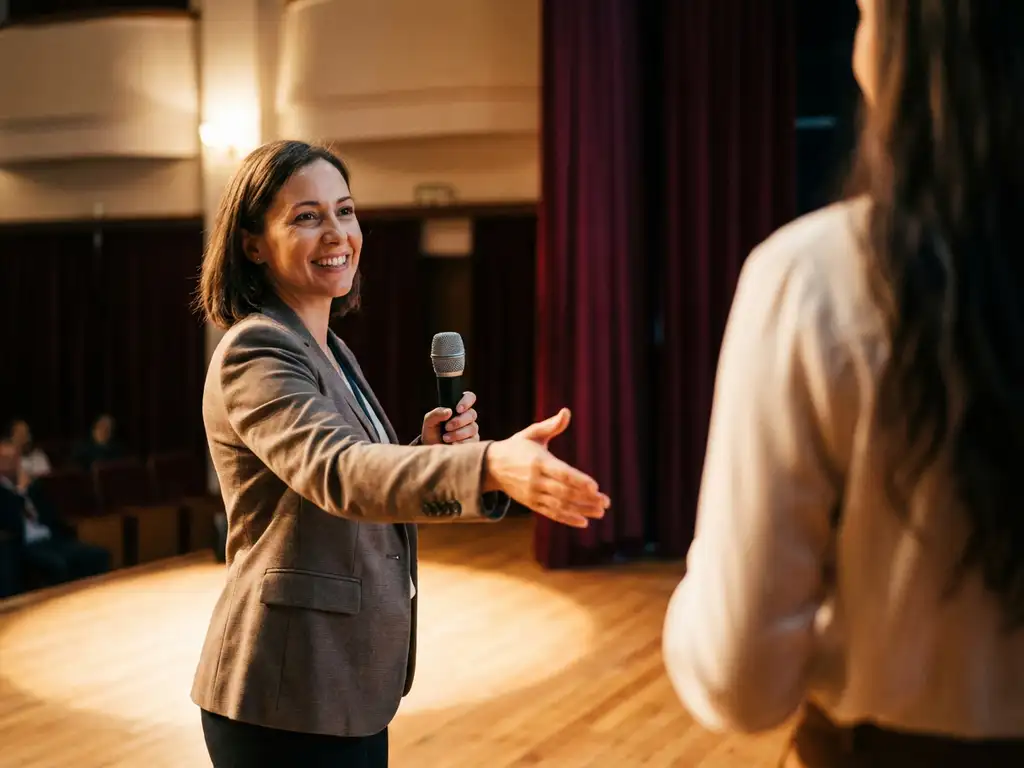
A great speaker can elevate an entire event, but even the most polished presenter needs the right conditions to perform at their best. That is where skilled event moderation makes all the difference. The role of an event moderator goes far beyond reading a script or filling gaps between sessions. A professional host creates an environment where speakers feel confident, audiences stay engaged, and the programme flows with genuine energy.
Whether you are planning a large-scale conference, an internal company day, or a leadership summit, these seven event moderation habits will help every speaker feel supported from the moment they arrive backstage to the moment they leave the stage.
Why speaker support defines event success
Speaker support is one of the most underestimated elements of successful corporate event hosting. When speakers feel prepared, welcomed, and guided, they perform better, which directly affects how audiences receive the content. A nervous or poorly briefed speaker can undermine even the strongest message.
Effective event facilitation creates a safety net for everyone on stage. It signals professionalism to your audience, builds trust with your speakers, and keeps the programme on track. The habits below are what separate a functional moderator from an exceptional one.
1: Research every speaker before the event
Strong speaker support begins long before the event starts. A professional moderator takes time to understand each speaker’s background, area of expertise, communication style, and what they hope to achieve with their session. This preparation allows the host to make informed introductions and ask relevant follow-up questions.
Researching speakers also prevents awkward moments on stage. Mispronouncing a name, misrepresenting a title, or asking a question that misses the point of a talk can undermine the speaker’s credibility and the audience’s trust. Good research shows respect and sets the entire session up for success.
2: Hold a proper pre-show briefing
A pre-show briefing is one of the most valuable investments of time you can make in conference moderation. This is the moment when the moderator and speaker align on format, timing, key messages, and any sensitivities to be aware of. It removes uncertainty and gives the speaker a chance to ask questions in a low-pressure setting.
Keep briefings structured but conversational. Cover the basics: how the speaker will be introduced, when timing signals will appear, how Q&A will be managed, and what to do if something goes wrong. A well-run briefing transforms a speaker’s nerves into confidence.
3: Set clear timing signals backstage
Nothing disrupts a speaker’s flow more than uncertainty about time. Clear, agreed-upon timing signals remove that anxiety entirely. Before the event, establish a simple system, whether that is visual cues from a stage manager, physical cards, or a countdown clock, and make sure every speaker understands exactly what each signal means.
Consistency matters here. When speakers know they can trust the timing system, they stop monitoring the clock themselves and focus entirely on their delivery. A reliable signal system is a small logistical detail that has a large impact on stage presence and speaker confidence.
4: What makes a speaker introduction land?
A strong introduction does three things: it establishes the speaker’s credibility, frames the topic for the audience, and creates genuine anticipation. A weak introduction, by contrast, leaves the speaker walking into a cold room with no momentum behind them.
The best introductions are concise, specific, and written or reviewed in collaboration with the speaker. Avoid reading a full biography word for word. Instead, highlight one or two details that are directly relevant to the session’s theme. End the introduction with a clear, energetic handover that gives the speaker a warm launch.
5: Stay present and attentive during every talk
An event moderator’s job does not pause while a speaker is on stage. Staying visibly attentive sends a powerful signal to both the speaker and the audience. It communicates that what is being said matters, and it keeps the moderator ready to respond in the moment if anything unexpected happens.
Avoid looking at your phone, reviewing notes for the next session, or having side conversations while a speaker is presenting. Your body language is visible to the audience, and if you appear distracted, the room will follow. Active listening during every talk also prepares you to ask more relevant, thoughtful questions during Q&A.
6: Handle Q&A with control and warmth
Q&A sessions are where event facilitation skills are most visible. A skilled moderator manages the flow of questions without making the audience feel policed. This means knowing when to step in, how to rephrase unclear questions, and how to redirect a line of questioning that is going off track.
Warmth is just as important as control. Acknowledge contributions from the audience before passing them to the speaker. If a question is too long or unclear, gently summarize it rather than repeating it verbatim. And always protect the speaker from hostile or irrelevant questions that would derail the session’s value.
7: Close each segment with a strong handoff
The closing handoff is the final act of speaker support, and it shapes how the audience remembers the session. A strong close summarizes the key takeaway, thanks the speaker with genuine warmth, and bridges naturally into the next part of the programme. It gives the speaker a dignified exit and keeps the event’s energy moving forward.
Avoid vague closings like “thanks for that” or trailing off into applause without a clear transition. A purposeful handoff reflects well on the speaker, reinforces the session’s message, and demonstrates the professionalism that distinguishes great corporate event hosting from average execution.
Build a moderation style speakers trust
These seven habits share a common thread: they are all about building trust. When speakers trust their moderator, they perform with more confidence, take more creative risks, and connect more genuinely with the audience. That trust does not happen by accident. It is built through preparation, communication, and consistent professional presence throughout the event.
The most effective event moderators combine structure with spontaneity. They know the programme inside out, but they also read the room and adapt in real time. That balance between preparation and flexibility is what creates the conditions for truly memorable events.
How Boom For Business Helps You Master Event Moderation
At Boom For Business, we bring over 30 years of performance and facilitation expertise to every event we host. Our professional moderators are trained in the art of making speakers feel supported, keeping audiences engaged, and delivering programmes that flow with energy and purpose. But we also help organisations build these skills internally.
- Our Masterclass Workshops train your team in presentation skills, storytelling, and confident stage presence, so your internal hosts and speakers perform at their best.
- Our team building programmes use improvisation techniques that directly strengthen the listening, adaptability, and communication skills every great moderator needs.
- Our positive culture approach ensures that every event we support creates an environment where people feel heard, valued, and energised.
- Our professional hosting services are fully customised to your event format, audience, and goals, combining warmth with precision.
Whether you need an experienced professional host for your next conference or want to develop stronger facilitation skills within your own team, we are ready to help. Reach out to Boom For Business and let us bring the energy, expertise, and speaker support your next event deserves.
Frequently Asked Questions
How far in advance should a moderator contact speakers before an event?
Ideally, a moderator should reach out to speakers at least one to two weeks before the event to begin the briefing process. This gives enough time to review materials, align on key messages, and address any concerns without adding last-minute pressure. A brief follow-up call or check-in 24–48 hours before the event is also valuable to confirm logistics and settle any remaining nerves.
What should a moderator do if a speaker goes significantly over their allotted time?
The moderator should intervene calmly and professionally, using the pre-agreed timing signal first before stepping in verbally. If the speaker continues, a polite but firm on-stage intervention — such as 'I'm going to need to stop you there so we have time for one or two questions' — protects the programme without embarrassing the speaker. This is exactly why establishing timing signals in the pre-show briefing is so important: the speaker has already agreed to the system, making the intervention feel collaborative rather than confrontational.
How can a moderator handle an audience member who asks an inappropriate or hostile question during Q&A?
The moderator's role is to act as a filter between the audience and the speaker, and this is one of the most important moments to exercise that responsibility. Acknowledge the comment briefly, then either reframe it into a more constructive question or redirect the conversation entirely — for example, 'That's a broad topic; let's bring it back to what we covered today.' If the question is genuinely inappropriate, it is perfectly acceptable to move on without passing it to the speaker at all, stating that you want to keep the session focused.
Can these moderation habits be applied to virtual or hybrid events, or are they only relevant for in-person formats?
All seven habits translate directly to virtual and hybrid formats, though some require adaptation. Pre-show briefings become even more critical online, where technical issues and unfamiliar platforms can increase speaker anxiety. Timing signals can be delivered via chat or on-screen prompts, and staying visibly attentive means keeping your camera on and maintaining engaged body language throughout. The core principle — making speakers feel supported and prepared — remains identical regardless of format.
What is the most common mistake moderators make when introducing a speaker?
The most common mistake is reading a full, unedited biography directly from a sheet of paper, which creates a flat, impersonal atmosphere right before the speaker takes the stage. Great introductions are curated, not copied — they highlight one or two credentials that are directly relevant to the session and build genuine anticipation rather than simply listing achievements. Always review the introduction with the speaker beforehand so they feel represented accurately and can walk on stage with momentum already behind them.
How do you develop the skill of reading the room as a moderator, especially under pressure?
Reading the room is a skill rooted in active listening and presence, both of which can be trained. Improvisation-based exercises — like those used in Boom For Business's team building programmes — are particularly effective because they build the instinct to observe, respond, and adapt in real time without over-thinking. Practically, experienced moderators learn to scan the audience regularly, notice energy shifts, and adjust pacing, tone, or format accordingly, whether that means shortening a Q&A that has lost momentum or adding a spontaneous moment of interaction to re-engage a distracted room.
Is it worth hiring a professional moderator for smaller internal company events, or is this only necessary for large conferences?
Professional moderation adds value at any scale, and internal events are often where it matters most. Company days, leadership offsites, and team summits carry significant cultural weight, and a skilled moderator ensures those conversations are facilitated with the same care and energy as a major external conference. Even for smaller events, a professional host brings structure, neutrality, and the ability to manage group dynamics in a way that an internal colleague — who may be too close to the content or the politics — often cannot.
Related Articles
- What are creative problem-solving team building exercises?
- How do team building activities support organizational health?
- 7 ways to help your team speak with authority at work from day one
- 7 questions to ask before booking team building activities for your company
- 7 ways event moderation transforms the energy in a room