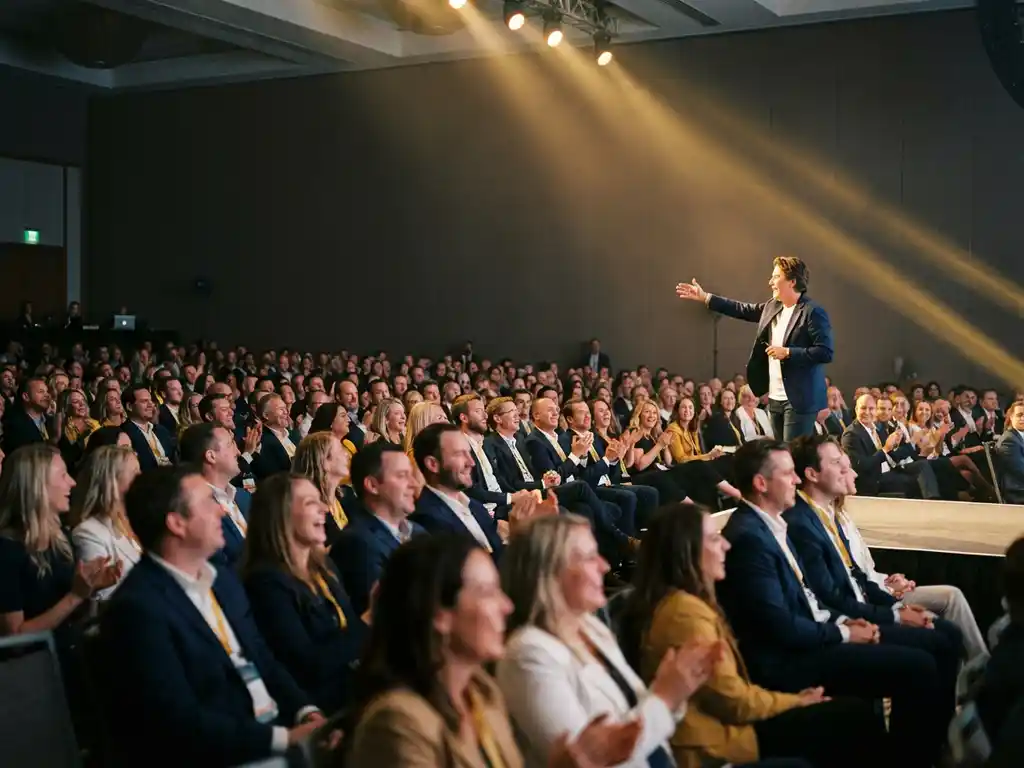
The difference between a forgettable corporate event and one that people talk about for months often comes down to a single factor: the quality of the event moderation. A skilled event moderator does far more than introduce speakers and keep time. They shape the entire experience, from the moment guests walk in to the final round of applause. Whether you are planning a large conference, an internal town hall, or a team-building day, understanding what great moderation actually does will change how you approach every event you run.
If you have ever sat through an event that felt flat despite strong content, or watched a room lose energy after a break, you already know the problem. Event moderation is the invisible architecture that holds everything together. Here are seven ways a professional host transforms the energy in a room.
Why event moderation is your secret weapon
Most event planners invest heavily in content, speakers, and production. Moderation is often the last thing on the list, yet it is the element that determines whether everything else lands. A professional event moderator acts as the connective tissue of your event, giving the audience a human anchor to follow and trust throughout the day.
When moderation is done well, audiences rarely notice it. They simply feel engaged, informed, and energized. That seamlessness is the goal, and it takes real skill to achieve. The seven points below break down exactly how great moderation creates that effect.
1: Sets the tone before a word is spoken
The first impression of any corporate event happens before the agenda even begins. The way a moderator enters the room, greets the audience, and opens the program sends an immediate signal about what kind of experience this will be. A confident, warm, and purposeful opening tells the room: this is worth your attention.
Energy is contagious. When a professional host arrives with genuine presence and enthusiasm, the audience mirrors it. This is not about performance for its own sake. It is about creating a psychological contract with the room that says the next few hours will be engaging, respectful of your time, and genuinely worthwhile.
2: Turns passive audiences into active participants
Sitting and listening is the default mode for most event attendees. A skilled event moderator breaks that pattern by inviting the audience into the experience rather than talking at them. This might mean posing questions, facilitating quick interactions, or using humor to lower the barrier to participation.
Audience engagement is not a bonus feature. It is what transforms information into experience. When people actively participate, even briefly, they retain more, feel more invested, and leave with a stronger connection to the content and the organization behind it. The moderator is the person who makes that shift happen naturally, without forcing it.
3: Keeps energy high between sessions
The transitions between sessions are where most events lose momentum. Speakers finish, the room shifts, and without skilled handling, attention drifts to phones and side conversations. A professional host uses these moments strategically, bridging content, resetting the room’s energy, and building anticipation for what comes next.
These in-between moments are actually opportunities in disguise. A moderator who knows how to read a room can use a well-timed observation, a light moment of humor, or a brief interactive beat to re-engage the audience and carry them forward. This keeps the event feeling coherent rather than like a series of disconnected segments.
4: Makes complex messages land with clarity
Corporate events often carry significant content: strategic updates, organizational changes, new initiatives, or complex data. Without skilled framing, even the most important messages can get lost. A great moderator contextualizes information, connects it to what the audience already knows, and distills key takeaways in plain language.
This is especially valuable during panel discussions or multi-speaker formats, where a moderator can synthesize different perspectives and help the audience understand what they have just heard. The result is not simplification. It is translation, turning dense information into something that genuinely resonates and sticks.
5: Handles the unexpected without losing the room
Every live event carries risk. A speaker runs over time, a technical issue interrupts the flow, an audience question catches everyone off guard. How these moments are handled determines whether the event recovers or unravels. A seasoned event moderator treats the unexpected as part of the job, not an exception to it.
The ability to improvise gracefully under pressure is one of the most underrated skills in corporate event hosting. When a moderator navigates a difficult moment with calm and even humor, it builds trust with the audience. It signals that the event is in capable hands, which allows everyone else to relax and stay present.
6: Creates psychological safety for honest dialogue
Some of the most valuable moments at any corporate event happen when people feel safe enough to speak honestly. Whether in a Q&A session, a panel discussion, or a workshop format, that openness does not appear automatically. It is cultivated by a moderator who sets the right tone and actively makes space for it.
Psychological safety in a group setting comes from feeling that your contribution will be received with respect, not judgment. A skilled moderator signals this through their language, their reactions, and the way they handle contributions from the audience. When people feel genuinely heard, conversations become richer and more productive for everyone in the room.
7: Leaves audiences with a lasting impression
The close of an event is as important as the opening. A strong moderator brings the day full circle, connecting back to the themes introduced at the start and giving the audience a clear, memorable takeaway. This is what separates events that feel complete from those that simply stop.
A lasting impression is not just about what people remember. It is about how they feel as they leave. A well-moderated event leaves audiences energized, connected, and clear on what comes next. That emotional residue is what drives follow-through, whether the goal is behavioral change, team cohesion, or organizational alignment.
What great moderation looks like in practice
Great event moderation combines preparation with adaptability. Before the event, a skilled moderator invests time in understanding the audience, the content, and the organizational context. During the event, they stay attuned to the room, adjusting their approach in real time based on what they observe. After the event, the best moderators leave behind an experience that felt effortless, even though nothing about it was.
The qualities that define a great professional host include deep listening, genuine curiosity, the ability to hold a room’s attention without dominating it, and the confidence to handle whatever comes up. These are skills that take years to develop, which is why experienced moderation makes such a measurable difference to event outcomes.
How Boom For Business helps with event moderation
We have been helping organizations create memorable, high-impact events for over 30 years, drawing on the expertise of Boom Chicago, one of the world’s most respected comedy and improvisation companies. Our professional hosts and moderators bring the full range of skills described above, combining sharp communication instincts with genuine warmth and humor that keeps any room engaged.
Here is what working with us looks like in practice:
- Custom-built programs designed around your audience, your message, and your goals
- Experienced professional hosts who know how to read a room and adapt in real time
- Improv-trained facilitation that handles the unexpected with confidence and grace
- Interactive formats that turn passive attendees into active, engaged participants
- Masterclass Workshops that build your team’s own communication and presentation skills for the long term
Whether you are planning a large conference in Amsterdam, an internal leadership summit, or a team-building day that truly energizes people, we bring the energy, expertise, and creative edge to make it land. Explore our full range of services at Boom For Business, discover our Masterclass Workshops, check out our team building programs, or learn how we help organizations build a positive culture through business-friendly humor and human connection. Get in touch, and let us show you what great event moderation can do for your next event.
Frequently Asked Questions
How do I know if my event actually needs a professional moderator, or can an internal team member handle it?
If your event carries significant organizational stakes — a leadership summit, a company-wide town hall, a multi-speaker conference — a professional moderator is almost always worth the investment. Internal team members often lack the neutrality, stage presence, and real-time adaptability that experienced hosts bring, and they carry the added pressure of their own role within the organization. A professional moderator has no agenda beyond making the event work, which gives them a freedom and authority in the room that insiders rarely have.
How far in advance should we brief the moderator on our event content and goals?
The earlier, the better — ideally several weeks before the event. A great moderator needs time to understand your audience, your organizational context, your key messages, and the personalities of any speakers or panelists involved. A thorough briefing process is not just logistical; it is what allows the moderator to make informed, confident decisions in the room. Last-minute briefings almost always result in a more generic, less impactful experience.
What is the biggest mistake event planners make when it comes to moderation?
Treating moderation as an afterthought rather than a core component of the event design. Many planners lock in speakers, venues, and production months in advance but only think about the host at the last minute. This means the moderator has little time to prepare, no input into the program flow, and no opportunity to align with speakers beforehand. Bringing your moderator into the planning process early transforms them from a presenter into a genuine co-architect of the experience.
How should a moderator handle a speaker who runs significantly over time without creating an awkward moment?
A skilled moderator uses a combination of pre-agreed signals and confident, respectful intervention. Before the event, establish a clear time-warning system with all speakers — for example, a visible card or a discreet hand signal at the five-minute and one-minute marks. If a speaker still runs over, a good moderator steps in warmly but firmly, framing the interruption as a service to the audience: 'We want to make sure we have time for your key takeaway and a few audience questions.' Preparation and clear expectations set before the event make these moments much rarer.
Can good moderation really make a difference if the content itself is dry or overly technical?
Absolutely — in fact, this is where skilled moderation earns its value most clearly. A professional host can reframe dense or technical content in human terms, use analogies that make abstract ideas concrete, and create moments of interaction that give the audience a chance to process and engage rather than simply absorb. They can also work with speakers in advance to identify the most audience-relevant angles of their material. Strong moderation does not replace great content, but it can significantly close the gap when content is challenging.
What is the difference between a moderator and a facilitator, and does it matter for corporate events?
The terms are often used interchangeably, but there is a practical distinction worth knowing. A moderator typically guides the overall flow of an event — managing speakers, transitions, Q&A, and audience energy. A facilitator is more focused on drawing out participation, guiding group discussion, and helping a team or audience reach shared conclusions. Many professional hosts do both, shifting between modes depending on the session format. When briefing your host, be clear about which role is needed for each part of your program so they can prepare accordingly.
How can we measure whether the moderation at our event was actually effective?
Post-event surveys are the most direct tool — ask specifically about energy levels, clarity of key messages, and how engaged attendees felt throughout the day. You can also look at behavioral indicators during the event itself: audience participation rates, the quality of questions asked during Q&A, and whether energy visibly held up through transitions and after breaks. For longer-term impact, track whether the event's key messages translated into the actions or mindset shifts you were aiming for. A great moderator leaves a measurable imprint on all of these.
Related Articles
- How does an event MC differ from a regular presenter?
- 9 team workshops that HR professionals recommend in 2026
- 11 team communication strategies for organizations going through rapid growth
- What are the differences between indoor and outdoor team building?
- 9 storytelling techniques that help employees genuinely connect to brand values