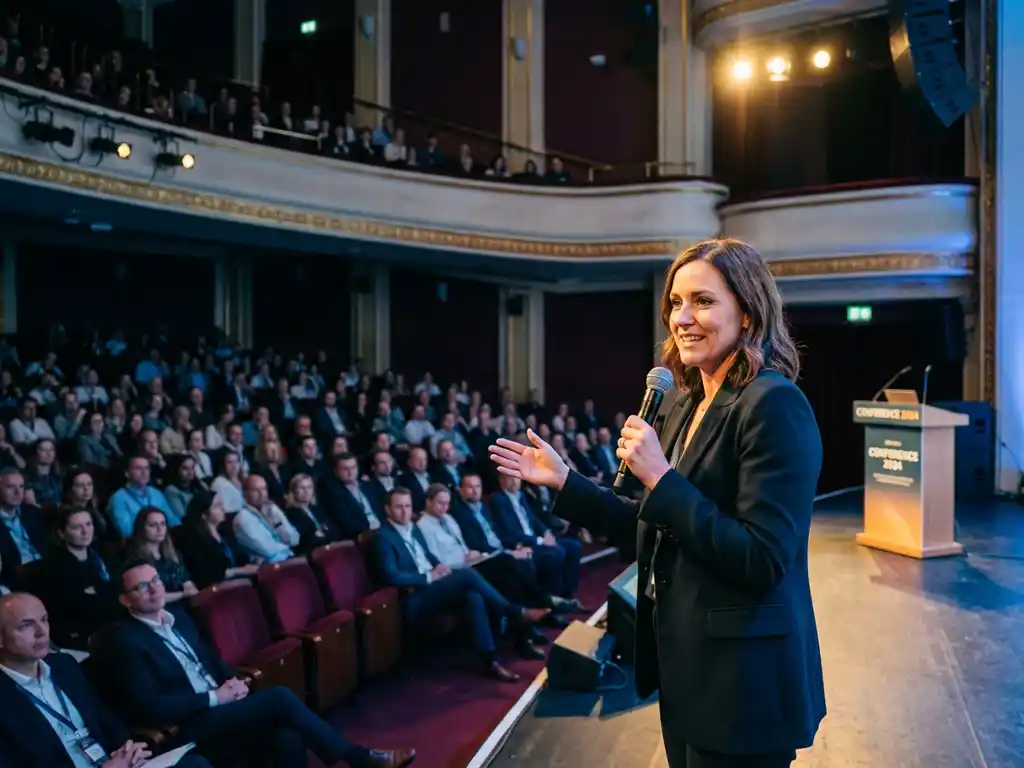
Running a large corporate event is one thing. Keeping a room full of professionals engaged from start to finish is another challenge entirely. Whether you are hosting a company-wide conference, a leadership summit, or an international team gathering, the quality of your event moderation determines whether your audience leaves energized or exhausted. The moderator is not just a timekeeper; they are the engine that drives the entire experience forward.
Strong audience engagement does not happen by accident. It is the result of deliberate choices made before, during, and after each segment of your event. These eleven event moderation techniques are designed to help corporate event professionals keep large audiences genuinely engaged, not just politely present.
Why event moderation makes or breaks large gatherings
In a large corporate setting, attention is the scarcest resource in the room. Professionals arrive with full inboxes, competing priorities, and a healthy skepticism toward yet another scheduled session. Without skilled event facilitation, even the most important content gets lost in a fog of passive listening and drifting attention.
A skilled event moderator does more than introduce speakers. They set the emotional temperature of the room, manage pacing, bridge content gaps, and create the psychological safety that makes audiences willing to participate. When moderation is weak, energy drops fast and rarely recovers. When it is strong, the entire event feels cohesive, purposeful, and alive.
1: Open with an icebreaker that sets the tone
The first five minutes of any large corporate event establish the social contract between the moderator and the audience. A well-chosen icebreaker signals that this event will be different, interactive, and worth paying attention to. It does not need to be elaborate; it needs to be intentional.
Effective icebreakers for large audiences include quick show-of-hands questions, a surprising fact related to the event theme, or a brief paired-conversation prompt. The goal is to activate the audience physically and mentally before the first speaker takes the stage. Once people have spoken or moved, they are far more likely to stay engaged throughout.
2: Use humor to disarm and energize the room
Humor is one of the most powerful tools in a corporate event moderator’s toolkit, and one of the most underused. A well-placed, business-friendly joke or a light observation about the shared experience in the room lowers defenses, builds rapport, and makes the audience more receptive to the content that follows.
This does not mean turning your event into a comedy show. It means using levity strategically to reset energy, smooth over transitions, or acknowledge the elephant in the room. Humor that feels forced or inappropriate does the opposite, so the key is authenticity and timing. Moderators who can read a room and deploy humor naturally create an atmosphere where audiences feel comfortable and connected.
3: Break content into timed, digestible segments
Cognitive load is real, and large audiences feel it acutely. Presenting dense information in long, unbroken blocks is one of the fastest ways to lose a room. Structuring your event into clearly timed segments gives the audience mental checkpoints and helps them stay oriented throughout the day.
A practical approach is to limit any single content block to no more than twenty minutes before introducing a change of format, a brief interaction, or a transition moment. Communicating the structure clearly at the start of the event also helps audiences manage their own attention. When people know what is coming and when, they invest more fully in each segment.
4: Involve the audience with live interaction tools
Passive audiences disengage quickly, especially in large corporate gatherings where anonymity makes it easy to mentally check out. Live interaction tools transform the dynamic by giving every person in the room a voice, even in an auditorium of five hundred people.
Polling platforms, live word clouds, digital Q&A queues, and real-time reaction tools all serve this purpose. The key is integrating these tools into the content flow rather than treating them as novelties. When a moderator uses a live poll to introduce a topic and then references the results during the discussion, it creates a feedback loop that makes the audience feel genuinely heard and involved.
5: Read the room and adapt on the fly
No event runs exactly as planned, and the best moderators know how to pivot without losing momentum. Reading the room means paying attention to body language, energy levels, and the subtle signals that tell you whether the audience is with you or drifting.
Practical adaptation techniques include shortening a segment that is losing traction, inserting an unplanned interaction moment when energy dips, or adjusting your pace and tone to match the mood of the audience. This requires confidence and experience, but even small adjustments made in real time can dramatically change the trajectory of an event. Preparation is essential, but rigidity is the enemy of great event facilitation.
6: Use storytelling to anchor key messages
Facts and data inform. Stories move people. In large corporate events where multiple messages compete for attention, storytelling is the technique that makes specific content stick long after the event ends. A well-told story creates an emotional anchor that connects the audience to the message on a human level.
Moderators can use storytelling in transitions, introductions, and summaries. Framing a key message within a concrete narrative—whether a challenge overcome, a lesson learned, or a moment of unexpected insight—transforms abstract information into something memorable. The story does not need to be dramatic; it needs to be relevant and genuine.
7: Manage panel dynamics with precision
Panels are a staple of large corporate events, and they are also one of the most common sources of audience disengagement. When panelists dominate the conversation, talk past each other, or default to prepared talking points, the audience switches off quickly.
A skilled moderator manages panel dynamics actively. This means preparing targeted questions in advance, knowing when to redirect a panelist who is running long, and creating deliberate moments of contrast or debate between speakers. Introducing a specific point of tension or inviting panelists to challenge each other’s perspectives keeps the conversation dynamic and gives the audience a reason to stay alert. The moderator’s role is not to facilitate a monologue relay; it is to orchestrate a genuine exchange.
8: Design strategic Q&A sessions that spark dialogue
A poorly managed Q&A is one of the most common ways large corporate events lose momentum. The standard format of opening the floor to questions often results in silence, rambling statements, or a handful of voices dominating the room.
Strategic Q&A design solves this by preparing seed questions in advance, using digital submission tools to collect questions before the session begins, and grouping related questions into thematic clusters. Moderators can also paraphrase and sharpen audience questions before directing them to speakers, which improves clarity and keeps the dialogue focused. Framing the Q&A as a conversation rather than a formality changes the energy entirely.
9: Incorporate movement to reset audience energy
Sitting still for extended periods drains energy from any audience, regardless of how compelling the content is. Building deliberate movement moments into your event schedule is a simple, effective technique for resetting attention and re-engaging the room.
Movement does not require a full break. A brief stand-and-stretch prompt, a quick turn-and-talk exercise with a neighbor, or a structured networking rotation between sessions all serve the same purpose. These moments signal a shift in format, re-oxygenate the brain, and create social connection that makes the rest of the event feel more collaborative. For full-day corporate events, scheduling at least one movement moment per hour is a sound baseline.
10: Tailor moderation style to your audience culture
A moderation approach that works brilliantly for a creative agency might fall flat with a global financial services firm. Audience culture, industry context, and the specific mix of nationalities and seniority levels in the room all shape how people respond to different facilitation styles.
Effective corporate event moderators research their audience before the event and adjust their tone, humor register, formality level, and interaction design accordingly. In international corporate settings, this also means being mindful of language nuance, cultural norms around participation, and varying expectations of what a professional event looks and feels like. Tailoring your approach is not about compromising your style; it is about meeting your audience where they are.
11: Close with a call to action, not just applause
The closing moments of a large corporate event are an opportunity that most moderators underuse. Ending on applause and a thank you is polite, but it leaves the audience without a clear next step. A strong close transforms the energy in the room from passive appreciation into active intention.
Effective closing calls to action are specific and achievable. Ask the audience to commit to one thing they will do differently in the next week. Invite them to continue a specific conversation with a colleague. Point them toward a resource, a follow-up session, or a shared challenge. The goal is to extend the impact of the event beyond the venue and into the daily work of every person who attended.
How Boom For Business helps you master event moderation
Knowing these techniques is one thing. Executing them in front of hundreds of corporate professionals is another. That is where we come in. At Boom For Business, we bring over thirty years of professional performance and facilitation expertise to corporate events of every scale, helping organizations create experiences that audiences genuinely remember.
Here is how we support your event moderation goals:
- Professional event hosting: Our experienced moderators combine sharp facilitation skills with business-friendly humor to keep large corporate audiences engaged from the opening icebreaker to the closing call to action.
- Custom program design: We build event structures tailored to your audience culture, your content, and your goals, ensuring every segment lands with impact.
- Interactive masterclass workshops: Through our Masterclass Workshops, we train your internal teams in storytelling, presentation delivery, and communication skills so your people can facilitate with confidence.
- Team building experiences: Our team building programs use improvisation and interactive formats to build the collaborative energy that makes group events come alive.
- Culture and change support: For organizations navigating transformation, our positive culture programs use humor and human connection to make complex messages land with clarity and warmth.
Whether you are planning a flagship company conference or a focused leadership summit, we help you design and deliver events that go far beyond polite applause. Get in touch with Boom For Business and let us help you create an event your audience will still be talking about long after they leave the room.
Frequently Asked Questions
How do I choose the right event moderator for a large corporate audience?
Look for a moderator with demonstrated experience in large-format corporate events, not just public speaking. The right fit depends on your audience culture, industry, and event goals — a moderator who thrives with a creative tech crowd may not be the right match for a formal financial services summit. Ask for references from similar events, review recordings of their work, and prioritize someone who invests time in pre-event preparation and audience research.
What are the most common mistakes moderators make at large corporate events?
The most frequent mistakes include sticking rigidly to the script when the room's energy shifts, treating Q&A sessions as an afterthought, and failing to prepare for panel management. Over-relying on slides or running segments too long without interaction are also common energy killers. The good news is that most of these mistakes are preventable with proper pre-event planning, a flexible mindset, and a clear understanding of the audience's needs going in.
How far in advance should we start planning the moderation strategy for a large corporate event?
Ideally, your moderation strategy should be developed alongside your overall event program — not bolted on at the end. For large corporate events, engaging your moderator at least four to six weeks in advance gives them time to research your audience, align with speakers, design interaction moments, and rehearse transitions. The more complex the event (multiple tracks, international audiences, high-stakes messaging), the earlier that collaboration should begin.
Which live interaction tools work best for audiences of 300 or more people?
For large audiences, browser-based tools that require no app download tend to see the highest participation rates — platforms like Slido, Mentimeter, or Pigeonhole Live are popular choices in corporate settings. Live polling and word clouds work especially well for opening a topic and gauging room sentiment, while digital Q&A queues help manage the volume and quality of questions during panels. The key is to test all tools thoroughly before the event and ensure your AV setup can display results clearly to everyone in the room.
How do you keep energy high during a full-day corporate conference without over-scheduling breaks?
The secret is building micro-resets into the program rather than relying solely on scheduled breaks. Short movement prompts, paired conversations, live polls, or a well-timed humorous moment can reset audience attention in under two minutes without disrupting the flow. Aim for at least one format change every twenty minutes and one physical movement moment per hour — this pacing keeps cognitive load manageable and prevents the mid-afternoon energy slump that derails so many full-day events.
Can internal team members be trained to moderate large corporate events effectively?
Absolutely — with the right training and practice, internal facilitators can become strong moderators, especially for recurring company events where deep organizational knowledge is an advantage. The key skills to develop are active listening, real-time room reading, storytelling, and confident improvisation when things don't go to plan. Structured workshops focused on facilitation, presentation delivery, and communication — like those offered through Boom For Business's Masterclass Workshops — give internal teams a practical foundation they can build on with experience.
How should moderation style change when working with international or multicultural corporate audiences?
With multicultural audiences, clarity and cultural sensitivity become even more important than charisma. Avoid idioms, humor that relies on cultural references, or interaction formats that may feel uncomfortable in certain professional cultures — for example, some audiences are less accustomed to spontaneous public participation than others. Speak at a measured pace, use universal and concrete examples, and design interaction formats that give people multiple ways to engage (written, digital, or verbal) so that participation feels accessible rather than pressured.
Related Articles
- 7 reasons team communication breaks down and how workshops fix each one
- 7 event moderation habits that make every speaker feel supported on stage
- 11 teambuilding workshop outcomes that your leadership team will care about
- 11 entrepreneurial mindset workshop exercises that energize corporate teams
- How does a corporate event host work?