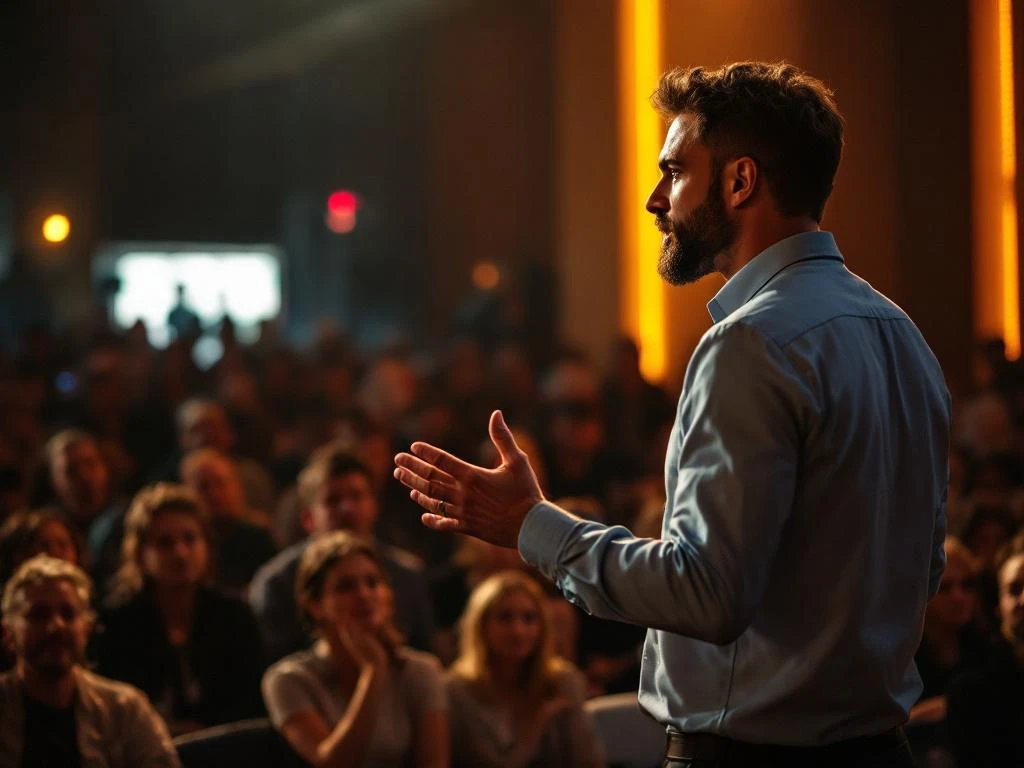
An event presenter engages audiences through authentic connection, dynamic body language, and interactive techniques that transform passive listeners into active participants. Professional presenters combine storytelling ability with real-time audience awareness, using both traditional methods and modern technological tools to maintain energy and attention throughout their presentations.
What makes an event presenter truly engaging?
Authenticity forms the foundation of audience engagement for any successful event presenter. Genuine presenters connect with their audience by being themselves rather than adopting a false persona. This authenticity allows them to build trust quickly and maintain credibility throughout their presentation.
Energy levels significantly impact how audiences perceive and respond to presentations. Engaging presenters match their energy to the room while maintaining enthusiasm that feels natural rather than forced. They understand that energy is contagious and use this principle to elevate the entire event atmosphere.
Storytelling ability distinguishes exceptional presenters from merely competent ones. Great event presenters weave narratives that make abstract concepts tangible and memorable. They use personal anecdotes, case studies, and relatable scenarios to illustrate key points and maintain audience interest.
Audience awareness enables presenters to read the room and adjust their approach accordingly. This skill involves recognizing when attention is waning, identifying confused expressions, and adapting content delivery to match audience needs and preferences in real time.
How does body language impact audience engagement during events?
Non-verbal communication accounts for the majority of how audiences perceive and connect with presenters. Effective body language creates an invisible bridge between the presenter and audience, fostering trust and maintaining attention throughout the event.
Eye contact establishes personal connections even in large venues. Professional presenters scan the entire audience regularly, making individuals feel acknowledged and included. This technique prevents the audience from feeling like passive observers and instead makes them feel part of a conversation.
Purposeful gestures enhance message delivery by providing visual emphasis to key points. Engaging presenters use hand movements that complement their words rather than distract from them. Open gestures, such as uncrossed arms and visible hands, signal approachability and confidence.
Strategic movement around the stage or presentation area prevents static delivery that can cause audience attention to drift. However, movement should be intentional rather than nervous pacing. Effective presenters move closer to the audience during important points and use different areas of the stage to signal topic transitions.
Posture communicates confidence and authority before the presenter even speaks. Upright, relaxed positioning suggests competence and preparedness, while slouching or rigid stances can undermine credibility and create barriers to audience connection.
What interactive techniques keep audiences actively involved?
Interactive elements transform presentations from monologues into engaging conversations that maintain audience attention and improve information retention. These techniques work by giving attendees active roles rather than passive listening positions.
Question-and-answer sessions create dialogue opportunities throughout presentations rather than relegating interaction to the end. Strategic Q&A breaks allow presenters to gauge understanding, clarify complex points, and address specific audience concerns in real time.
Live polling and surveys provide immediate feedback while giving audience members a voice in the presentation’s direction. Digital polling tools enable anonymous participation, encouraging honest responses and increasing engagement from typically quiet attendees.
Breakout activities divide large audiences into smaller groups for discussion or problem-solving exercises. These activities work particularly well for longer presentations, providing natural energy breaks while reinforcing key concepts through peer interaction.
Gamification elements, such as quizzes, challenges, or competitions, inject fun into serious topics while maintaining educational value. These techniques appeal to competitive instincts and create memorable moments that enhance information retention.
How do professional presenters handle difficult audiences?
Experienced presenters prepare strategies for managing challenging situations before they arise, maintaining composure and professionalism regardless of audience response or unexpected circumstances.
Disengaged participants require gentle re-engagement techniques rather than confrontational approaches. Professional presenters use direct questions, relevant examples, or interactive elements to draw distracted audience members back into the presentation without creating embarrassment or conflict.
Hostile questions demand calm, respectful responses that acknowledge concerns without becoming defensive. Skilled presenters listen fully, paraphrase the question to ensure understanding, and provide thoughtful answers while maintaining event flow and a positive atmosphere.
Technical difficulties test presenter adaptability and preparation. Professional event presenters always have backup plans, whether that means printed slides, alternative activities, or the ability to continue effectively without technology. They use humour appropriately to diffuse tension during technical problems.
Low-energy audiences require presenters to adjust their approach without losing enthusiasm. This might involve changing pace, incorporating more interaction, or acknowledging the energy level directly while finding ways to re-energise the room through movement or engaging activities.
What technology tools enhance presenter-audience connection?
Modern technology platforms facilitate real-time interaction and feedback collection that bridges physical and digital gaps between presenters and audiences. These tools work in both virtual and in-person settings to create more engaging experiences.
Interactive presentation software allows audiences to submit questions, participate in polls, and provide feedback through their mobile devices. These platforms create participation opportunities for attendees who might not speak up in traditional settings.
Live streaming and hybrid event platforms enable presenters to engage both in-person and remote audiences simultaneously. Professional presenters learn to address both groups naturally, ensuring remote participants feel included rather than like afterthoughts.
Social media integration encourages audience participation through event hashtags, live tweeting, and shared content creation. These tools extend engagement beyond the event itself while creating additional touchpoints for presenter-audience connection.
Audience response systems provide immediate feedback on presenter effectiveness and content clarity. This real-time data allows skilled presenters to adjust their approach during the event to better serve audience needs and maintain engagement levels.
How boom for business helps with professional event hosting
Professional event hosting requires the perfect balance of expertise, energy, and adaptability that comes from years of experience in live performance and corporate environments. We combine theatrical training with business acumen to deliver exceptional results.
Our event hosting services include:
- Dynamic conference moderation that maintains energy and flow
- Award-ceremony hosting with appropriate gravitas and celebration
- Panel facilitation that encourages meaningful dialogue
- Hybrid and digital event management with seamless technical integration
- Real-time audience engagement through improvisation skills
- Crisis management when unexpected situations arise
Drawing from over 30 years of experience in live entertainment and corporate events, our professional hosts understand how to read audiences, adapt content delivery, and inject appropriate business-friendly humour that enhances rather than detracts from your event objectives.
Ready to transform your next corporate event into an engaging, memorable experience? Contact us to discuss how our professional event hosting services can elevate your upcoming conference, award ceremony, or corporate gathering.
Frequently Asked Questions
How can I overcome nervousness before presenting at a major event?
Start by practicing your presentation multiple times until the content becomes second nature. Arrive early to familiarize yourself with the venue and test all equipment. Use breathing exercises and positive visualization techniques before going on stage. Remember that some nervousness is normal and can actually enhance your performance when channeled into positive energy.
What should I do if my interactive techniques aren't working with a particular audience?
Quickly pivot to alternative engagement methods rather than forcing techniques that aren't resonating. If polling isn't working, switch to direct questions or storytelling. Read the room's energy and adjust accordingly - some audiences prefer more formal interaction while others respond better to casual engagement. Always have 2-3 backup interaction strategies prepared.
How do I maintain audience engagement during long presentations (60+ minutes)?
Break longer presentations into 15-20 minute segments with natural transition points. Incorporate physical movement breaks, interactive polls, or brief discussion periods every 20 minutes to reset attention spans. Vary your delivery style throughout - alternate between storytelling, data presentation, and audience interaction to prevent monotony.
What's the best way to handle technical failures during a live presentation?
Always prepare a complete backup plan that doesn't rely on technology. Print key slides, prepare verbal transitions, and practice presenting without visual aids. When technology fails, acknowledge it briefly with appropriate humor, then seamlessly continue with your backup approach. Never spend more than 2-3 minutes trying to fix technical issues during your presentation.
How can I effectively engage both in-person and virtual audiences in hybrid events?
Address both audiences explicitly throughout your presentation by saying phrases like 'for those joining us virtually' and 'for our in-person attendees.' Use interactive tools that work for both groups, such as live polls accessible via mobile devices. Designate specific moments to check in with virtual participants and ensure they have opportunities to ask questions or participate in activities.
What are the most common presentation mistakes that kill audience engagement?
Reading directly from slides instead of using them as visual support, failing to make eye contact with the audience, speaking in a monotone voice, and ignoring audience body language cues. Other engagement killers include overloading slides with text, not having a clear structure, and failing to connect your content to the audience's specific needs or interests.
How do I adapt my presentation style for different types of corporate events?
Research your audience demographics, industry, and event context beforehand. Executive audiences typically prefer concise, data-driven presentations with minimal interaction, while training sessions benefit from high interactivity. Award ceremonies require celebratory energy and smooth transitions, while conferences need educational value with networking opportunities. Always match your energy level and formality to the event's purpose and audience expectations.
Related Articles
- What is the difference between leadership skills training and a leadership development program?
- What are team building activities for developing leadership skills?
- 9 employee engagement workshop formats that B2B companies actually invest in
- What techniques do event hosts use to maintain energy?
- What are outdoor adventure team building options in Amsterdam?