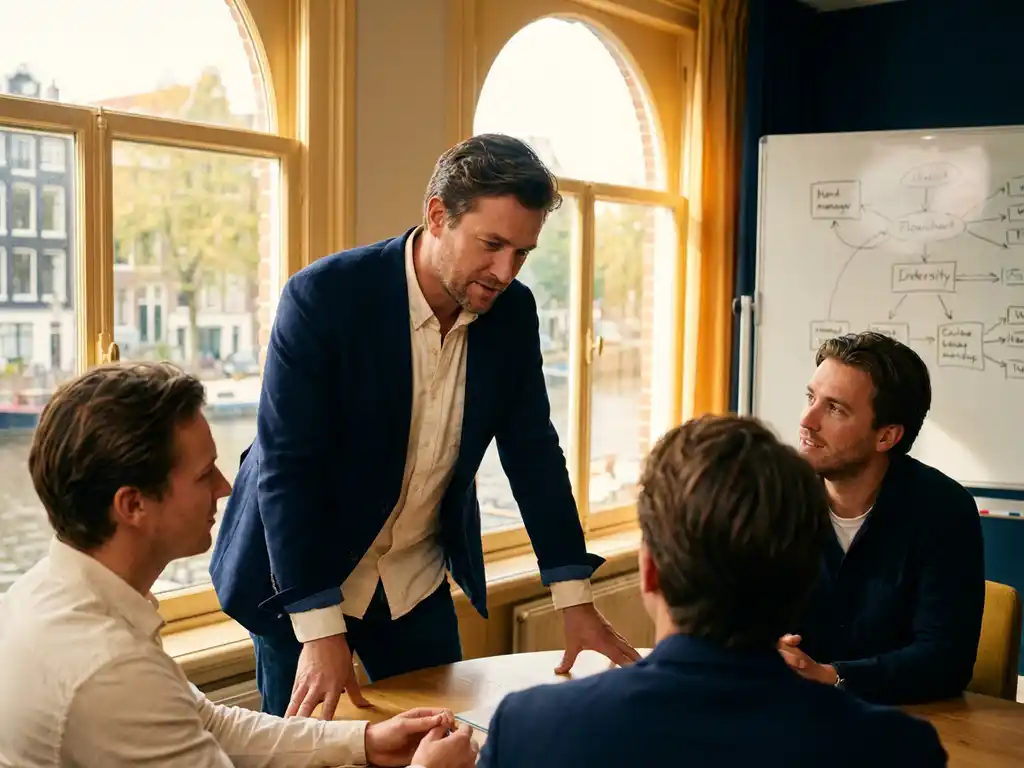
Middle managers sit at one of the most demanding intersections in any organization. They translate strategy from above into action below, manage team dynamics, and are often held accountable for outcomes they only partially control. Yet most leadership training programs treat them as either junior executives or senior team members, missing what they actually need: a genuine sense of ownership over their work, their team, and their results. That is where ownership mentality training comes in.
This article answers the most important questions about what ownership mentality training should cover for middle managers, how it differs from conventional leadership development, and how to know whether it is actually working. Whether you are designing a program from scratch or evaluating an existing one, these answers will help you build something that sticks.
What is ownership mentality, and why does it matter for middle managers?
Ownership mentality is the mindset of taking full responsibility for outcomes, not just tasks. A manager with an ownership mindset does not wait to be told what to do when something goes wrong. They proactively identify problems, make decisions within their authority, and treat their team’s success as a personal commitment rather than a job requirement.
For middle managers specifically, ownership mentality matters because they are the connective tissue of any organization. When middle managers operate with a reactive, task-completion mindset, communication breaks down, accountability becomes blurry, and teams disengage. When they operate with genuine ownership, they become multipliers of performance rather than bottlenecks. Research consistently shows that employee engagement is directly influenced by the behavior of direct managers, which means an ownership mindset at the middle-management level has an outsized ripple effect across the entire organization.
Ownership mentality is also what separates managers who survive from those who genuinely lead. It is the difference between someone who reports problems upward and someone who arrives with proposed solutions already in hand.
What core skills should ownership mentality training build in managers?
Effective ownership mentality training for middle managers should build five core skills: proactive decision-making, clear and accountable communication, constructive feedback habits, initiative under uncertainty, and the ability to align team goals with broader organizational direction.
Each of these skills reinforces the others. A manager who communicates clearly sets expectations that make accountability natural. A manager who gives and receives feedback well creates a team culture where problems surface early rather than escalating. Accountability training is most effective when it is not treated as a disciplinary tool but as a communication framework that helps everyone understand who owns what and why.
Skills that are often overlooked
Many ownership mentality programs focus heavily on accountability frameworks and goal-setting tools but overlook the interpersonal and communicative dimensions of ownership. The ability to tell a compelling story about why a project matters, to present a decision with confidence, and to inspire a team through a difficult period are all ownership behaviors. These softer skills are not optional extras. They are the delivery mechanism for everything else a manager knows.
Leadership development that ignores communication and presence is like training someone to write excellent speeches they will never be able to deliver effectively. The technical and the human need to develop together.
How does ownership mentality training differ from standard leadership training?
Standard leadership training typically focuses on frameworks, models, and hierarchical skills like delegation, performance reviews, and strategic planning. Ownership mentality training focuses on mindset and behavior, specifically on shifting how a manager relates to responsibility, outcomes, and initiative.
The practical difference shows up in how each type of training is designed. Leadership development programs often teach managers what good leadership looks like. Ownership mentality training puts managers in situations where they have to practice behaving like owners, making real-time decisions, recovering from mistakes, and communicating under pressure. The emphasis is experiential rather than instructional.
Another key distinction is the scope of accountability. Leadership training often focuses on managing others. Ownership mentality training also focuses on how managers manage themselves, including how they respond to ambiguity, how they handle failure, and how they communicate upward when they disagree with a decision. These are the behaviors that define whether someone truly owns their role or simply occupies it.
Why should ownership mentality training include improvisation and storytelling?
Improvisation and storytelling belong in ownership mentality training because ownership is fundamentally about how you respond in the moment and how you bring others along with you. Both skills are directly tied to the real-world demands of managing with accountability and initiative.
Improvisation teaches managers to work with what they have, make confident decisions without complete information, and stay present and responsive rather than rigid and reactive. These are precisely the conditions middle managers face every day. The core principle of improv—building on what your scene partner offers rather than blocking it—directly mirrors the collaborative ownership behaviors that make teams function well.
Storytelling matters because ownership without communication is invisible. A manager who takes full responsibility for a project but cannot articulate the vision, the stakes, or the progress to their team will struggle to bring others into that sense of ownership. Compelling narratives create alignment and motivation in ways that status updates and task lists simply cannot. When managers learn to frame their work as a story with meaning and direction, their teams naturally become more engaged and invested.
Together, improvisation and storytelling transform ownership from an abstract value into a practiced, observable set of behaviors.
When is the right time to run ownership mentality training for managers?
The right time to run ownership mentality training is during periods of transition, growth, or increased organizational complexity—ideally before those pressures peak rather than after they have already caused problems.
Specific moments that signal readiness include when managers are newly promoted and stepping into greater accountability, when an organization is undergoing structural or strategic change, when engagement scores or team performance data suggest a disconnect between management intent and team experience, or when a company is scaling and needs middle managers to operate more independently.
That said, ownership mentality training is not exclusively a crisis response. Organizations that invest in this kind of manager training as a regular part of their employee-ownership culture tend to build more resilient teams over time. Waiting for a visible problem to appear before investing in mindset development means the cost of the gap has already been paid.
How do you measure whether ownership mentality training actually worked?
You measure the effectiveness of ownership mentality training by tracking behavioral change, not just satisfaction scores. The right indicators include whether managers are making more proactive decisions, whether they are communicating more clearly with their teams, whether accountability conversations are happening more consistently, and whether team engagement has shifted.
Practical measurement approaches include:
- Pre- and post-training 360-degree feedback from direct reports and peers
- Tracking how often managers raise problems with proposed solutions rather than escalating without context
- Monitoring team-level engagement and retention data over a three- to six-month window after training
- Structured follow-up conversations between managers and their own leaders about behavioral commitments made during the training
- Observing whether the language and frameworks from the training appear in day-to-day communication
The most common mistake in evaluating accountability training is measuring how much participants enjoyed the experience rather than whether their behavior changed afterward. Both matter, but enjoyment without application is entertainment, not development. The strongest signal that ownership mentality training worked is when managers start doing things differently without being reminded.
How Boom For Business Supports Ownership Mentality Training for Middle Managers
At Boom For Business, we have spent over 30 years helping organizations build the skills that make ownership mentality real, not just aspirational. Our Masterclass Workshops are specifically designed to develop the communication, storytelling, and leadership behaviors that middle managers need to lead with genuine accountability and initiative.
What makes our approach different is the combination of professional development with proven methodologies from improvisation and comedy. Through our workshops, managers practice:
- Making confident decisions and communicating them clearly under pressure
- Crafting compelling narratives that align their teams around shared goals
- Building the interpersonal skills that make accountability feel collaborative rather than punitive
- Strengthening the communication habits that reduce silos and increase cross-team ownership
Our programs are fully customized to your organization’s specific challenges, whether you are navigating a period of change, scaling a team, or simply ready to invest in a stronger positive organizational culture. We also offer engaging team-building experiences that reinforce ownership behaviors in a group context, helping entire teams adopt a shared sense of responsibility.
If you are ready to develop middle managers who lead with ownership, initiative, and genuine impact, we would love to help. Visit Boom For Business to explore our programs and start a conversation about what the right approach looks like for your organization.
Frequently Asked Questions
How long does ownership mentality training typically take to show measurable results?
Most organizations begin to see early behavioral shifts within 30 to 60 days after training, but meaningful, sustained change typically becomes visible over a three- to six-month window. The timeline depends heavily on whether the training is reinforced by follow-up coaching, manager check-ins, and a workplace culture that rewards ownership behaviors. A one-time workshop can spark awareness, but lasting change requires ongoing practice and structural support from senior leadership.
Can ownership mentality training work for managers who are resistant to it or skeptical of soft-skills development?
Yes, and skeptical managers are often the ones who benefit most once they experience the practical, experiential nature of well-designed ownership training. The key is framing the training around real business problems and tangible outcomes rather than abstract values. When resistant managers see that the skills being practiced—decision-making under pressure, clear communication, proactive problem-solving—directly reduce the friction and frustration they already feel in their roles, skepticism tends to give way to genuine engagement.
Should ownership mentality training be delivered to managers individually or as a group?
Group delivery is generally more effective for ownership mentality training because a significant portion of ownership behaviors are relational and collaborative by nature. Practicing communication, accountability conversations, and decision-making alongside peers creates shared language and mutual accountability that carries back into the workplace. That said, individual coaching can be a valuable complement for managers who need more personalized attention on specific behavioral gaps identified before or after group sessions.
What role does senior leadership play in making ownership mentality training stick?
Senior leadership plays a critical role that is often underestimated. If executives and directors continue to reward task-completion behavior and penalize initiative or honest upward communication, middle managers will quickly revert to safer, reactive patterns regardless of what they learned in training. For ownership mentality to take root, senior leaders need to model the same behaviors they are asking managers to develop, create psychological safety for managers to raise problems with proposed solutions, and actively recognize ownership behaviors when they see them.
How do you tailor ownership mentality training for managers at different levels of experience?
The core principles of ownership mentality apply across experience levels, but the complexity of scenarios, the depth of self-reflection expected, and the emphasis on specific skills should be calibrated to the audience. Newer managers typically need more foundational work on proactive communication and accountability frameworks, while experienced managers often benefit more from advanced scenarios involving ambiguity, organizational politics, and leading through change. Pre-training assessments or manager surveys are a practical way to identify where each cohort needs the most development before designing the program.
What is the biggest mistake organizations make when designing ownership mentality training programs?
The most common mistake is treating ownership mentality as a one-day event rather than a developmental journey. A single workshop can introduce the mindset and build initial skills, but without follow-through—structured reflection, behavioral commitments, peer accountability, and reinforcement from direct supervisors—the impact fades quickly. Organizations that see lasting results treat ownership mentality training as a continuous investment, layering coaching, real-world application, and periodic skill-building sessions over time rather than checking a box and moving on.
How can a middle manager personally start building an ownership mindset before formal training is available?
The most effective starting point is to shift from reporting problems to presenting solutions. Whenever you bring an issue to a senior leader or peer, challenge yourself to arrive with at least one proposed path forward. From there, practice proactive communication by sharing project updates before you are asked, and begin framing your team's work in terms of outcomes and impact rather than tasks and activities. These small, consistent behavioral shifts build the ownership habit over time and signal to those around you that your relationship with responsibility is changing.