A great corporate event host can transform an ordinary company gathering into something people talk about for months. But even the most talented professional host needs the right information to deliver a truly tailored experience. The difference between a generic performance and one that genuinely resonates with your audience almost always comes down to preparation and briefing.
Whether you are planning a large-scale conference, a product launch, or an internal team event, understanding what your event host needs to know before stepping on stage is one of the most important steps in corporate event management. This guide answers the key questions every event organizer should ask.
What does a corporate event host actually do?
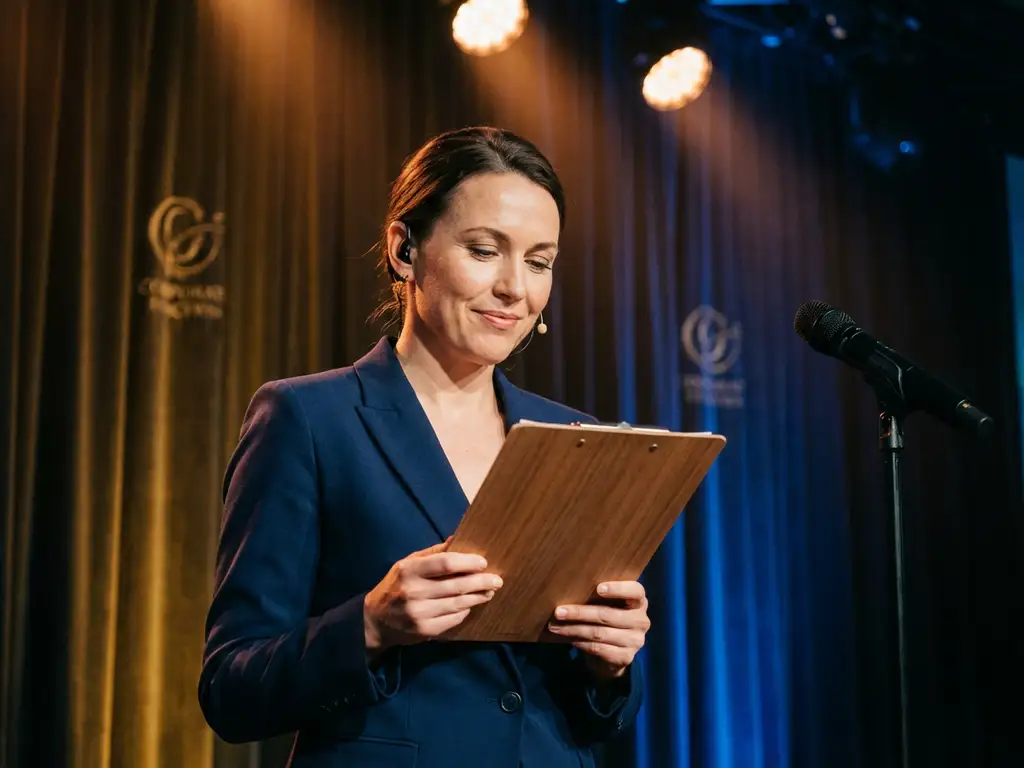
A corporate event host is the professional who guides an audience through an event, maintaining energy, managing transitions, and ensuring the program flows smoothly from start to finish. Beyond introducing speakers and filling gaps, a skilled host sets the tone, reads the room, and keeps participants engaged throughout the entire experience.
Think of the event host as the connective tissue of your event. They hold the different parts together, whether that means warming up a cold morning crowd, handling unexpected delays with humor, or steering a panel discussion toward meaningful conclusions. A professional event host is not simply a presenter reading from a script. They are an active participant in creating the atmosphere and emotional journey of the event.
In larger corporate settings, hosts also serve as a bridge between leadership and employees. They translate the formal agenda into something human and relatable, helping messages land with clarity and warmth rather than feeling like a broadcast from above.
Why does a corporate event host need to know your company?
A corporate event host needs to know your company because generic hosting produces generic results. When a host understands your culture, your people, and your goals, they can tailor every moment of the event to feel intentional and relevant rather than off-the-shelf. Company knowledge is what separates a polished performance from a truly memorable experience.
Audiences notice immediately when a host is working with real context. References to ongoing projects, internal values, or the specific challenges your team is navigating create moments of genuine connection. Employees feel seen rather than addressed as a faceless crowd. That recognition drives engagement in a way that no amount of stage presence alone can achieve.
There is also a practical dimension to this. A host who understands your industry can speak credibly alongside your subject matter experts, ask sharper questions during panels, and avoid inadvertently touching on sensitive topics. Company knowledge is not just a nice-to-have. It is the foundation of professional event hosting.
What company information should you share with your event host?
You should share the following key categories of information with your corporate event host before the event: the event’s purpose and goals, your company culture and tone, the audience profile, any sensitive topics or internal context to avoid, key names and titles, the program structure, and any relevant recent company developments.
Breaking this down further, here is what a thorough briefing typically includes:
- Event goals: Is this a celebration, a change announcement, a motivational kickoff, or a strategic alignment session? The purpose shapes everything.
- Audience profile: Who is attending? What are their roles, seniority levels, and nationalities? Are they likely to be enthusiastic or skeptical?
- Company culture and tone: Is your organization formal and hierarchical, or informal and collaborative? Does humor play a role in your culture, and if so, what kind?
- Key people: Names, titles, and pronunciations of speakers, executives, and anyone the host will reference during the event.
- Off-limits topics: Recent layoffs, ongoing restructuring, internal conflicts, or any subject that could create discomfort if raised publicly.
- Program flow: The full run of show, including timing, transitions, and any interactive elements.
- Recent company news: Launches, milestones, or changes that are relevant to the event narrative.
The more context you provide, the more the host can make the event feel custom-built for your specific organization rather than adapted from a standard template.
How far in advance should you brief your corporate event host?
You should brief your corporate event host at least two to three weeks before the event, with a final detailed briefing three to five days before. This timeline gives the host enough time to research, prepare tailored material, and ask follow-up questions before the event briefing window closes.
For larger or more complex events, such as multi-day conferences or events involving significant change announcements, earlier engagement is strongly advisable. Bringing a professional host into the planning process four to six weeks out allows them to contribute to the program design itself, not just execute it.
A common mistake in corporate event management is treating the host briefing as a last-minute checkbox. Sending a run of show the evening before the event leaves no room for the host to internalize the material, prepare relevant references, or raise concerns about any elements of the program. Preparation time is directly connected to performance quality.
What questions will a professional event host ask you?
A professional event host will ask questions that help them understand your goals, your audience, and the emotional tone you want to create. Expect questions about the purpose of the event, what success looks like, who will be in the room, what the audience already knows, and what you want people to feel when they leave.
Beyond these foundational questions, an experienced host will typically dig into the following areas:
- What is the one message you want every attendee to take away from this event?
- Are there any speakers or segments that need special attention or handling?
- What has worked well at previous company events, and what has fallen flat?
- Are there any inside references, running jokes, or cultural touchpoints that would resonate with this audience?
- What is the energy level you want to maintain throughout the day?
- Are there any logistical constraints that affect how the host can move and interact with the audience?
The quality of a host’s questions is itself a signal of their professionalism. A host who asks thoughtful, specific questions is already doing the work of understanding your event on a deeper level.
What happens when a host isn’t properly briefed before an event?
When a corporate event host is not properly briefed, the event risks feeling disconnected, generic, or even awkward. The host may mispronounce names, reference irrelevant topics, misjudge the audience’s mood, or fail to reinforce the key messages that the event was designed to communicate. The result is a missed opportunity at best and a damaging experience at worst.
Poor briefing creates a cascade of smaller problems throughout the event. Transitions feel clunky because the host does not fully understand the logic connecting each segment. Interactive moments fall flat because the host cannot connect them to the audience’s real context. Speakers feel unsupported because the introductions lack substance.
There is also a trust dimension. Employees and attendees are perceptive. When a host clearly does not know who they are speaking to, it signals that the event was not thoughtfully prepared. That impression reflects not just on the host but on the organization that planned the event. Investing time in a proper briefing is one of the simplest and most effective ways to protect the quality of your event.
How Boom For Business Helps You Host Unforgettable Corporate Events
We understand that a well-briefed, professionally prepared host is the difference between an event people endure and one they genuinely remember. At Boom For Business, we bring over 30 years of experience in performance, communication, and corporate event management to every event we host. Our approach is built entirely around understanding your company before we ever step on stage.
Here is what working with us looks like in practice:
- Deep-dive briefing process: We ask the right questions early and thoroughly, ensuring we understand your goals, your audience, and the tone you want to set.
- Custom-tailored hosting: Every reference, transition, and moment of humor is designed around your specific company culture and event objectives.
- Business-friendly humor: We use improvisation and comedy expertise to create energy and engagement without ever losing sight of your professional goals.
- Interactive formats: From panel facilitation to team-building activities and masterclass workshops, we offer formats that go beyond traditional hosting to create genuine participation.
- Experienced facilitators: Our hosts understand corporate environments, navigate sensitive dynamics with skill, and keep your event on track no matter what happens.
Whether you are organizing a company-wide conference, a leadership offsite, or a team-building event, we bring the preparation, professionalism, and energy your event deserves. If you want an event experience that truly resonates with your people, get in touch with Boom For Business and let us show you what a properly prepared professional host can do for your organization.
Frequently Asked Questions
How do I find the right corporate event host for my specific type of event?
Start by looking for hosts who have direct experience in your industry or with events of a similar format and scale — a product launch requires a very different energy than an internal leadership summit. Ask for showreels, client references, and examples of past corporate work rather than relying on general performance credentials alone. A discovery call is also a great opportunity to assess how well the host listens and asks questions, since that instinct is exactly what they will bring to your event briefing and stage work.
What if our event involves sensitive news, like a restructuring or leadership change — can a host still add value?
Absolutely, and in fact a skilled host becomes even more valuable in high-stakes situations like these. A professional corporate host can help manage the emotional tone of the room, create space for difficult messages to land with clarity, and prevent the event from feeling cold or purely transactional. The key is full transparency during the briefing — the host needs to know exactly what is being communicated and why, so they can support the message rather than accidentally undercut it.
How much creative input should we give our host, and how much should we control?
A good rule of thumb is to brief your host thoroughly on goals, tone, and boundaries, then give them the creative freedom to work within that framework. Over-scripting a professional host often produces a stiffer, less natural result — their ability to read the room and respond in the moment is precisely what you are hiring. Share your must-haves and your no-go zones clearly, then trust the professional to make the right calls on stage.
Should the event host attend the rehearsal or site visit before the event?
Yes, whenever possible, a site visit or run-through is strongly recommended and many professional hosts will request one as standard practice. Walking the stage, testing microphones, understanding the room layout, and meeting key speakers in person all directly improve performance on the day. Even a one-hour walkthrough can prevent logistical surprises that would otherwise disrupt the flow of the event.
What is the difference between a corporate event host and a facilitator, and do we need both?
A host primarily guides the overall flow of the event — managing energy, introducing segments, and keeping the audience engaged across the full program. A facilitator focuses on structured participation, such as leading workshops, driving group discussions, or extracting meaningful outcomes from a session. Many experienced corporate event professionals, like those at Boom For Business, can perform both roles, which can simplify coordination and create a more cohesive experience throughout the day.
Can a corporate event host help if something goes wrong on the day, like a speaker cancellation or technical failure?
This is one of the most underrated values of hiring a seasoned professional host. An experienced corporate host is trained to handle the unexpected — filling time gracefully, pivoting the program without alerting the audience to backstage chaos, and keeping energy and confidence in the room while issues are resolved. This is why experience matters so much: a host who has worked across many live corporate events will have encountered disruptions before and knows exactly how to navigate them without derailing the event.
How do we measure whether our corporate event host actually delivered value?
Post-event feedback surveys are the most direct tool — include specific questions about the hosting, the energy of the event, and whether the program felt well-paced and engaging. Beyond surveys, watch for qualitative signals: Did attendees stay engaged throughout? Did key messages land clearly? Were transitions smooth? If people are still talking about specific moments the host created days after the event, that is one of the strongest indicators that the hosting genuinely elevated the experience.
Related Articles
- What are team building activities for improving collaboration?
- What are the benefits of hiring Amsterdam-based event hosts?
- 11 signs your team needs an ownership mentality training program
- How do team building activities support organizational health?
- How do team building activities improve interdepartmental communication?