Planning a corporate event comes with a long list of decisions, and one of the most overlooked is choosing the right person to lead the room. Should you bring in a moderator or a facilitator? The two roles sound similar and are often used interchangeably, but they serve very different purposes. Getting this distinction right can be the difference between an event that runs smoothly and one that genuinely moves people.
Whether you are organizing a leadership summit, a panel discussion, a strategy day, or a team workshop, understanding event moderation and event facilitation will help you make a smarter choice and get far better results from your event investment.
What is event moderation and what does a moderator do?
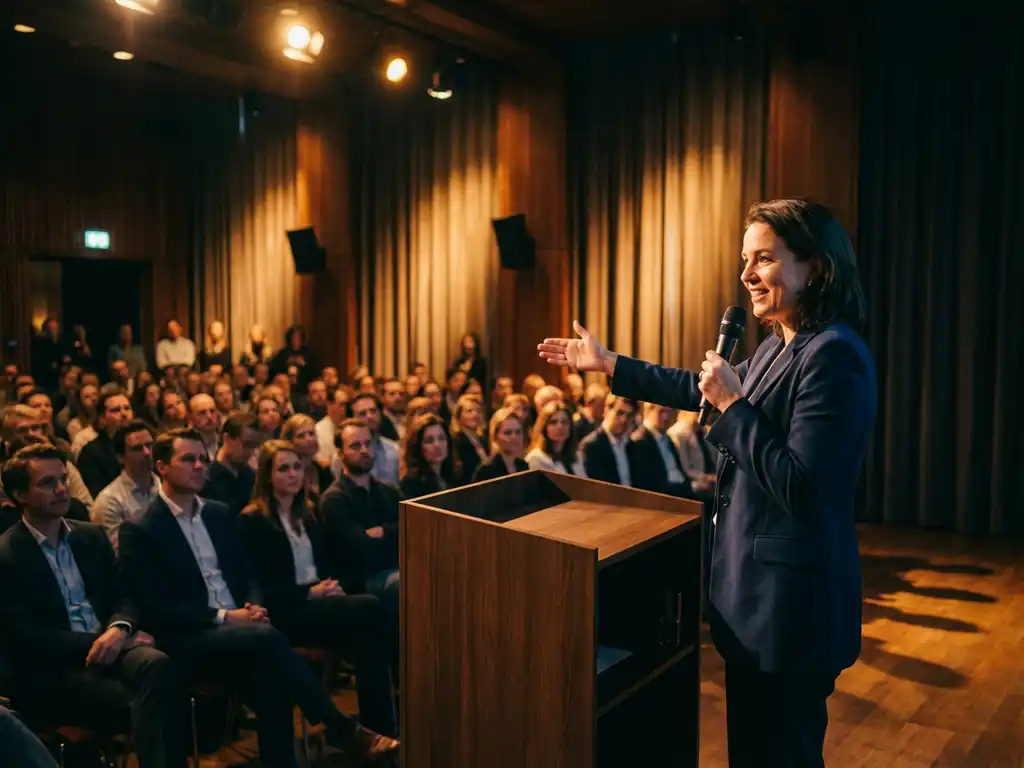
Event moderation is the practice of managing the flow, tone, and structure of a live event. An event moderator acts as the anchor of the program, keeping discussions on track, introducing speakers, managing time, and ensuring the audience stays engaged. The moderator serves the agenda and the audience, not the other way around.
A skilled event moderator does much more than read from a script. They read the room, adapt to unexpected moments, and create a sense of confidence and energy that puts both speakers and attendees at ease. In panel discussions, they ask sharp follow-up questions that draw out genuine insights. In conferences or town halls, they bridge the gap between presenters and the audience, making the event feel like a conversation rather than a broadcast.
Good moderation is particularly valuable when the program is content-heavy or speaker-driven. The moderator ensures that no single voice dominates, that transitions feel seamless, and that the audience leaves feeling informed and respected. Think of the moderator as the conductor of the event orchestra: they do not play every instrument, but without them, the whole thing falls apart.
What is event facilitation and how is it different from hosting?
Event facilitation is the process of guiding a group through a structured experience designed to produce a specific outcome, such as a decision, a shared understanding, or a strengthened team dynamic. A facilitator is not there to present content or manage a schedule. Their job is to create the conditions in which participants can think, collaborate, and contribute effectively.
Where a host or moderator focuses on the event itself, a facilitator focuses on the people in the room. Facilitation is deeply interactive. The facilitator designs and leads activities, asks provocative questions, manages group energy, and helps teams navigate disagreement or complexity. The outcome of a well-facilitated session is not just information delivered; it is something collectively built by the participants.
Facilitation is commonly used in workshops, strategy sessions, innovation sprints, and team-building programs. The facilitator brings structure and method without imposing conclusions. Their skill lies in drawing out the wisdom already present in the group, making every voice feel heard and every contribution feel valuable.
What is the key difference between event moderation and facilitation?
The key difference between event moderation and facilitation is directional focus. A moderator manages the flow of content and keeps an event on track for an audience. A facilitator guides a group through a process to reach a shared outcome. Moderation serves the program; facilitation serves the participants.
Put simply, a moderator ensures the event runs well. A facilitator ensures the people in the room do something meaningful together. Both roles require strong communication skills, the ability to read a room, and confidence under pressure. But their core purpose is different:
- Moderator: Keeps the structure, manages speakers, maintains energy, serves the agenda
- Facilitator: Unlocks group thinking, drives participation, serves the outcome
Another way to think about it is this: if you removed the moderator from a conference, the event would feel chaotic. If you removed the facilitator from a workshop, the group would likely spin in circles or default to the loudest voice in the room. Both are essential, just in very different contexts.
When should you choose a moderator over a facilitator?
Choose a moderator when your event is structured around content delivery, speakers, or presentations, and your primary goal is to keep the audience engaged and informed. A moderator is the right choice for panel discussions, town halls, conferences, award ceremonies, and hybrid events where managing flow and energy is the central challenge.
Specifically, a moderator adds the most value when:
- You have multiple speakers or presenters who need to be introduced and managed
- Time management is critical and the program has a tight schedule
- The audience is large and interaction needs to be carefully curated
- You want a professional presence that elevates the credibility of the event
- The tone of the event needs to be warm, energetic, or entertaining as well as informative
A great moderator does not just fill the gaps between speakers. They add a layer of coherence and personality that transforms a collection of presentations into a unified event experience.
When does an event need a facilitator instead of a moderator?
An event needs a facilitator when the goal is not just to inform but to generate something from the group, whether that is a decision, a strategy, a shared commitment, or a stronger team connection. Facilitation is the right approach for workshops, team-building sessions, strategy days, retrospectives, and change management programs where active participation is essential.
Consider bringing in a facilitator when:
- You need the group to solve a problem or make a collective decision
- Team dynamics are strained and you need a neutral guide to create psychological safety
- You are introducing organizational change and need buy-in, not just awareness
- The session involves sensitive topics that require careful, skilled navigation
- You want participants to leave with new skills, insights, or commitments they have co-created
The facilitator’s neutrality is one of their greatest assets. Because they do not advocate for a particular outcome, participants feel freer to contribute honestly. This is especially important in corporate environments where hierarchy can otherwise silence important voices.
Can one person handle both moderation and facilitation?
Yes, one person can handle both moderation and facilitation, but only if they have genuine expertise in both disciplines and the event is designed thoughtfully to accommodate both roles. In practice, many corporate events blend moderated segments with facilitated breakouts, and a skilled professional can move between the two modes fluidly.
However, blending the roles works best when:
- The event is not too large or complex for one person to manage alone
- The program is designed with clear transitions between moderated and facilitated segments
- The professional leading the event has a strong background in both group dynamics and event management
For larger or more complex events, it is often smarter to separate the roles. A moderator can anchor the main stage while a facilitator leads breakout sessions. This division of labor ensures both the program and the people in the room get the dedicated attention they deserve.
How Boom For Business Can Help With Event Moderation and Facilitation
At Boom For Business, we bring over 30 years of experience in professional event hosting, moderation, and facilitation to corporate events across the Netherlands and beyond. Whether you need a sharp, energetic moderator to anchor your next conference or a skilled facilitator to guide your team through a meaningful workshop, we have the expertise to make it happen with humor, warmth, and genuine impact.
Here is what we offer:
- Professional event moderation for panels, town halls, hybrid events, and conferences, led by hosts who know how to keep energy high and content sharp
- Expert facilitation for team-building sessions, strategy workshops, and change management programs that generate real outcomes
- Masterclass Workshops that combine structured learning with improvisation and storytelling techniques, helping teams build communication and collaboration skills in an engaging, memorable way
- Customized programs tailored to your organization’s specific goals, culture, and challenges
We understand that no two events are the same, which is why we work closely with you to design an experience that fits your audience and delivers results. If you are ready to take your next corporate event from ordinary to unforgettable, explore what Boom For Business can do for you. You can also discover our Masterclass Workshops, browse our team-building programs, or learn how we help organizations build a positive culture through creative, human-centered experiences.
Frequently Asked Questions
How do I know if my event needs both a moderator and a facilitator?
If your event includes both a main-stage program (keynotes, panels, presentations) and interactive group sessions (workshops, breakouts, strategy discussions), you likely need both roles. A good starting point is to map out your agenda and ask: which segments are about delivering content to an audience, and which are about generating something from the group? The former calls for moderation, the latter for facilitation. When in doubt, consult with a professional event partner who can help you audit your program and recommend the right combination.
What should I look for when hiring a professional event moderator?
Beyond a confident on-stage presence, look for someone who does their homework — a great moderator will invest time upfront to understand your industry, your speakers, and your audience before stepping on stage. Ask to see examples of their previous moderation work, particularly in formats similar to yours (panel discussions, hybrid events, town halls, etc.). Also pay attention to their ability to ask sharp, spontaneous follow-up questions rather than just reading from a prepared list, as this is often what separates a good moderator from a truly exceptional one.
What happens if a facilitated session goes off track or the group gets stuck?
This is precisely where an experienced facilitator earns their fee. A skilled facilitator anticipates moments of stagnation, conflict, or tangential discussion and has a toolkit of techniques — reframing questions, breaking into smaller groups, using structured activities, or calling a deliberate pause — to get the group moving productively again. The key is hiring someone with genuine group dynamics expertise, not just a confident presenter. If a session goes sideways under a skilled facilitator, it becomes a learning moment; under an unprepared one, it can derail the entire day.
How far in advance should I book a moderator or facilitator for a corporate event?
For most corporate events, booking 6 to 12 weeks in advance is a reasonable minimum, though high-demand professionals can be booked out much further, especially around busy conference seasons. More importantly, earlier booking gives you time for proper briefing and preparation, which directly impacts the quality of the output. A moderator who has had two weeks to research your speakers and agenda will always outperform one who was briefed the day before.
Can event moderation and facilitation work effectively in hybrid or virtual formats?
Absolutely, but both roles require specific adaptations for hybrid and virtual settings. A hybrid moderator, for example, must actively bridge the in-room and online audiences, ensuring remote participants feel equally included rather than like passive observers. A virtual facilitator needs to be fluent in digital collaboration tools (such as Miro, Mentimeter, or Slido) and must design activities that work equally well on screen as they do in person. When evaluating candidates, always ask specifically about their hybrid and virtual experience, as it is a distinct skill set from in-person delivery.
Is it worth investing in a professional moderator or facilitator for a smaller internal event?
Yes, often more so than for large external events. Internal events — team days, strategy sessions, all-hands meetings — carry a high emotional stakes because they directly shape company culture, team trust, and organizational alignment. A poorly run internal workshop can reinforce silos or leave employees feeling unheard, while a well-facilitated one can unlock genuine breakthroughs. Even for a team of 15 people, bringing in a skilled external professional removes the burden from internal leaders (who often struggle to participate and manage simultaneously) and signals to the team that their time and input are genuinely valued.
What is the biggest mistake companies make when planning events that involve group discussion?
The most common mistake is designing a packed agenda with no real space for meaningful interaction, then expecting a moderator or facilitator to magically generate engagement anyway. Authentic participation cannot be rushed or squeezed into a 10-minute slot at the end of a three-hour presentation block. The most effective events are designed from the outcome backward — starting with what you want participants to think, feel, or decide by the end, and then building the program around creating those conditions. Involving your moderator or facilitator in the design phase, not just the delivery, makes an enormous difference to the final result.
Related Articles
- 7 low-budget team building activities that deliver high-impact results
- What does a professional event host do during conferences?
- How do you incorporate humor effectively in corporate team building?
- How do team building activities improve workplace communication?
- What should a B2B teambuilding workshop include to deliver measurable results?