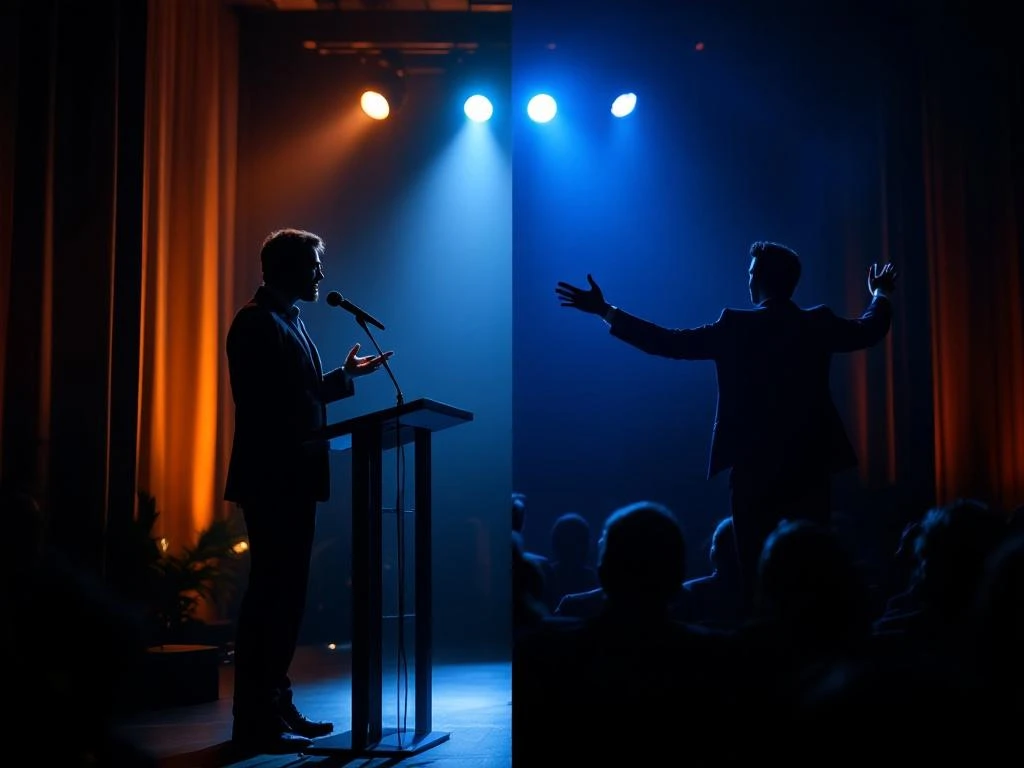
An event host manages the flow and engagement of an event, keeping audiences connected and ensuring smooth transitions between segments. An event speaker delivers specific content, expertise, or inspiration to educate and motivate attendees. While hosts facilitate the overall experience, speakers provide the core educational or motivational content that drives event value.
What exactly is an event host and what do they do?
An event host serves as the master of ceremonies who guides audiences through the entire event experience. Professional event hosts manage program flow, facilitate transitions between speakers or activities, and maintain audience engagement throughout the gathering.
Event hosts handle multiple responsibilities that keep corporate events running smoothly. They introduce speakers and presenters, manage timing to keep programs on schedule, and adapt to unexpected changes or technical issues. A skilled corporate event host reads audience energy and adjusts their approach accordingly, whether that means energizing a tired afternoon crowd or calming pre-presentation nerves.
The role extends beyond simple announcements. Business event facilitators create atmosphere through their personality and presentation style, help attendees feel welcomed and included, and serve as the consistent thread connecting different event elements. They often handle audience questions, facilitate networking opportunities, and ensure key messages resonate with participants.
Unlike other event roles, hosts remain present throughout the entire program. While speakers focus on their specific presentation slots, a professional event host maintains responsibility for the overall attendee experience from opening remarks through closing statements.
What is an event speaker and how do they contribute to events?
An event speaker delivers focused content designed to educate, inspire, or inform audiences about specific topics. Event speakers are subject matter experts who share knowledge, insights, or experiences that align with the event’s educational or motivational objectives.
Different types of speakers serve various functions at business events. Keynote speakers typically open or close events with inspirational or thought-provoking presentations that set the tone or leave lasting impressions. Breakout session speakers dive deeper into specialized topics for smaller audience segments. Panel speakers participate in discussions that explore multiple perspectives on relevant industry issues.
Event speakers focus primarily on content delivery rather than event logistics. They prepare presentations, research their topics thoroughly, and tailor their messages to audience needs and interests. The best speakers engage audiences through storytelling, interactive elements, and practical takeaways that attendees can implement in their professional lives.
Speakers contribute value through their expertise and unique perspectives. They provide the educational foundation that justifies attendee investment in corporate events, whether that’s learning new skills, gaining industry insights, or finding inspiration for professional growth.
What’s the main difference between an event host and an event speaker?
Event hosts focus on facilitation and flow management, while event speakers concentrate on content delivery and expertise sharing. This fundamental distinction shapes how each role approaches audience interaction, timing, and preparation.
Hosts maintain responsibility for the entire event timeline, ensuring smooth transitions and managing unexpected situations that arise during corporate events. They adapt their energy and approach based on audience response and program needs. Speakers, conversely, prepare specific presentations within allocated time slots and focus on delivering their expertise effectively.
The interaction styles differ significantly between roles. Professional event hosts engage audiences conversationally, facilitating connections and maintaining energy throughout extended programs. Event speakers typically use more structured presentation formats, though the best speakers incorporate interactive elements to enhance engagement.
Preparation approaches also vary considerably. Hosts prepare by understanding the full event agenda, learning about attendees and speakers, and developing contingency plans for various scenarios. Speakers prepare by researching their topics, crafting compelling presentations, and anticipating audience questions related to their expertise.
These roles complement each other perfectly. A skilled event MC creates the ideal environment for speakers to deliver their messages effectively, while compelling speakers provide the substantive content that justifies the host’s facilitation efforts.
When should you hire an event host versus an event speaker?
Hire an event host when your priority is audience engagement, program flow, and overall experience management. Corporate events with multiple segments, complex agendas, or large audiences benefit significantly from professional hosting services.
Event hosting becomes essential for conferences, award ceremonies, panel discussions, and hybrid events where seamless transitions and audience connection are crucial. If your event includes multiple speakers, networking sessions, or interactive elements, a business event facilitator ensures everything flows smoothly while maintaining participant interest.
Choose event speakers when your primary goal is knowledge transfer, skill development, or inspiration. If attendees need specific expertise, industry insights, or motivational content, speakers provide the educational value that justifies their event investment.
Budget considerations also influence these decisions. Event speakers often command higher fees due to their specialized expertise, while professional event hosts typically offer more predictable pricing structures. However, the investment in either role should align with your event’s primary objectives and expected outcomes.
Consider your audience size and event complexity when making this decision. Larger corporate events with diverse agendas almost always benefit from professional hosting, while smaller, focused gatherings might achieve their goals through expert speakers alone.
Can one person be both an event host and speaker at the same event?
Yes, experienced professionals can successfully combine hosting and speaking roles, though this approach requires careful balance and exceptional multitasking abilities. The hybrid role works best when the person has expertise relevant to the event topic and strong facilitation skills.
This combination offers several advantages for business event organization. It creates consistency in voice and energy throughout the program, potentially reduces costs compared to hiring separate professionals, and allows for seamless integration between content delivery and program management.
However, significant challenges exist when combining these responsibilities. The person must maintain hosting duties while preparing for their speaking segments, which can create stress and potentially compromise either role’s effectiveness. Time management becomes crucial, as does the ability to shift smoothly between facilitation and expert modes.
The approach works best for smaller corporate events, industry conferences where the host has relevant expertise, or situations where budget constraints make separate hires impractical. Virtual event hosts often successfully combine roles since technical demands are typically lower than at in-person events.
Success requires exceptional preparation, clear role boundaries, and realistic expectations about what one person can accomplish effectively. The individual must excel at both content delivery and audience facilitation, which represents a unique and valuable skill set.
How boom for business helps with professional event hosting
We deliver exceptional event hosting services that transform corporate gatherings into memorable, engaging experiences. Our professional hosts combine seamless program management with dynamic energy and business-friendly humor that keeps audiences engaged throughout your event.
Our comprehensive event hosting services include:
- Conference and panel facilitation with expert audience engagement techniques
- Award ceremony hosting that celebrates achievements with appropriate energy and professionalism
- Hybrid and virtual event moderation that bridges in-person and digital audiences effectively
- Interactive program management that adapts to audience response and maintains optimal energy levels
- Professional MC services for large corporate gatherings and international events
Drawing from over 30 years of experience as Amsterdam’s premier corporate event management company, our hosts bring unique backgrounds in improvisation and storytelling. This expertise allows them to read audiences expertly, adapt in real time to changing dynamics, and inject appropriate humor that enhances rather than detracts from your business objectives.
Ready to elevate your next corporate event with professional hosting that combines expertise, energy, and engagement? Contact us to discuss how our experienced event hosts can create an unforgettable experience that resonates with your audience and achieves your business goals.
Frequently Asked Questions
How far in advance should I book a professional event host?
Book your event host at least 6-8 weeks in advance for optimal results. This timeline allows the host to thoroughly prepare by understanding your agenda, researching attendees and speakers, and developing contingency plans. For large corporate events or during peak conference seasons, consider booking 3-4 months ahead to secure the best talent.
What information should I provide to my event host before the event?
Share your complete event agenda, speaker bios and presentation topics, attendee demographics and expectations, key messages you want emphasized, and any sensitive topics to avoid. Also provide technical details about the venue, AV setup, and timing requirements. The more context your host has, the better they can tailor their approach to your specific audience and objectives.
How do I choose between hiring a local event host versus someone from outside my area?
Local hosts often understand cultural nuances and may have lower travel costs, but don't limit yourself geographically if budget allows. Focus on finding a host whose experience, style, and expertise align with your event goals. For international or multicultural audiences, consider hosts with diverse backgrounds who can connect with various demographic groups effectively.
What happens if technical issues arise during the event?
Professional event hosts are trained to handle technical difficulties smoothly while maintaining audience engagement. They typically have contingency plans, can improvise content to fill time during fixes, and work closely with technical teams to resolve issues quickly. A skilled host will keep the audience informed and entertained, turning potential disruptions into opportunities for connection.
Should I have my event host participate in rehearsals with speakers?
Yes, brief rehearsals or coordination calls between your host and key speakers are highly valuable. This allows them to practice transitions, clarify timing, discuss any special requirements, and ensure smooth handoffs. Even 15-30 minutes of coordination can significantly improve the flow and professionalism of your event.
How can I measure the success of my event host's performance?
Evaluate success through audience feedback surveys asking about engagement levels, event flow, and overall experience. Monitor social media mentions and networking activity during breaks, as engaged audiences are more active. Also assess whether the event stayed on schedule, how well transitions flowed, and whether the host successfully reinforced your key messages throughout the program.
What's the difference in cost between hiring an event host and an event speaker?
Event hosts typically charge daily or hourly rates ranging from moderate to premium depending on experience level, while speakers often command higher fees based on their expertise and reputation. However, hosts provide value throughout the entire event duration, while speakers contribute during specific time slots. Consider the total value each brings to your specific event objectives when comparing costs.