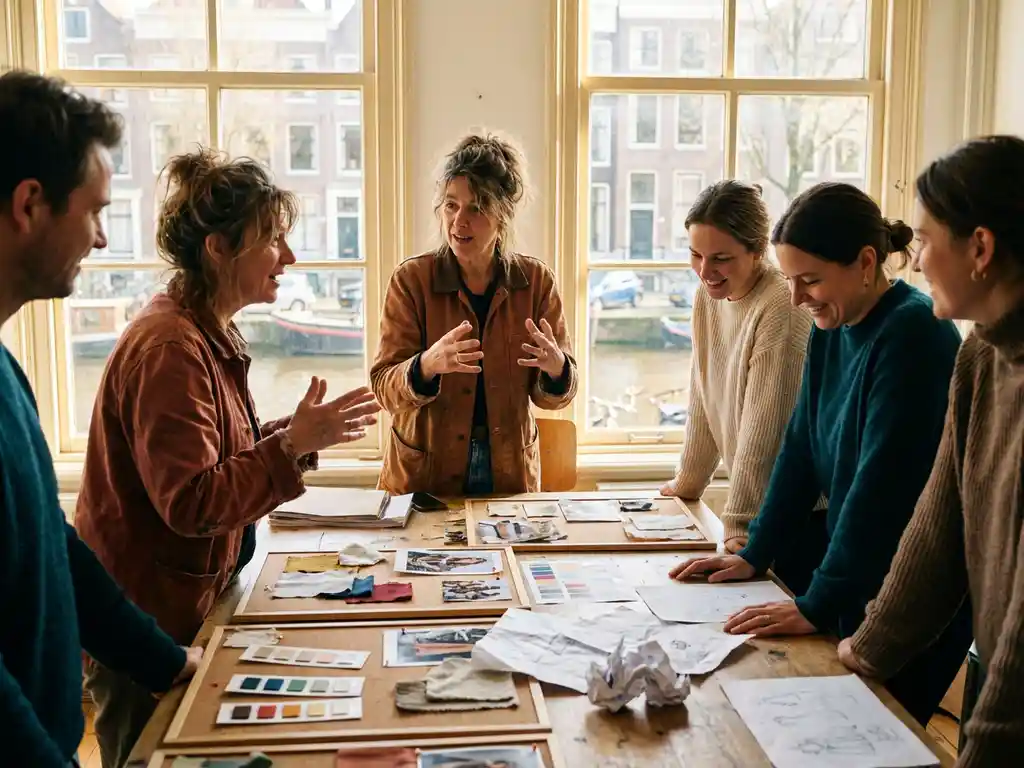
A company rebrand is one of the most significant moments in an organization’s life. New name, new logo, new direction—but none of it lands without the right story behind it. Employees, clients, and stakeholders all need to understand not just what changed, but why it matters and where it’s taking them. That’s where a storytelling workshop becomes one of the most powerful tools in your rebrand communication strategy.
Building a storytelling workshop specifically for companies going through a rebrand requires a different approach than standard communication training. It needs to connect emotional truth with strategic messaging, and it needs to work for real people navigating real uncertainty. This guide walks you through everything you need to design a workshop that actually delivers.
What is a storytelling workshop in a corporate rebrand context?
A storytelling workshop in a corporate rebrand context is a structured learning experience that helps employees and leaders craft, align, and communicate the narrative behind a brand transformation. Rather than simply explaining what changed, it teaches participants how to tell the story of why the rebrand happened, what it means for the future, and how each person fits into that new chapter.
Unlike general communication training, a rebrand storytelling workshop is deeply tied to a specific organizational moment. It works with the tension, excitement, and sometimes confusion that come with change. Participants learn to translate brand strategy into human language—language that resonates with colleagues, clients, and communities rather than sounding like a press release.
At its core, this kind of workshop treats storytelling not as a marketing skill but as a change-management tool. When people can articulate the rebrand story with confidence and authenticity, they become ambassadors rather than bystanders.
Why does storytelling matter during a company rebrand?
Storytelling matters during a company rebrand because people don’t connect with logos or taglines—they connect with meaning. A rebrand without a clear, compelling narrative leaves employees confused, customers skeptical, and leadership messages falling flat. Corporate storytelling bridges the gap between strategic intent and human understanding, making change feel purposeful rather than disruptive.
When a rebrand is communicated through facts and announcements alone, it tends to generate resistance. People naturally ask, “What does this mean for me?” and if the answer comes in corporate jargon, trust erodes quickly. A well-told story answers that question emotionally and logically at the same time.
Internal communication is especially vulnerable during rebrands. Research consistently shows that employees are far less satisfied with internal communications than leaders assume, and periods of change amplify that gap. A storytelling approach gives employees a framework to understand and internalize the rebrand rather than simply receiving it as top-down information. That shift from passive receiver to active storyteller is what drives genuine buy-in.
What should a storytelling workshop for a rebranding company include?
A storytelling workshop for a rebranding company should include four core elements: narrative framework building, message-alignment exercises, personal story development, and practice with real-world delivery scenarios. These components work together to move participants from understanding the rebrand intellectually to being able to communicate it convincingly and consistently.
Narrative framework building
This is the foundation. Participants need to understand the rebrand story at a structural level—what was the old chapter, what triggered the change, and what does the new direction represent? A strong narrative framework gives everyone a shared spine to build their own version of the story on.
Message-alignment exercises
Different roles in an organization need to tell the rebrand story differently. A sales team member, an HR manager, and a senior leader all have different audiences and contexts. Alignment exercises help participants identify the consistent core message while adapting tone and detail to their specific situations.
Personal story development
The most powerful rebrand communication happens when individuals connect the organizational story to their own experience. Workshops should create space for participants to find their personal angle—what the rebrand means to them specifically—because authentic storytelling is always grounded in personal truth.
Live practice and feedback
Storytelling is a skill, and skills require practice. Participants should have the opportunity to tell their version of the rebrand story out loud, receive constructive feedback, and refine their delivery in a safe environment before taking it into the real world.
How do you structure the storytelling workshop sessions?
Structure a rebrand storytelling workshop in three progressive phases: discovery, development, and delivery. Each phase builds on the last, moving participants from understanding the rebrand narrative to owning and communicating it with confidence. Sessions typically work best when spread across two to four hours, or split into shorter modules for larger organizations.
- Phase 1 — Discovery: Unpack the rebrand story together. What is the origin, the challenge, the turning point, and the vision? Use open questions and group discussion to surface the emotional and strategic truth behind the change.
- Phase 2 — Development: Build individual and team narratives using storytelling frameworks. Participants draft their own version of the rebrand story, tailored to their role and audience.
- Phase 3 — Delivery: Practice telling the story in pairs, small groups, or in front of the room. Use improvisation-based exercises to build confidence, handle unexpected questions, and respond naturally rather than robotically.
Between each phase, build in reflection moments. Rebrand storytelling is emotionally loaded work, and giving participants space to process what they are creating makes the output more genuine and more durable.
Who should participate in a rebrand storytelling workshop?
A rebrand storytelling workshop should include a cross-functional mix of participants rather than only leadership or communications teams. Ideally, it brings together senior leaders, middle managers, and frontline employees—because the rebrand story needs to travel through every layer of the organization to take hold.
Leaders set the tone and carry the strategic narrative, but middle managers are often the most critical group. They are the ones translating the rebrand story daily to their teams, fielding questions, and managing uncertainty. Without equipping them with strong storytelling tools, even the best rebrand strategy gets diluted as it moves through the organization.
Including frontline employees also matters. When people who are not in leadership roles can articulate the rebrand story authentically, it signals genuine organizational alignment rather than top-down messaging. It also surfaces valuable perspective on how the story is actually landing versus how leadership thinks it is landing.
What mistakes should you avoid when designing a rebrand storytelling workshop?
The most common mistakes when designing a rebrand storytelling workshop are treating it as a one-time event, focusing only on external messaging, and underestimating the emotional dimension of organizational change. Each of these errors can undermine even a well-intentioned workshop and leave participants less equipped than when they started.
- Treating it as a one-off session: Storytelling skills and rebrand narratives both need reinforcement. A single workshop without follow-up practice or integration into ongoing communication rituals rarely produces lasting change.
- Focusing only on the external story: Many organizations design rebrand communication with clients and market positioning in mind, forgetting that employees need their own version of the story first. Internal alignment always comes before external credibility.
- Ignoring emotional resistance: Rebrands can trigger real anxiety about identity, job security, and belonging. A workshop that skips the emotional layer and jumps straight to messaging techniques will feel hollow. Create space for honest conversation before building new narratives.
- Over-scripting participants: Giving people a script to memorize produces robotic communication. The goal is to give participants frameworks and confidence, not lines to recite.
- Skipping practice time: Knowing the story and being able to tell it well are two different things. Workshops that end after the content phase without live practice leave participants underprepared for real conversations.
How Boom For Business Helps with Rebrand Storytelling
We understand that a rebrand is not just a visual refresh—it is a human story that needs to be told with clarity, confidence, and genuine connection. Our Masterclass Workshops are built on over 30 years of storytelling and improvisation expertise, designed specifically to help organizations navigate moments of change with impact.
Here’s what we bring to a rebrand storytelling workshop:
- Customized narrative frameworks tailored to your specific rebrand story and organizational culture
- Improvisation-based exercises that build real confidence in live storytelling situations
- Cross-functional facilitation that works for leadership teams, middle managers, and frontline employees alike
- A business-friendly, humor-infused approach that makes learning stick without feeling like a lecture
- Practical tools participants can use immediately in meetings, presentations, and day-to-day conversations
Whether you are rolling out a full organizational rebrand or navigating a strategic transformation, our workshops help your people move from uncertainty to advocacy. We also offer team-building experiences and positive culture programs that complement storytelling work and reinforce the new narrative across your organization. Ready to build a rebrand story that actually lands? Get in touch with us, and let us help you turn your rebrand into a story worth telling.
Frequently Asked Questions
How long does a rebrand storytelling workshop typically take to show results?
Most organizations begin to see measurable shifts in how employees communicate the rebrand within two to four weeks of the workshop, provided there is follow-up reinforcement built into team meetings and communication rituals. Immediate results—like increased confidence in answering client questions or more consistent internal messaging—often appear within days of the session. For deeper cultural alignment, plan for a three-to-six-month horizon and integrate storytelling practice into regular touchpoints rather than treating the workshop as a standalone event.
What if employees are resistant to the rebrand itself—can a storytelling workshop still work?
Yes, and in fact a well-designed workshop is one of the best tools for working through that resistance rather than around it. Resistance usually stems from unanswered questions about identity, job security, or a sense of loss for what the old brand represented—and storytelling creates a structured, safe space to surface and address those concerns honestly. When employees feel heard rather than managed, they are far more likely to move from skepticism to genuine advocacy. Skipping this step and jumping straight to messaging rarely produces authentic buy-in.
How do you ensure message consistency across different departments without making everyone sound scripted?
The key is to align participants around a shared narrative spine—the core 'why' and 'where we're going' of the rebrand—while giving each person the freedom to express it in their own voice and through their own experience. Think of it as a jazz ensemble: everyone is playing the same song, but each instrument has room to interpret it. Message-alignment exercises during the workshop help teams identify which elements are non-negotiable and consistent, and which elements can flex depending on audience and context.
Can a storytelling workshop be run virtually, or does it need to be in person?
A rebrand storytelling workshop can absolutely be run virtually and still deliver strong results, as long as the format is adapted thoughtfully. Live practice, breakout room exercises, and real-time feedback all translate well to platforms like Zoom or Teams when facilitated with intention. That said, in-person sessions tend to generate deeper emotional connection and more spontaneous conversation, which is particularly valuable given the emotionally charged nature of rebrands—so if bringing groups together is feasible, it is worth prioritizing, at least for the initial session.
How do you tailor the workshop for a global organization where employees speak different languages or come from different cultures?
Cultural and linguistic diversity actually enriches rebrand storytelling when handled well, because it forces facilitators and participants to find the universal human elements of the narrative rather than relying on corporate language that may not translate. Practically, this means running localized sessions in regional languages with facilitators who understand the cultural context, while keeping the core narrative framework consistent across all versions. It also means testing the rebrand story with diverse audiences early in the workshop design process to identify where meaning gets lost in translation—literally or figuratively.
What materials or preparation should participants complete before attending the workshop?
Participants benefit most from arriving with a basic understanding of the rebrand rationale, so sharing a concise brief—covering the 'what,' 'why,' and 'where we're heading'—ahead of time is strongly recommended. Asking participants to reflect on one or two personal moments that connect to the company's journey can also prime them for the personal story development phase and shorten the time needed to get into meaningful work. Avoid sending lengthy decks or overly polished messaging documents, as these can inadvertently push participants toward reciting information rather than developing their own authentic narrative.
How do you measure the success of a rebrand storytelling workshop?
Success can be measured across three levels: participant confidence (measured through pre- and post-workshop self-assessment surveys), message consistency (assessed by listening to how employees actually talk about the rebrand in meetings, client calls, and town halls over the following weeks), and organizational outcomes (such as improved employee engagement scores, reduced rebrand-related confusion flagged in feedback channels, or stronger client retention during the transition period). The most telling indicator is often qualitative—when leaders start hearing the rebrand story told back to them by frontline employees in their own words, that is a strong signal the workshop has done its job.
Related Articles
- 11 public speaking workshop activities that reduce stage fright permanently
- How do you introduce entrepreneurial thinking to a risk-averse corporate culture?
- How do you justify the cost of team building activities to a skeptical CFO?
- 7 collaborative team workshop formats that break down departmental silos
- What does a professional team building facilitator do?