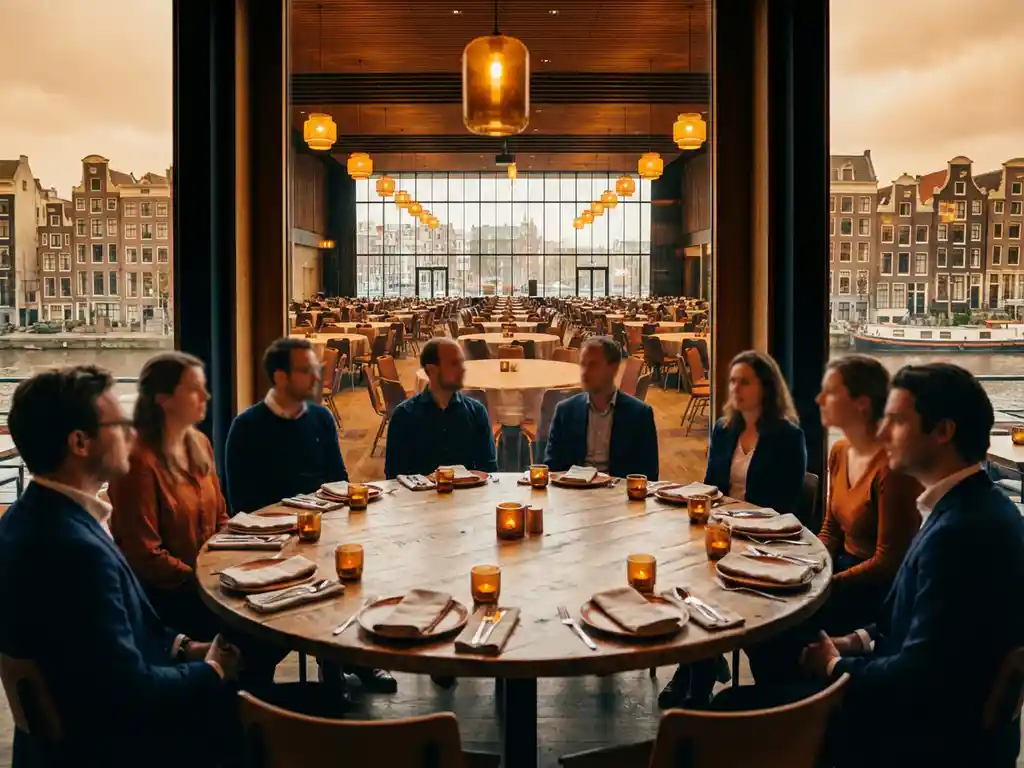
Planning a team-building event sounds straightforward until you realize that what energizes a tight-knit group of ten can completely fall flat with a crowd of two hundred. Team size is one of the most important variables in designing team-building activities that actually work, and getting it wrong means a wasted budget, disengaged participants, and missed opportunities to strengthen your organization. Whether you are organizing an intimate workshop or a large-scale corporate event, understanding how group dynamics shift with scale will help you make smarter choices from the start.
This guide walks through the key questions that event organizers, HR professionals, and team leaders ask when planning team-building activities for different group sizes—from small teams to large groups and everything in between.
Why does team size matter for team-building activities?
Team size directly affects communication dynamics, participation levels, and the types of activities that create genuine connection. In smaller groups, every individual has a voice, and interactions feel personal. In larger groups, the sheer number of people changes how engagement works, requiring more structure, facilitation, and deliberate design to ensure no one gets lost in the crowd.
When you choose team-building activities without considering group size, you risk creating an experience that feels either too intimate and exposing for a large crowd or too impersonal and chaotic for a small team. A trivia game that sparks lively debate among eight colleagues becomes unmanageable noise with 150 people unless it is structured specifically for that scale. Conversely, a deeply reflective storytelling exercise designed for large audiences can feel overly formal and stiff when only ten people are in the room. Matching the format to the group size is not just a logistical consideration; it is the foundation of effective team building.
What team-building activities work best for small teams of 10?
For small teams of around ten people, the best team-building activities are interactive, conversation-driven, and allow every participant to contribute meaningfully. Options like improv workshops, collaborative problem-solving challenges, storytelling exercises, and creative brainstorming sessions work particularly well because they rely on genuine interaction between participants rather than spectacle or scale.
Small-group settings create psychological safety more naturally. When people know they will be seen and heard, they tend to open up, take creative risks, and engage more honestly. This makes small teams ideal for activities that build deeper trust and communication skills, such as improvisation-based exercises in which participants practice active listening and spontaneous collaboration. The intimacy of a small group also makes it easier for facilitators to tailor the experience in real time, responding to the energy and needs of the room.
For corporate team building with small groups, the focus should be on the quality of interaction over the quantity of activities. One well-designed, facilitated session in which every person participates actively will deliver far more lasting impact than a packed agenda of surface-level games.
What team-building activities work best for large groups of 200?
For large groups of around 200 people, the best team-building activities combine high energy, clear structure, and opportunities for small-group interaction within the larger event. Think large-scale improv performances, hosted game shows, creative challenges run in parallel teams, and interactive experiences that blend entertainment with participation.
The key challenge with large-group team building is preventing passivity. With 200 people in a room, it is easy for individuals to become spectators rather than participants. The most effective formats for large groups use a combination of whole-group moments, such as a shared performance or collective challenge, alongside smaller breakout activities in which individuals actually engage with one another. This hybrid approach maintains the energy and spectacle of a big event while ensuring people form real connections rather than just sitting in the same room together.
Large-group events also benefit from strong professional hosting. A skilled host or facilitator can read a big room, keep energy high, manage transitions smoothly, and make even the person in the back row feel included. For corporate team building at this scale, production quality and facilitation expertise matter enormously.
How does participant engagement differ between small and large team events?
Participant engagement in small-team events tends to be deeper and more personal, while engagement in large-group events needs to be deliberately engineered through structure and variety. In a small group, engagement happens naturally through conversation and shared tasks. In a large group, engagement requires intentional design to prevent passive attendance.
In small teams, the social pressure to participate is naturally higher because everyone is visible. This can be both an advantage and a challenge. It encourages contribution but can also create anxiety for less confident team members. Good facilitation in small groups focuses on creating a safe, inclusive environment where everyone feels comfortable joining in.
In large groups, the opposite dynamic often takes over. Individuals can easily become anonymous, which reduces their sense of personal responsibility to engage. Effective large-group team building counters this by breaking people into smaller units, using technology-assisted interaction, or creating competitive elements that motivate participation. The goal is to make each individual feel that their involvement matters, even within a much larger collective experience.
Should large groups be split into smaller teams during activities?
Yes, splitting large groups into smaller teams during activities is one of the most effective strategies in corporate team building for large groups. Breaking a group of 200 into teams of 8 to 12 people creates the conditions for genuine interaction, shared problem-solving, and real relationship-building that simply cannot happen at full scale.
The structure of how you split groups also matters. Mixing people from different departments or seniority levels during breakout activities is a powerful way to break down silos and build cross-functional connections. When colleagues who rarely interact are placed on a team together and given a shared challenge, they discover common ground and build rapport that carries back into the workplace long after the event ends.
A well-designed large-group event typically moves between whole-group moments and smaller team activities, creating rhythm and variety. The whole-group segments build shared energy and a sense of collective identity, while the smaller team segments create the personal connections that make team building genuinely meaningful. Skipping the breakout element in a large-group event is one of the most common mistakes organizations make when planning corporate events.
How do you choose the right team-building format for your group size?
Choosing the right team-building format starts with three questions: How many people are attending? What outcome do you want to achieve? And how much time and space do you have available? From there, you can match the format to the constraints and goals of your specific event.
Here is a practical framework to guide your decision:
- Groups of 5 to 15: Prioritize interactive, skills-based workshops and facilitated group exercises. Focus on depth of connection and skill development.
- Groups of 15 to 50: A blend of facilitated activities and light competitive elements works well. You have enough people to create energy without losing personal interaction.
- Groups of 50 to 100: Structure becomes more important. Use a mix of whole-group facilitation and smaller breakout activities to maintain engagement.
- Groups of 100 to 200 and beyond: Invest in professional hosting and a hybrid format that combines large-group entertainment with smaller team challenges. Production quality and facilitation expertise are critical at this scale.
Beyond group size, consider your objectives. If you want to improve communication skills, an improv-based workshop delivers practical tools participants can use immediately. If you want to celebrate a milestone and build collective energy, a hosted large-group event with competitive team challenges works better. Aligning the format with the purpose of the event is just as important as matching it to the number of participants.
How Boom For Business helps you get team building right at any group size
We understand that no two groups are the same, and that is exactly why we design every experience around your team’s specific size, goals, and culture. At Boom For Business, we draw on more than 30 years of expertise from Boom Chicago to create team-building activities and masterclass workshops that work whether you have a team of 10 or a crowd of 200.
Here is what we bring to every event:
- Tailored formats for small teams: Our Masterclass Workshops use improvisation, storytelling, and communication exercises to create deep, meaningful engagement in intimate group settings.
- High-energy experiences for large groups: Our team building programs are designed to keep large groups engaged through professional hosting, structured breakout activities, and formats that combine entertainment with genuine connection.
- Expert facilitation at every scale: Our experienced facilitators know how to read a room, whether it holds 10 or 200 people, and adapt in real time to keep energy high and participation meaningful.
- Custom programs built around your goals: Whether you want to strengthen communication, break down silos, or build a positive team culture, we design the experience to deliver lasting results.
If you are ready to plan a team-building event that actually works for your group size and your goals, we would love to help. Get in touch with Boom For Business to explore what we can create together.
Frequently Asked Questions
What is the ideal team size for a breakout group within a large corporate event?
The sweet spot for breakout groups within large events is typically 8 to 12 people. This range is large enough to generate diverse perspectives and energy, but small enough for every participant to contribute and feel personally involved. Groups smaller than 6 can feel too exposed for some participants, while groups larger than 15 start to lose the intimacy that makes breakout activities effective.
How far in advance should I start planning a team-building event for a large group?
For groups of 100 or more, start planning at least 8 to 12 weeks in advance. Large-group events require venue coordination, professional facilitation booking, logistics planning, and activity customization that simply cannot be rushed without compromising quality. For smaller groups of 10 to 50, a 4 to 6 week lead time is generally sufficient, though earlier is always better if you want a fully tailored experience.
What are the most common mistakes organizations make when planning team-building activities?
The most common mistake is choosing an activity based on what sounds fun rather than what fits the group size, goals, and culture. Other frequent missteps include skipping breakout activities at large events (leaving people as passive spectators), overpacking the agenda with too many activities at the expense of depth, and underestimating the importance of professional facilitation. A single well-designed, expertly facilitated experience almost always delivers more value than a full day of loosely connected games.
How do I get buy-in from employees who are skeptical or resistant to team-building activities?
The key is choosing activities that feel genuinely useful rather than forced or gimmicky. When employees can see a clear connection between the activity and real workplace skills—like communication, collaboration, or creative problem-solving—resistance tends to drop significantly. Being transparent about the purpose of the event, keeping participation pressure appropriate for the group size, and delivering a high-quality, professionally facilitated experience all help convert skeptics into engaged participants.
Can team-building activities be effective for hybrid or partially remote teams?
Yes, but they require more intentional design than fully in-person events. If part of your team is joining remotely, the activity format needs to account for the different engagement dynamics of on-screen participation versus being in the room. The most effective hybrid team-building approaches use structured small-group interactions, clear facilitation, and formats that give remote participants an equal role rather than treating them as an afterthought. Whenever possible, consolidating the team for an in-person event delivers deeper connection and more lasting results.
How do I measure whether a team-building event was actually successful?
Success looks different depending on your goals, so define your desired outcomes before the event, not after. If your goal was to improve cross-departmental relationships, track whether new connections formed during breakout activities translate into increased collaboration in the weeks that follow. If the goal was communication skill-building, gather participant feedback on whether they are applying new tools in their day-to-day work. Short post-event surveys, follow-up check-ins, and manager observations are all practical ways to assess real impact beyond just enjoyment scores.
Is it worth hiring a professional facilitator, or can we run team-building activities ourselves?
For small, informal team activities among close colleagues, self-facilitation can work well. However, for anything involving 30 or more people, a significant organizational goal, or a group with mixed comfort levels, professional facilitation is a worthwhile investment. An experienced facilitator brings the skills to read the room, manage group dynamics, adapt in real time, and ensure everyone feels included—outcomes that are very difficult to achieve without dedicated expertise, especially at scale.
Related Articles
- What are team building formats for hybrid work environments?
- What are outdoor adventure team building options in Amsterdam?
- What should an inspirational workshop for teams actually make people feel?
- What are team building formats for time-pressed organizations?
- How do team building activities address employee disengagement?