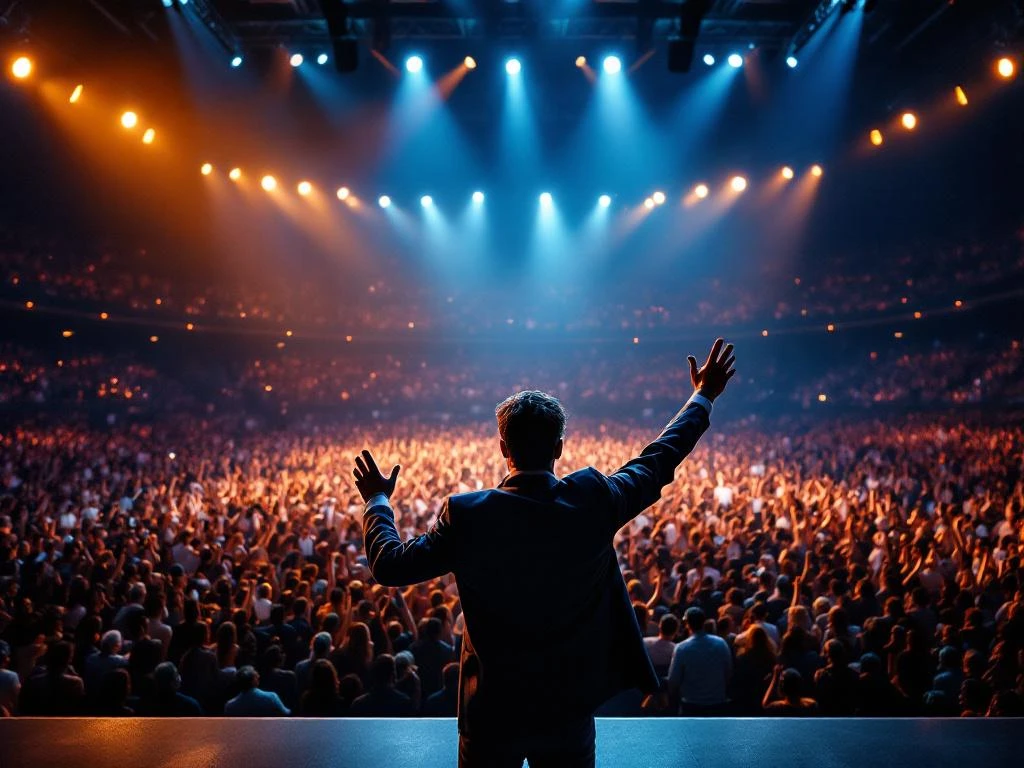
Maintaining engagement in large venues requires strategic adaptation of presentation techniques, technology integration, and interactive elements. Professional hosts face unique challenges when addressing hundreds or thousands of attendees, from acoustics and visibility issues to psychological barriers that emerge in expansive spaces. Successful large-venue hosting combines amplified presentation styles, audience participation strategies, and digital tools to create connection across vast distances and ensure every attendee remains engaged throughout the event.
What are the biggest challenges hosts face in large venues?
Large-venue hosting presents significant obstacles, including poor acoustics, limited visibility, audience distance, technical difficulties, and energy dissipation across expansive spaces. These challenges fundamentally alter the dynamics between corporate event hosts and their audiences, requiring completely different approaches from those used in intimate settings.
Acoustics represent the primary challenge in large venues. Sound can echo, create dead zones, or become muffled depending on venue design and materials. Even with professional microphone systems, hosts must project their voices differently and speak more slowly to ensure clarity reaches the back rows.
Visibility issues compound the problem. Attendees seated far from the stage struggle to see facial expressions, gestures, and visual materials that create connection in smaller settings. This physical distance creates psychological distance, making audiences feel disconnected from the presentation.
Technical difficulties multiply in large venues. Complex lighting, sound systems, projection equipment, and staging create more potential failure points. Backup plans become essential when addressing hundreds of attendees who cannot easily relocate or restart.
Energy management becomes exponentially more difficult as venue size increases. The enthusiasm that works in a conference room can feel lost in a convention centre, requiring hosts to amplify their presence while maintaining authenticity.
How do professional hosts adapt their presentation style for large audiences?
Professional hosts modify their presentation through amplified voice projection, exaggerated body language, scaled gestures, strategic movement, and enhanced visual elements. These adaptations ensure their presence reaches every corner of large venues while maintaining the personal connection that drives engagement.
Voice projection techniques extend beyond simply speaking louder. Experienced event presenters slow their speaking pace, enunciate more clearly, and use strategic pauses to allow sound to travel and settle. They project from their diaphragm rather than their throat, preventing voice fatigue during extended presentations.
Body language amplification becomes crucial in large venues. Gestures that feel natural in meeting rooms appear tiny from stadium seating. Professional hosts scale their movements appropriately, using broader arm movements and more pronounced facial expressions to communicate effectively across distances.
Movement strategies help maintain audience attention across large spaces. Rather than remaining stationary behind a podium, skilled hosts move purposefully across the stage, directing attention to different venue sections and creating visual variety that prevents audience drift.
Visual presentation adjustments include larger fonts, higher-contrast colours, and simplified graphics that remain clear on massive screens. Professional hosts also position themselves strategically relative to visual aids, ensuring they complement rather than compete with projected content.
What techniques keep large audiences engaged throughout long events?
Effective large-audience engagement relies on interactive elements, strategic audience participation, energy management, optimal break timing, varied content pacing, and digital engagement tools. These techniques prevent attention drift and maintain involvement throughout extended programmes in expansive venues.
Interactive elements become more important as audience size increases. Professional event hosts incorporate polls, Q&A sessions, and group activities that give attendees active roles rather than leaving them in passive observation. These interactions break up presentation monotony and re-engage wandering attention.
Audience participation methods must be adapted for large groups. Simple techniques like applause, hand-raising, or turn-and-discuss moments with neighbours work effectively. More complex participation requires careful orchestration and clear instructions that reach every attendee.
Energy management involves reading the room’s collective mood and adjusting presentation intensity accordingly. Skilled hosts recognise when energy drops and implement energising activities, humour, or movement to revitalise audience attention.
Break timing becomes critical in large venues where attendees cannot easily step out individually. Strategic breaks every 45–60 minutes prevent fatigue and provide necessary mental resets. Professional hosts build these breaks into their content flow rather than treating them as interruptions.
Content pacing varies throughout long events, alternating between high-energy segments and reflective moments. This rhythm prevents audience overwhelm while maintaining engagement across different learning styles and attention spans.
Why does audience interaction become more difficult in large venues?
Large venues create psychological barriers, physical limitations, technology challenges, and communication obstacles that inhibit natural audience interaction. Attendees feel anonymous in crowds, struggle with sight lines and acoustics, and face technical hurdles that do not exist in smaller settings.
Psychological barriers emerge when individuals feel lost in large crowds. People become less likely to ask questions, participate in discussions, or engage actively when they feel their contributions might not be seen or heard. This anonymity effect reduces the personal connection that drives interaction.
Physical limitations include poor sight lines, acoustic dead zones, and sheer distance from the stage. Attendees in back rows or side sections may struggle to see the host clearly or hear questions from other audience members, making participation feel pointless or embarrassing.
Technology challenges multiply with venue size. Passing microphones for questions takes longer, wireless systems may have interference issues, and technical delays can kill interaction momentum. These obstacles discourage spontaneous participation that energises smaller events.
Communication obstacles include the time lag between question and response, difficulty identifying questioners in large crowds, and the intimidation factor of speaking to hundreds of people. Professional event moderation techniques help overcome these barriers through structured interaction methods.
How do you use technology to enhance engagement in large venues?
Technology enhances large-venue engagement through professional microphone systems, audience response tools, live polling platforms, social media integration, advanced projection techniques, and digital interaction methods. These tools bridge the physical gap between hosts and audiences while creating new participation opportunities.
Professional microphone systems include wireless lapel mics for hosts, handheld mics for audience questions, and strategically placed microphones throughout the venue. Quality audio systems with proper equalisation ensure every word reaches every attendee clearly.
Audience response tools like clickers or smartphone apps enable real-time polling and feedback collection. These systems provide instant engagement opportunities and give hosts immediate audience insights to adjust their presentations accordingly.
Live polling platforms create interactive moments that work regardless of venue size. Attendees can participate simultaneously without physical microphones or movement, making large-group interaction seamless and inclusive.
Social media integration allows extended engagement before, during, and after events. Hashtags, live tweets, and social walls displayed on screens create a sense of community and enable participation from attendees who might not speak publicly.
Advanced projection techniques include multiple screens positioned throughout venues, ensuring visual content reaches every seating area. Some venues use LED walls or curved screens that wrap around audiences for immersive experiences.
Digital interaction methods encompass everything from virtual reality demonstrations to augmented reality experiences that create memorable moments regardless of physical proximity to the stage.
How Boom For Business helps with large-venue hosting
We address large-venue hosting challenges through our professional event hosting services, combining over 30 years of experience with proven engagement strategies that work in venues of any size. Our experienced presenters understand the unique dynamics of large-audience management and employ interactive techniques that maintain connection across vast spaces.
Our comprehensive large-venue hosting solutions include:
- Professional event presenters with extensive large-venue experience and comedy-theatre backgrounds
- Proven audience engagement techniques adapted specifically for expansive spaces
- Interactive elements and participation strategies that work with hundreds or thousands of attendees
- Energy management expertise that maintains enthusiasm throughout extended programmes
- Technical coordination support for complex venue requirements
- Customised presentation styles tailored to your specific venue and audience size
Ready to ensure your large-venue event captivates every attendee? Contact us today to discuss how our professional hosting services can transform your next large-scale corporate event into an engaging, memorable experience that resonates with audiences regardless of venue size.
Frequently Asked Questions
What's the ideal microphone setup for a venue with 500+ attendees?
For venues with 500+ attendees, use a combination of wireless lapel microphones for hosts, at least 2-3 handheld wireless mics for audience questions, and strategically placed boundary microphones throughout the venue. Ensure your audio system includes proper equalisation and delay towers for venues longer than 100 feet to prevent echo issues.
How do you handle technical failures during a large-venue presentation?
Always have backup systems ready: spare microphones, alternative projection methods, and printed materials for key points. Designate a technical coordinator to monitor equipment throughout the event. Most importantly, prepare seamless transition phrases and alternative content delivery methods so you can continue engaging the audience while technical issues are resolved behind the scenes.
What's the biggest mistake first-time large-venue hosts make?
The most common mistake is trying to use the same intimate presentation style that works in small meetings. New large-venue hosts often speak too quietly, use gestures that are too small, and fail to project energy across the entire space. They also underestimate the need for strategic breaks and audience interaction to maintain engagement over longer periods.
How can you tell if audience engagement is dropping in a large venue?
Watch for visual cues like increased phone usage, side conversations, people leaving for breaks, and reduced response to interactive elements. Listen for changes in applause volume and participation levels. In large venues, these signs appear in waves across different sections, so scan the entire audience regularly rather than focusing only on the front rows.
What audience participation techniques work best for groups over 1,000 people?
Use simultaneous participation methods like applause variations, hand raising, turn-and-talk with neighbours, and digital polling through smartphone apps. Avoid techniques requiring individual responses or movement, as these create bottlenecks. Group the audience into sections for competitive activities, and use clear visual and audio cues that everyone can follow regardless of their seating location.
How do you maintain your energy and voice during 6+ hour large-venue events?
Use proper breathing techniques and project from your diaphragm, not your throat. Stay hydrated with room-temperature water and avoid dairy or caffeine before presenting. Plan strategic energy peaks and valleys in your content, use audience interaction to give your voice breaks, and consider co-hosting arrangements for extremely long events. Practice vocal warm-ups and have throat lozenges on standby.
Should you modify your content for different sections of a large venue?
While your core content remains the same, adjust your delivery for different venue areas. Direct specific comments to side sections and back rows to include them. Use section-specific examples or references during interactive moments. Move strategically across the stage to 'visit' different areas, and ensure visual materials are optimised for the furthest viewing distance while remaining engaging for closer attendees.
Related Articles
- 9 ways to think like an entrepreneur at work without leaving your job
- 11 elevator pitch training exercises that build real confidence fast
- 7 ways event moderation improves how your company is perceived by attendees
- Are professional event hosting services worth the investment?
- What are the differences between indoor and outdoor team building?