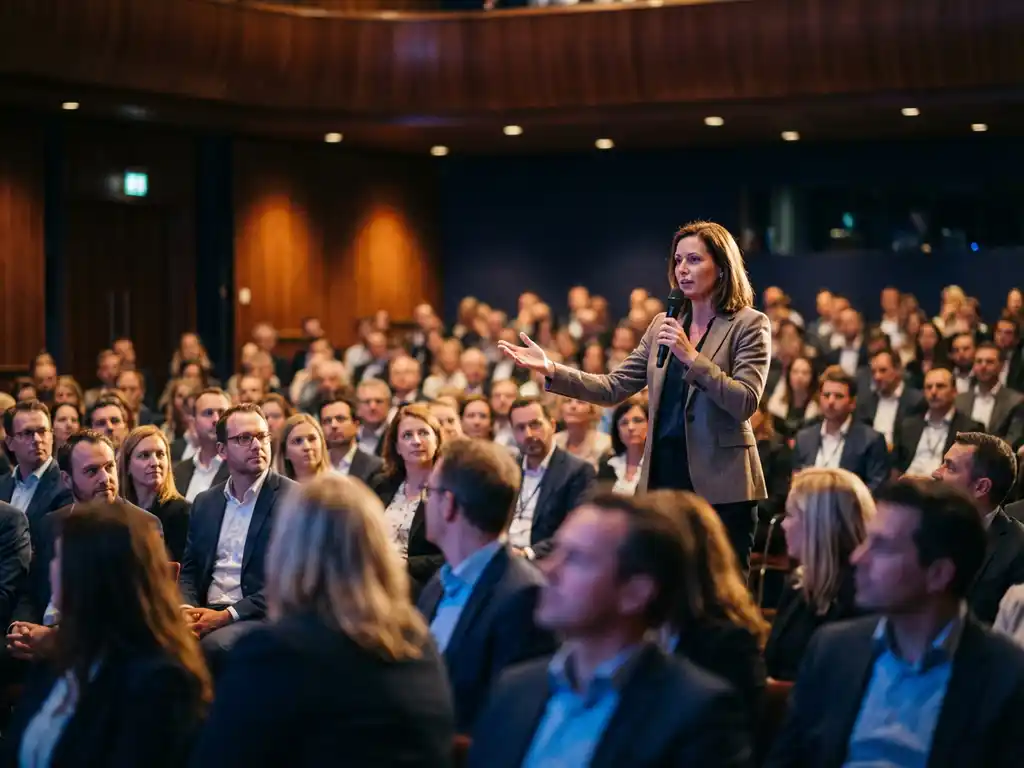
Not every corporate event lives up to its potential. Whether it’s an all-hands meeting that loses the room halfway through or a panel discussion that goes off the rails, the difference between a forgettable event and a genuinely impactful one often comes down to one thing: professional event moderation. A skilled moderator keeps energy high, manages time effectively, and creates the kind of atmosphere where real engagement can happen.
Corporate event moderation is not just about keeping things on schedule. It’s about reading the room, drawing out meaningful contributions, and making every attendee feel that their presence matters. Below are nine types of corporate events that consistently benefit from having a professional moderator at the helm.
When professional event moderation makes all the difference
The right moderator transforms the structure of an event into an experience. Without skilled facilitation, even the most carefully planned agenda can fall flat: speakers run over time, audiences disengage, and key messages get lost in the noise. Professional event moderation provides the connective tissue that holds an event together and gives it momentum.
What separates events with strong moderation from those without it is a sense of intentionality. Attendees feel guided rather than shuffled. Conversations feel dynamic rather than scripted. And the event achieves its goals rather than simply checking a box on the calendar.
1: All-hands meetings that actually hold attention
All-hands meetings are among the most common corporate events and, unfortunately, among the most dreaded. When leadership addresses the entire organization at once, the stakes are high, and the risk of disengagement is real. A professional moderator keeps the energy moving, bridges segments smoothly, and ensures that the meeting feels like a conversation rather than a broadcast.
With the right facilitation, all-hands meetings become a genuine moment of alignment. A moderator can field questions, manage audience interaction, and bring warmth and pace to what might otherwise feel like a long presentation. Employees leave feeling informed and included rather than talked at.
2: Town halls where every voice feels heard
Town halls are designed to be participatory, but without skilled event facilitation, they often end up dominated by a handful of voices while the majority stays silent. A professional moderator creates the conditions for broader participation by actively inviting input, managing dominant speakers diplomatically, and giving quieter attendees space to contribute.
This is especially important in organizations navigating change or tension. A moderator brings neutrality and structure to the room, helping employees feel safe enough to ask honest questions and share real concerns. The result is a town hall that actually delivers on its promise of two-way communication.
3: Product launches with maximum audience impact
A product launch is a high-energy event with a clear goal: generate excitement and build momentum. Professional event moderation ensures the narrative arc of the launch stays sharp, from the opening hook to the final call to action. A skilled host manages transitions between demos, speakers, and audience moments without losing the thread of the story.
Product launches also often involve live elements that can go sideways—technical glitches, timing issues, or audience questions that need careful handling. An experienced moderator keeps the atmosphere confident and upbeat regardless of what happens behind the scenes.
4: Change management events that reduce resistance
Communicating organizational change is one of the most sensitive challenges in corporate event management. When employees are anxious or skeptical, the wrong tone can deepen resistance rather than ease it. A professional moderator brings emotional intelligence to the room, acknowledging concerns without amplifying them and steering conversations toward constructive outcomes.
Change management events benefit enormously from a moderator who can hold the tension in the room without letting it derail the agenda. They create space for honest dialogue while keeping the event moving toward its intended message. This balance between openness and direction is difficult to achieve without experienced facilitation.
5: Panel discussions that stay on track
Panel discussions are only as good as the person guiding them. Without strong conference moderation, panels can devolve into monologues, tangents, or awkward silences. A professional moderator prepares smart questions, manages speaking time fairly, and draws out the most interesting perspectives from each panelist.
The best panel moderators also know how to create genuine dialogue between panelists rather than a series of isolated answers. They listen actively, make connections between contributions, and keep the audience engaged throughout. The result is a panel that feels like a real conversation rather than a rehearsed performance.
6: Team-building activities with real cohesion outcomes
Team-building events are only effective when participants are genuinely engaged rather than going through the motions. A professional facilitator creates the right conditions for authentic connection by setting clear expectations, managing group dynamics, and debriefing activities in a way that reinforces the learning.
Well-facilitated team-building activities move beyond surface-level fun and create moments of real insight. When a moderator guides reflection after an exercise, teams walk away with shared language and a stronger sense of how they work together. Without that facilitation layer, even the best activities can feel like a nice afternoon that fades from memory within a week.
7: Conferences with multiple speakers and sessions
Multi-session conferences are logistical challenges as much as they are content challenges. With several speakers, breakout sessions, and transitions throughout the day, conference moderation keeps the experience cohesive and prevents the event from feeling like a series of disconnected presentations.
A skilled conference moderator acts as the connective thread of the entire event. They introduce speakers with context rather than just credentials, summarize key themes between sessions, and maintain the energy of the room across a full day or multiple days. Attendees leave with a sense of the whole experience rather than just individual fragments.
8: Award ceremonies that feel genuinely celebratory
Award ceremonies tend to either drag on too long or feel uncomfortably formal. Professional event hosting brings warmth, humor, and pacing to recognition events, making them feel like genuine celebrations rather than obligatory rituals. A skilled host knows how to honor each recipient meaningfully without losing the room between awards.
The tone of an award ceremony shapes how employees feel about the recognition they receive. When the event is lively, warm, and well paced, the awards themselves carry more weight. A professional moderator elevates the entire experience and ensures that the people being celebrated feel genuinely seen.
9: Hybrid events where no one feels left out
Hybrid events present a unique challenge: keeping both in-person and remote audiences equally engaged. Without deliberate facilitation, the online audience often becomes a passive observer while the room takes priority. A professional moderator actively bridges both groups, directing questions to remote participants, acknowledging online contributions, and ensuring the event feels unified rather than split.
Hybrid corporate events require a moderator who is comfortable managing multiple channels simultaneously. They coordinate with technical teams, monitor chat feeds, and adapt in real time to keep both audiences feeling included. This kind of event facilitation is increasingly essential as hybrid formats become the norm rather than the exception.
How to choose the right moderator for your event
Choosing the right professional event moderator starts with understanding your event’s specific goals and audience. A change management event requires different skills than a product launch, and a hybrid conference demands different capabilities than an in-person award ceremony. Look for a moderator with relevant experience in your event type, strong improvisational instincts, and the ability to adapt when things do not go exactly to plan.
Also consider cultural fit. A moderator who understands your organization’s tone and values will land much better with your audience than someone who delivers a generic performance. Ask to see examples of their previous work, and pay attention to how they handle transitions and unexpected moments—not just their polished opening remarks.
- Match the moderator’s style to your event format and audience expectations
- Prioritize adaptability and live performance experience over scripted delivery
- Look for someone who listens actively, not just someone who speaks well
- Ensure they understand your goals and can translate them into facilitation choices
- Consider hybrid experience if your event includes remote participants
How Boom For Business helps with corporate event moderation
We bring over 30 years of performance and facilitation expertise to every event we host. Rooted in the world of professional comedy and improvisation at Boom Chicago, our team knows how to read a room, hold an audience’s attention, and create the kind of energy that makes corporate events genuinely memorable. Whether you need a confident host for a large conference, a skilled facilitator for a sensitive town hall, or an engaging moderator for a hybrid event, we bring the professional experience and human warmth that makes the difference.
Here is what working with us looks like in practice:
- Custom event hosting tailored to your organization’s goals, tone, and audience
- Interactive facilitation that draws out genuine participation rather than polite silence
- Hybrid event expertise that keeps both in-person and remote attendees equally engaged
- Masterclass Workshops that develop communication and presentation skills within your team for lasting impact
- Team-building facilitation grounded in improvisation techniques that build real cohesion
If you are ready to make your next corporate event one that people actually talk about afterward, we would love to help. Explore our full range of corporate event services, discover our Masterclass Workshops, browse our team-building programs, or learn how we help organizations build a positive culture through humor and connection. Let’s create something worth showing up for.
Frequently Asked Questions
How far in advance should we book a professional event moderator?
For large-scale events like conferences or product launches, aim to book your moderator at least 6–8 weeks in advance to allow enough time for briefings, agenda reviews, and preparation. For more sensitive events like town halls or change management sessions, earlier is better — giving the moderator time to understand your organization's context, culture, and key messages will significantly improve the outcome. Last-minute bookings are sometimes possible, but they limit the depth of preparation that makes moderation truly effective.
What information should we share with a moderator before the event?
At minimum, share your event agenda, speaker bios, key objectives, and any background on your organization's culture or current challenges. For sensitive events like change management sessions or town halls, brief the moderator on the specific concerns or tensions in the room so they can prepare accordingly. The more context a moderator has, the more naturally they can steer conversations, handle unexpected moments, and reinforce your event's core message.
Can one moderator handle an entire multi-day conference, or do we need multiple facilitators?
A single experienced moderator can absolutely anchor a multi-day conference, and there are real benefits to consistency — attendees build rapport with one host, and the narrative thread of the event stays stronger. That said, for very large events with simultaneous breakout sessions or highly specialized content tracks, a lead moderator supported by additional facilitators is often the smarter approach. Discuss the scope and structure of your event with your moderator early so the right setup can be planned.
What's the biggest mistake companies make when it comes to event moderation?
The most common mistake is treating moderation as an afterthought — hiring someone at the last minute, skipping the briefing process, or assuming a senior internal employee can fill the role without facilitation experience. Internal hosts often struggle to remain neutral, manage dominant voices, or recover gracefully from unexpected moments, especially in high-stakes settings. Investing in a professional moderator from the planning stage, not as a final checkbox, is what separates events that truly land from those that simply happen.
How does a moderator handle difficult or hostile audience questions, especially at town halls or change management events?
A skilled moderator acknowledges the emotion behind a difficult question without letting it derail the agenda — validating the concern, bridging to a constructive response, and keeping the tone from escalating. They also create a safe structure for honest dialogue upfront, which reduces the likelihood of hostility in the first place. If a question falls outside the scope of what leadership can address publicly, an experienced moderator knows how to redirect diplomatically without dismissing the person who asked.
Is professional moderation worth the investment for smaller internal events, or is it mainly for large conferences?
Professional moderation adds value at any scale, and smaller events are often where it matters most — because there's less room to hide disengagement or poor facilitation when everyone is in the same room. An all-hands meeting with 50 people that feels flat or one-sided can do real damage to morale, while a well-moderated session of the same size can genuinely move the needle on alignment and trust. Think of moderation less as a luxury for big events and more as a quality investment in how your organization communicates.
What should we look for when reviewing a moderator's past work or showreel?
Beyond polished opening remarks, pay close attention to how they handle transitions between speakers, respond to unexpected moments, and manage audience energy during quieter or more challenging segments. Look for signs of active listening — do they build on what speakers say, or do they just move mechanically through a script? It's also worth asking for references from events similar to yours in format and sensitivity level, since a great product launch host and a great change management facilitator require quite different skill sets.
Related Articles
- What are team building programs for enhancing workplace culture?
- 11 ways to connect employees to brand values that actually stick
- How do improvisation techniques enhance team building?
- How do professional facilitators enhance team building outcomes?
- What are entertainment-focused team building programs?