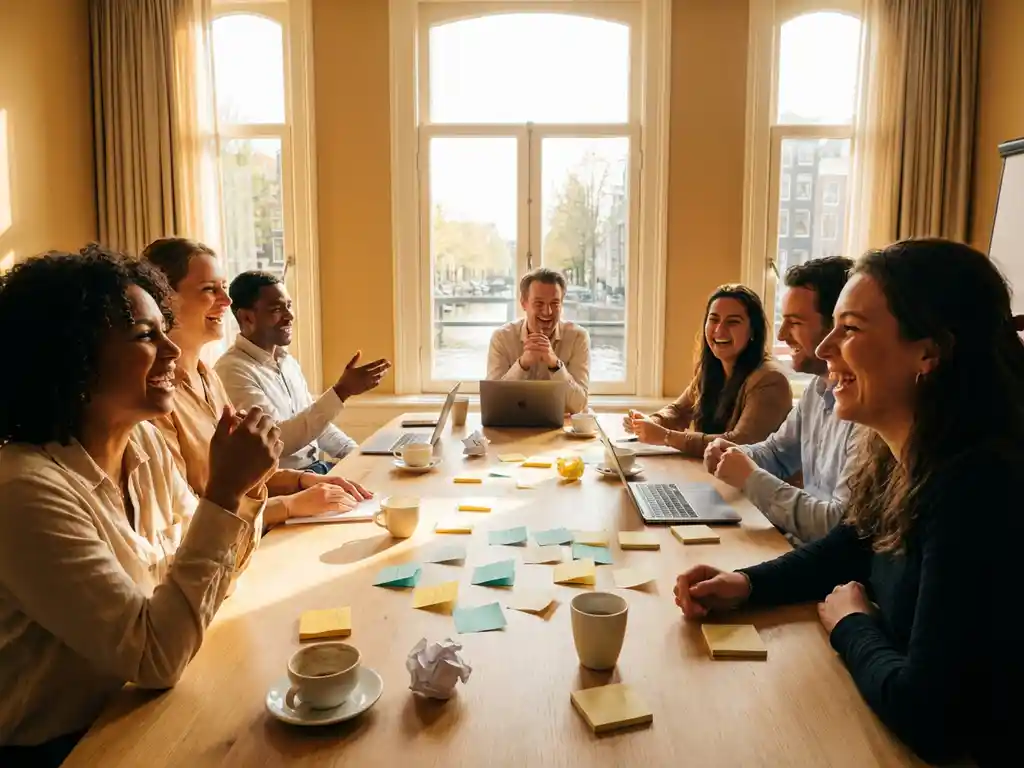
Most teamwork problems don’t come from having the wrong people on the team. They come from unclear expectations, poor communication habits, and a lack of shared identity. Before leaders assume the answer is restructuring, it’s worth exploring the many practical ways to improve teamwork in the workplace without moving a single person. The good news is that meaningful change is often closer than it appears.
The following eleven strategies are designed for teams that are already in place but not yet firing on all cylinders. Whether you’re managing a cross-functional group, a department that’s grown too fast, or a team that’s simply fallen into unhelpful routines, these teamwork tips offer concrete starting points for better collaboration, stronger communication, and genuine engagement.
Why teamwork struggles without structural change
Teams often underperform not because of who is on them, but because of how they operate together. Common culprits include vague goals, unspoken tensions, and communication patterns that prioritize activity over clarity. When leaders respond to these friction points by reshuffling roles or restructuring departments, they often move the problem rather than solve it.
Workplace teamwork improves most durably when underlying behaviors and habits shift. That means focusing on culture, communication, and connection rather than org charts. The strategies below address exactly that.
1: Set shared goals everyone actually understands
Shared goals are the foundation of effective team collaboration, but there’s a difference between goals that exist and goals that everyone genuinely understands and owns. When team members can’t articulate what they’re collectively working toward, effort fragments and motivation fades.
Start by co-creating goals with the team rather than delivering them top-down. When people contribute to setting a target, they’re more likely to feel accountable for reaching it. Review goals regularly in team settings so they stay visible and relevant, not buried in a document nobody opens.
2: Build psychological safety into team culture
Psychological safety is the belief that you can speak up, ask questions, or admit mistakes without facing judgment or punishment. It’s one of the strongest predictors of high-performing teams, and it doesn’t happen by accident.
Leaders set the tone by modeling vulnerability themselves. Acknowledging uncertainty, welcoming dissenting views, and responding to mistakes with curiosity rather than blame all signal that it’s safe to be honest. Over time, this creates a team culture where real collaboration becomes possible because people aren’t managing their image at the expense of their contribution.
3: Replace status meetings with focused check-ins
Long status meetings are one of the biggest drains on team energy and one of the easiest habits to change. When meetings exist primarily to report on progress that could be shared asynchronously, they consume time without generating value.
Focused check-ins, by contrast, are short and purposeful. They surface blockers, align priorities, and create space for quick decisions. Fifteen minutes with a clear agenda often does more for team communication than an hour-long update session. Protecting your team’s time is itself a form of respect that builds trust.
4: Use humor to break down team barriers
Humor is one of the most underused tools in workplace teamwork. When used well, it lowers defenses, builds rapport, and makes difficult conversations easier to have. Teams that laugh together tend to trust each other more and communicate more openly.
This doesn’t mean forcing jokes into every meeting. It means creating an atmosphere where levity is welcome and where people feel relaxed enough to be themselves. Even small moments of shared humor can shift team dynamics noticeably. Business-friendly humor, in particular, helps teams navigate tension and change without losing professionalism.
5: Assign roles that play to individual strengths
When people work in areas that align with their natural strengths, they’re more engaged, more productive, and more likely to contribute proactively. Role clarity combined with strengths alignment is a powerful combination for improving team dynamics.
Take time to understand what each team member does best and where they find energy in their work. This doesn’t require a formal assessment, though those can help. Regular one-on-ones and honest conversations about what people enjoy and where they feel underused often reveal opportunities to redistribute responsibilities in ways that benefit the whole team.
6: Create rituals that reinforce team identity
Teams with a strong shared identity perform better under pressure and recover faster from setbacks. Rituals, even small ones, play a meaningful role in building that identity. They signal belonging and create continuity across changing circumstances.
Rituals can be as simple as a weekly team highlight, a shared way of opening meetings, or a tradition around celebrating milestones. What matters is consistency and genuine participation. When rituals feel authentic rather than imposed, they become something the team actually values.
7: Improve how feedback flows across the team
Feedback is essential for growth, but in many teams it only flows in one direction or surfaces during formal reviews. This limits learning and can create a culture where problems accumulate silently until they become serious.
Build feedback into the natural rhythm of team life. Encourage peer feedback, not just manager-to-report feedback. Create simple structures for sharing what’s working and what isn’t after projects or key moments. The goal is to make feedback feel like a normal part of collaboration rather than a high-stakes event.
8: Use improv techniques to sharpen collaboration
Improvisation techniques, borrowed from the world of comedy and theater, are remarkably effective at developing the skills teams need most: active listening, adaptability, and the ability to build on each other’s ideas rather than compete with them.
The “yes, and” principle from improv is particularly useful in collaborative settings. Instead of shutting down ideas or pivoting immediately to counterarguments, team members learn to accept what’s been offered and add to it. This simple shift in approach can transform brainstorming sessions and make team discussions significantly more generative.
9: Bridge the gap between departments
Siloed communication is a common challenge in larger organizations. When teams operate in isolation, they duplicate effort, miss opportunities to collaborate, and sometimes work at cross purposes without realizing it.
Improving team collaboration across departments starts with visibility. Create regular touchpoints between teams whose work intersects. Shared projects, cross-functional workshops, and even informal social connections between departments all reduce the friction that silos create. When people know each other as individuals rather than just job titles, communication becomes faster and more effective.
10: Celebrate wins to sustain team momentum
Recognition is a powerful driver of employee engagement, yet many teams move from one deliverable to the next without pausing to acknowledge what they’ve achieved. This erodes motivation over time, even among high performers.
Celebrating wins doesn’t require elaborate events. A genuine acknowledgment in a team meeting, a message calling out a specific contribution, or a shared moment of reflection at the end of a project all reinforce that the work matters and that the people doing it are valued. Momentum builds when people feel their efforts are seen.
11: Invest in team building that actually works
Not all team building is created equal. Activities that feel forced, irrelevant, or purely recreational rarely translate into lasting improvements in how a team works together. Effective corporate team building connects the experience directly to the skills and dynamics the team needs to develop.
The best team building activities create shared experiences that challenge people in new ways, encourage communication, and generate genuine laughter and connection. When the experience is well-designed, participants leave with new perspectives on their colleagues and new tools for working together more effectively.
How Boom For Business Helps You Improve Teamwork in the Workplace
We’ve spent over 30 years helping organizations build stronger, more connected teams through the power of improvisation, humor, and expertly designed experiences. At Boom For Business, we don’t believe in generic team days or one-size-fits-all workshops. Everything we do is tailored to the specific dynamics, challenges, and goals of your team.
Here’s what working with us looks like in practice:
- Masterclass Workshops that use proven improv and storytelling techniques to strengthen communication, sharpen collaboration, and build psychological safety within your team
- Interactive team building programs that create genuine connection and shared identity through humor-infused, high-energy experiences
- Facilitation by experienced professionals who understand corporate environments and know how to make learning both practical and memorable
- Customized programs designed around your team’s real challenges, whether that’s breaking down silos, improving feedback culture, or navigating change
- A positive culture approach that helps teams sustain the improvements they make long after the session ends
If you’re ready to move beyond the usual and invest in team building that actually changes how your team works together, we’d love to help. Explore our Masterclass Workshops, discover our team building programs, or learn more about how we help organizations build a positive team culture. Visit Boom For Business to find out how we can create something memorable for your team.
Better teamwork starts with one small shift
You don’t need to overhaul your team to improve how it works. The strategies above show that meaningful progress in workplace teamwork comes from consistent, intentional changes to how people communicate, collaborate, and connect with each other. Pick one area where your team is currently struggling and start there.
Small shifts in behavior, when practiced consistently, create the kind of team dynamics that make work genuinely better. And when those shifts are supported by the right experiences and the right partners, the results can be transformative.
Frequently Asked Questions
How do I know which of these strategies to prioritize first for my team?
Start by identifying your team's most visible friction point — the one that comes up most often in complaints, missed deadlines, or low morale. If communication is the issue, begin with focused check-ins or feedback structures. If motivation is lagging, start with shared goal-setting or celebrating wins. You don't need to implement everything at once; one well-executed change creates momentum for the next.
What if some team members resist changes to how the team operates?
Resistance usually signals that people don't yet feel safe, heard, or convinced of the benefit. Rather than pushing through it, treat resistance as useful information. Involve skeptical team members in shaping the change — when people have a hand in designing new habits or rituals, they're far less likely to undermine them. Starting with low-stakes, easy-to-try changes also reduces the perceived risk for those who are hesitant.
How long does it typically take to see real improvements in team dynamics?
Some changes — like replacing long status meetings with focused check-ins — can produce noticeable results within weeks. Deeper shifts, like building psychological safety or establishing a strong team identity, typically take several months of consistent effort. The key is to track both the behaviors you're trying to change and the outcomes you're aiming for, so progress stays visible even when it feels slow.
Can these strategies work for remote or hybrid teams, or are they designed for in-person settings?
All eleven strategies apply to remote and hybrid teams, though some require light adaptation. Focused check-ins work just as well over video calls; rituals can be built into virtual team meetings; and improv-based techniques like 'yes, and' are highly effective in online workshops. The underlying principles — clear goals, psychological safety, genuine connection — matter even more when teams aren't sharing a physical space.
What's the most common mistake leaders make when trying to improve teamwork?
The most common mistake is treating teamwork as a one-time fix rather than an ongoing practice. Leaders often run a single team-building event or roll out a new communication tool and expect lasting change — but without reinforcing new behaviors consistently, teams revert to old habits quickly. Sustainable improvement comes from embedding small, intentional practices into the daily and weekly rhythm of how the team operates.
How do improv-based techniques hold up in more formal or traditional corporate cultures?
Improv techniques are often more effective in formal environments precisely because they introduce a low-pressure way to practice skills like active listening and idea-building that traditional corporate settings rarely teach directly. When facilitated by experienced professionals who understand corporate dynamics, even reserved or skeptical participants typically find the experience both practical and engaging. The goal isn't to make people perform comedy — it's to shift how they collaborate.
How do we sustain the improvements we make after a team-building session or workshop?
Sustainability comes from connecting the experience to everyday work habits. After any team-building investment, identify two or three specific behaviors or practices the team agrees to carry forward and build them into regular meetings or workflows. Scheduling a short follow-up reflection two to four weeks later also helps teams consolidate what they learned and troubleshoot anything that hasn't stuck. The experience opens the door; consistent practice keeps it open.
Related Articles
- 7 things a professional event presenter does that internal staff cannot replicate
- What are fun team building activities for large groups?
- What are team building programs for enhancing workplace culture?
- 7 collaborative team workshop formats that break down departmental silos
- What is a hybrid event host?