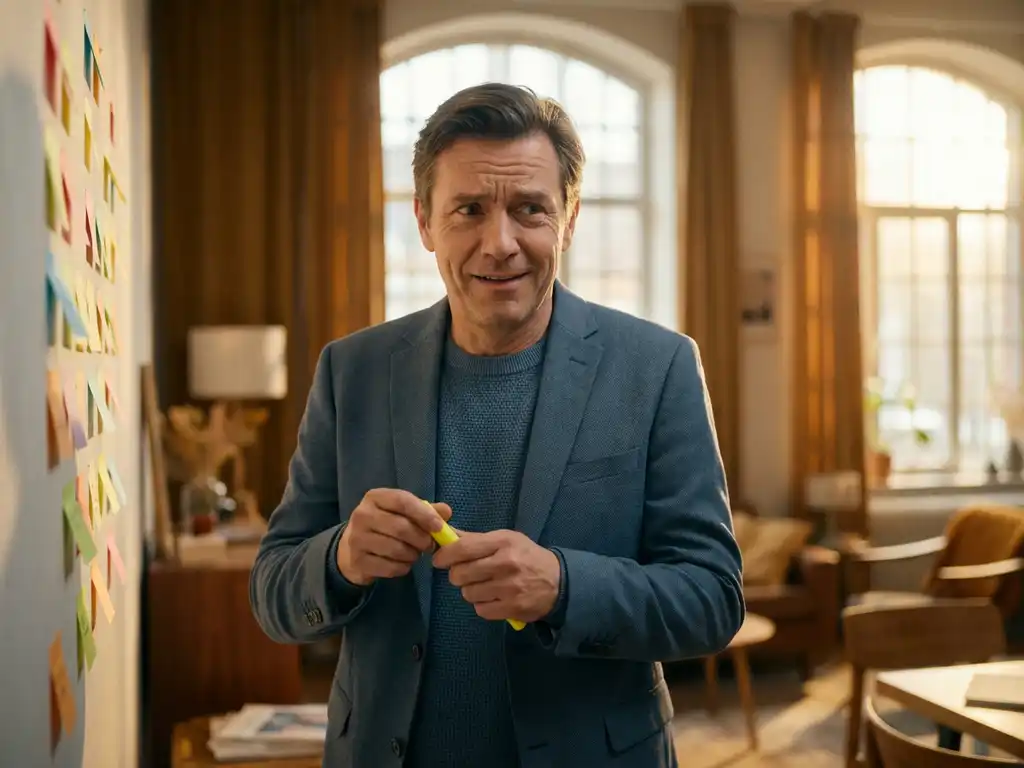
Most teams will tell you they are not creative. Ask an accountant, a project manager, or a logistics coordinator to join a “creativity workshop,” and watch the eye-rolls begin. The resistance is real, understandable, and also one of the biggest missed opportunities in modern team development. The good news is that running a successful creativity workshop for skeptical teams is absolutely possible—if you design it with their mindset in mind.
This article answers the most common questions about team creativity workshops, from what they actually are to how you measure whether they worked. If you are responsible for team building, leadership training, or organizing team workshops that need to land with people who think creativity is someone else’s department, keep reading.
What is a creativity workshop and why do teams resist it?
A creativity workshop is a structured session designed to help teams practice and apply creative-thinking skills in a professional context. Unlike brainstorming meetings, these workshops use guided activities, frameworks, and facilitation techniques to build creative confidence and generate new ways of approaching problems. Resistance usually comes from a fear of judgment, a belief that creativity is a talent rather than a skill, or past experiences with workshops that felt pointless.
The word “creativity” carries a lot of baggage. Many professionals associate it with arts and crafts, abstract thinking, or personality types they do not identify with. When someone has spent years being rewarded for precision, consistency, and analytical thinking, being asked to “think outside the box” can feel threatening rather than exciting. This is not stubbornness; it is a rational response to years of professional conditioning.
The most common sources of resistance include:
- Fear of looking silly or being judged by colleagues
- Belief that creative thinking is irrelevant to their role
- Previous workshops that felt like a waste of time
- Uncertainty about what they are actually supposed to produce
- A culture that implicitly punishes unconventional ideas
Understanding this resistance is the first step in designing a workshop that actually works.
Why does it matter if your team thinks creatively?
Creative thinking matters for every team because it is the foundation of problem-solving, adaptability, and innovation. Teams that can approach challenges with fresh perspectives find better solutions faster, communicate more effectively, and adapt more readily to change. In organizations where creative thinking is absent, teams tend to repeat the same approaches even when those approaches stop working.
This is not about making your finance team paint watercolors. It is about giving people the mental flexibility to question assumptions, connect unrelated ideas, and propose solutions that have not been tried before. These are skills that improve performance in every role, from operations to human resources to sales.
Organizations that invest in creative thinking at the team level also tend to see stronger collaboration. When people learn to build on each other’s ideas rather than immediately evaluating them, communication becomes more open and psychological safety increases. These are the conditions that allow teams to do their best work, especially during periods of change or uncertainty.
What causes the belief that “creativity is not my job”?
The belief that creativity is not someone’s job is driven by organizational cultures that separate “creative roles” from “operational roles,” reward conformity over experimentation, and rarely invite non-creative departments into idea-generation processes. Over time, people internalize the message that their value lies in execution, not invention, and they stop offering creative input altogether.
This mindset is often reinforced unintentionally. When ideas from certain teams are consistently redirected or dismissed, those teams stop generating them. When workshops are attended only by marketing or design teams, everyone else learns that creativity belongs to someone else. Leadership behavior plays a significant role, too. If managers do not model creative thinking or create space for experimentation, their teams will not either.
The role of psychological safety
Psychological safety is a critical factor. Research in organizational behavior consistently shows that people share unconventional ideas only when they feel safe from ridicule or negative consequences. In teams with low psychological safety, creativity does not disappear; it simply goes underground. People have ideas but keep them to themselves because the risk of sharing does not feel worth it.
The impact of role identity
Professional identity also shapes creative behavior. If someone defines themselves as “a data analyst” rather than “someone who solves problems with data,” they are less likely to engage with creative challenges. Effective creativity workshops gently expand how participants see themselves and their contribution to the team.
How do you design a creativity workshop for skeptical teams?
To design a creativity workshop for skeptical teams, start by removing the word “creativity” from the framing and replacing it with problem-solving or innovation. Build the session around real challenges the team actually faces, use low-stakes activities to warm people up, and make participation feel safe before asking for vulnerability. Structure matters more than inspiration when your audience is skeptical.
Here is a practical design approach that works well with resistant groups:
- Frame it around their problems, not abstract creativity. Skeptical teams engage when they see direct relevance. Begin by anchoring the workshop to a real challenge they are trying to solve.
- Start with low-risk warm-up activities. Before asking people to generate ideas, run short exercises that get them comfortable with quick thinking and imperfection. Improvisation-based games work exceptionally well here.
- Normalize imperfect ideas early. Make it explicit that the goal is quantity over quality in the early stages. This reduces the fear of judgment and encourages participation.
- Use structured frameworks. Tools like “Yes, and…” thinking, assumption reversal, or constraint-based brainstorming give skeptical participants a process to follow, which feels safer than open-ended ideation.
- Debrief with practical takeaways. End each activity with a conversation about how the thinking technique applies to real work. This closes the loop between the exercise and their professional context.
The facilitator’s role is crucial. Someone who can hold the energy of the room, read resistance without reacting to it, and keep things moving with warmth and humor will make the difference between a workshop that transforms and one that people forget by Monday.
What types of activities work best in a team creativity workshop?
The activities that work best in a creativity workshop for skeptical teams are those that feel playful but produce genuinely useful outputs. Improvisation exercises, constraint-based brainstorming, role-reversal scenarios, and storytelling challenges are particularly effective because they engage participants without asking them to “be creative” in an abstract way.
Improvisation exercises
Improv activities like “Yes, and…” teach teams to build on ideas rather than block them. They are fast, energetic, and produce immediate results that participants can observe in real time. These exercises also build the listening and collaboration skills that make creative teamwork possible.
Constraint-based brainstorming
Giving teams tight constraints, such as “solve this problem with no budget” or “explain this to a ten-year-old,” forces lateral thinking without requiring people to feel inspired. Constraints actually make creativity easier for analytical thinkers because they provide a clear problem space to work within.
Storytelling and scenario challenges
Asking teams to build a short story or scenario around a business challenge activates different parts of the brain and often surfaces insights that traditional brainstorming misses. These activities also strengthen communication skills, which is a direct benefit for everyday work.
Role reversal and perspective-taking
Asking participants to approach a problem from the perspective of a customer, a competitor, or even a fictional character breaks habitual thinking patterns. This technique is especially useful for teams stuck in departmental silos who rarely consider how their work looks from the outside.
How do you measure whether a creativity workshop actually worked?
You measure the success of a creativity workshop by tracking both immediate outputs and longer-term behavioral changes. Immediate measures include the number and quality of ideas generated, participant engagement during the session, and self-reported confidence in creative thinking. Longer-term measures include whether new behaviors appear in team meetings, how problems are approached in the weeks that follow, and whether psychological safety in the team has increased.
Practical ways to measure impact include:
- Pre- and post-workshop surveys measuring creative confidence and psychological safety
- Tracking idea generation in team meetings over the following month
- Manager observations of changes in communication or collaboration patterns
- Follow-up conversations at 30 and 60 days to assess skill retention
- Linking workshop participation to specific project outcomes where possible
It is worth noting that a single workshop rarely produces permanent change on its own. The most effective approach treats the workshop as the beginning of a process rather than a standalone event. Brief reinforcement activities, follow-up sessions, and leadership support in the weeks after the workshop significantly increase the lasting impact of what was learned.
How Boom For Business Helps Teams Unlock Creative Thinking
We know from experience that the teams who resist creativity workshops the most are often the ones who benefit from them the most. At Boom For Business, we have spent over 30 years developing practical, engaging approaches to creative thinking that work for exactly these kinds of teams. Our Masterclass Workshops are built on the proven methodologies of Boom Chicago, combining improvisation, storytelling, and structured facilitation to create learning experiences that feel genuinely useful rather than forced.
Here is what we bring to your team creativity workshop:
- Expert facilitation from professionals who understand both comedy and corporate environments, creating safety and energy in equal measure
- Customized programs built around your team’s real challenges, not generic exercises that feel disconnected from daily work
- Improv-based activities that build creative confidence, communication skills, and psychological safety simultaneously
- Practical frameworks your team can apply immediately in meetings, projects, and cross-departmental collaboration
- Humor-infused delivery that keeps skeptical participants engaged without ever making them feel uncomfortable
Whether you are looking to strengthen team building across departments, build a more open and innovative positive culture, or deliver leadership training that actually sticks, we design every session to meet your team where they are. Ready to turn your most skeptical colleagues into your most engaged participants? Get in touch with us and let us design a workshop that works for your team.
FAQ broken data: JSON error 4Related Articles
- How do you plan team building activities for medium-sized companies?
- 11 public speaking workshop activities that reduce stage fright permanently
- What are spontaneous team building exercises?
- How do storytelling techniques improve team dynamics?
- How do you run a public speaking workshop for teams that work across different cultures?