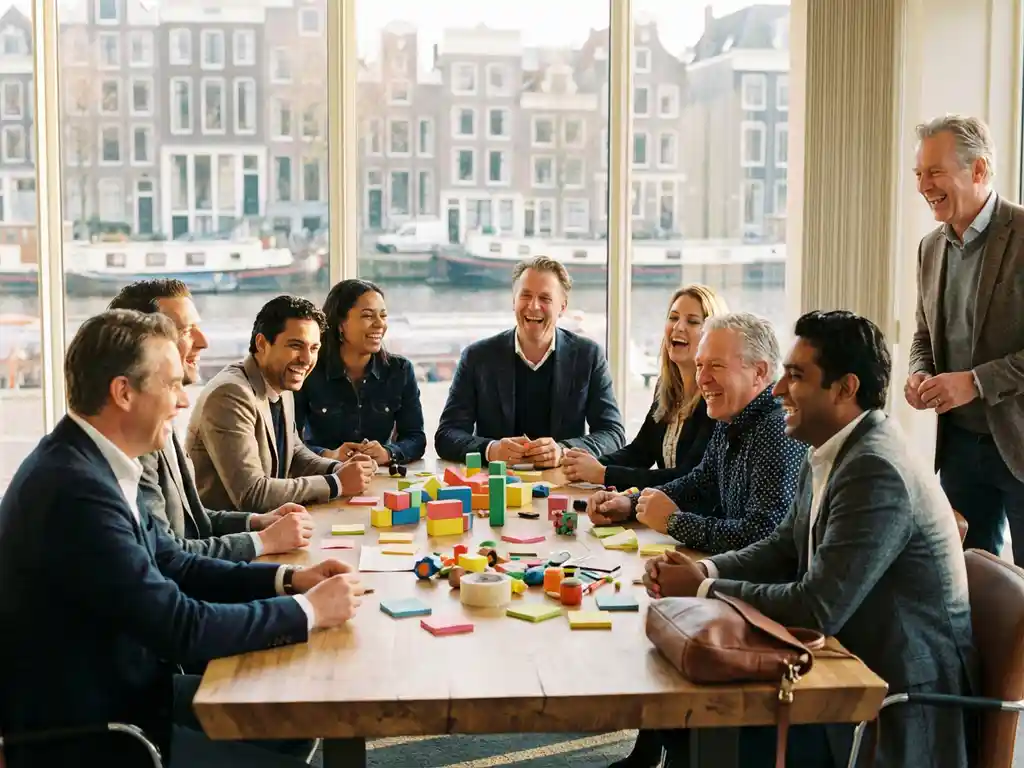
Team building has a reputation problem. Mention it in a meeting, and you’ll likely see a few eye rolls—maybe a polite smile or two. The assumption is that fun activities and serious business goals live in separate worlds. But that assumption is wrong, and it’s costing organizations real results.
The truth is that fun team building and purposeful team building are not opposites. When designed with intention, activities that energize and entertain can also build trust, sharpen communication, and help teams work through genuine challenges. The difference between a forgettable afternoon and a meaningful experience comes down to how you plan, frame, and follow through. Here are nine ways to make that happen with any corporate audience.
Why fun and purpose aren’t opposites at work
The idea that work must feel serious to be taken seriously is one of the most persistent myths in corporate culture. Research in organizational psychology consistently shows that positive emotional experiences accelerate learning, strengthen memory retention, and improve collaboration. When people laugh together, their guard comes down, and real connection becomes possible.
Purposeful team building does not mean stripping the joy out of an activity to make it feel more professional. It means designing experiences where enjoyment is the vehicle, not the destination. Fun creates the conditions for people to take risks, speak honestly, and engage fully. That is exactly what high-performing teams need.
1: Start with a clear business objective
Every successful corporate team building experience begins with a question: What do we actually need to achieve? Whether the goal is improving cross-departmental communication, rebuilding trust after organizational change, or helping a new team find its rhythm, the objective shapes every decision that follows.
Without a clear goal, even the most entertaining activity becomes just entertainment. With one, it becomes a tool. Before you book anything, write down the specific outcome you want participants to walk away with. That single step separates purposeful team building from a pleasant distraction.
2: Tie activities to real team challenges
Generic activities produce generic results. The most effective workplace team building takes the actual friction points a team faces and builds the experience around them. If silos are the problem, choose activities that require departments to share information and depend on each other. If communication is breaking down, use exercises that reveal how assumptions lead to miscommunication.
When participants recognize their real challenges reflected in an activity, engagement rises naturally. They stop thinking of it as a game and start treating it as relevant. That shift in perception is where real learning begins.
3: Brief and debrief every single activity
The brief sets context before an activity begins. The debrief extracts meaning after it ends. Skip either one, and you lose most of the value. A well-run debrief asks participants what they noticed, what surprised them, and what they want to do differently as a result.
This is where fun becomes purposeful. The activity creates an experience; the debrief turns that experience into insight. Even a five-minute conversation at the end of an exercise can anchor a lesson that lasts far longer than the activity itself.
4: Let improv techniques carry the message
Improvisation is one of the most effective frameworks for building team skills because it mirrors the conditions of real work. Teams must listen actively, respond to what is actually happening rather than what they expected, and support each other in real time. These are not abstract values; they are practiced behaviors.
Improv exercises like “yes, and” build collaborative thinking and teach people to build on ideas rather than shut them down. Applied to a corporate audience, these techniques create immediate, observable shifts in how people communicate. The skills transfer directly because they were never just about comedy to begin with.
5: Use humor to address uncomfortable topics
Some of the most important conversations in an organization are also the hardest to start. Tension between teams, resistance to change, unspoken frustrations about leadership decisions—these topics rarely surface in a standard meeting. Humor, used thoughtfully, creates the psychological safety that allows people to engage with difficult material without becoming defensive.
This does not mean making light of serious issues. It means using levity to lower the emotional temperature so that honest dialogue becomes possible. When people feel safe enough to laugh, they are often safe enough to tell the truth.
6: Involve leadership visibly and actively
When leaders sit at the back of the room checking their phones, they send a clear message: This matters less than my other work. When they participate fully, take creative risks, and allow themselves to be seen as human, the entire energy of the room shifts.
Active leadership participation signals that the organization genuinely values what is happening. It also gives employees a rare chance to see their managers as collaborators rather than evaluators. That shift in dynamic can do more for employee engagement than many formal initiatives.
7: Match the format to your audience’s culture
A high-energy improv game that lands brilliantly with a sales team might feel overwhelming to a group of analysts who prefer structure and clear rules. Understanding your audience’s culture before choosing a format is not optional; it is essential. The goal is to stretch people slightly beyond their comfort zone, not push them so far that they disengage entirely.
Consider factors like team size, seniority mix, cultural diversity, and the team’s history with team building activities. A format that respects where people are starting from will always outperform one that assumes everyone is equally ready to jump in.
8: Measure impact beyond the smile sheet
Post-event satisfaction surveys tell you whether people enjoyed themselves. They do not tell you whether anything changed. To measure the real impact of corporate team building, you need to look at indicators that matter to the business: communication frequency between departments, participation in collaborative projects, or feedback from managers in the weeks that follow.
Setting measurable outcomes before the event makes this possible. If the goal was to improve cross-team communication, track whether that communication increased. If the goal was to build confidence in presenting ideas, check in with participants a month later. Impact that cannot be observed cannot be repeated or scaled.
9: Partner with specialists who know both worlds
Designing team building activities that are genuinely fun and genuinely purposeful requires expertise in both entertainment and organizational dynamics. A facilitator who understands comedy but not corporate culture will miss the business context. One who understands business but not engagement will produce something informative but forgettable.
The best results come from partners who have spent years working at the intersection of these two worlds—who know how to read a room, adapt in real time, and hold both the energy and the outcome at the same time. That combination is rarer than it sounds and worth seeking out deliberately.
How Boom For Business helps you build teams that are both engaged and effective
We have spent over 30 years working at exactly that intersection. As the business division of Boom Chicago, we bring the craft of professional comedy and improvisation directly into corporate environments, creating experiences that entertain without sacrificing substance.
Our approach to fun team building is built around your specific goals, not a one-size-fits-all program. Here is what working with us looks like in practice:
- We start every engagement by understanding your team’s real challenges and defining clear outcomes together.
- Our Masterclass Workshops combine improv techniques with practical business skills like storytelling, communication, and collaborative thinking.
- Our team building programs are designed to create genuine connection, not just a fun afternoon.
- We facilitate briefings and debriefs that turn experiences into lasting insight.
- Our facilitators are experienced in both comedy and corporate dynamics, so they can hold the room and the outcome simultaneously.
- We work with organizations across the Netherlands and internationally, adapting every program to the specific culture of your team.
- We support organizations navigating change, building a positive culture through humor and human connection.
If you are ready to move beyond the smile sheet and create team building that actually sticks, we would love to help. Visit Boom For Business to explore our programs or get in touch to start designing something your team will still be talking about months from now.
Fun that works is a strategy, not an accident
Every item on this list points to the same underlying truth: Purposeful team building does not happen by chance. It is the result of clear goals, thoughtful design, skilled facilitation, and a genuine commitment to measuring what matters. Fun is not the enemy of that process. It is one of its most powerful tools.
The organizations that get the most from their team building investments are the ones that treat it as a strategic decision, not a calendar filler. When you bring intention to the experience, your team brings engagement to the room. That combination is where real change starts.
Frequently Asked Questions
How do we get leadership buy-in for investing in team building that goes beyond standard activities?
Frame team building as a business investment, not a perk, by tying it directly to measurable outcomes like reduced silos, faster onboarding, or improved cross-departmental collaboration. Come prepared with data — organizational psychology research consistently links psychological safety and team cohesion to productivity and retention. Presenting a clear pre/post measurement plan also helps skeptical leaders see that this is a strategic decision with trackable ROI, not just a feel-good afternoon.
What's the biggest mistake companies make when planning team building activities?
The most common mistake is choosing the activity before defining the objective — essentially picking a fun format and hoping something meaningful comes out of it. Without a clear goal anchoring the design, even the most entertaining experience produces little lasting change. A close second is skipping the debrief, which is where insights are actually formed and behavioral shifts begin to take hold.
How do we handle team members who are resistant to or openly skeptical about team building?
Resistance is almost always a response to past experiences that felt forced, irrelevant, or embarrassing — and it's completely valid. The best way to counter it is to acknowledge it openly at the start of the session rather than ignoring it, and to choose formats that don't require people to perform or be vulnerable before trust has been established. When skeptics see that the activity is well-designed, respects their intelligence, and connects to real work challenges, resistance tends to dissolve on its own.
How often should a company run team building programs to see lasting results?
A single session can create a meaningful spark, but lasting behavioral change typically requires reinforcement over time. A practical approach is to run a more immersive program once or twice a year, supplemented by shorter, skill-focused workshops or activities embedded in regular team meetings. Think of it less like an annual event and more like a continuous practice — the teams that benefit most treat team building as an ongoing investment rather than a one-off calendar item.
Can improv-based team building work for introverted teams or people who are uncomfortable with performance?
Absolutely — and this is one of the most common misconceptions about improv-based formats. Effective improv facilitation is not about putting people on a stage or making them perform comedy; it's about structured exercises that build listening, adaptability, and collaborative thinking in a low-stakes environment. A skilled facilitator will calibrate the energy and format to the group's comfort level, gradually expanding the stretch zone without pushing anyone into genuine discomfort.
What should we do in the weeks after a team building event to make sure the impact sticks?
Follow-through is where most organizations lose the value they've created. Start by sharing a brief summary of the key insights and commitments that emerged during the debrief, so participants have a tangible reminder of what they agreed to do differently. Then build in one or two lightweight check-ins — a short team discussion or a manager follow-up conversation — at the 2-week and 6-week marks to reinforce new behaviors before they fade back into old habits.
How do we choose the right team building format for a large, culturally diverse group?
Cultural diversity is actually one of the strongest arguments for improv and humor-based formats, because they create shared experiences that transcend language and hierarchy — but the design has to be intentional. Prioritize activities that are collaborative rather than competitive, avoid humor that relies on cultural references or wordplay that won't land universally, and work with a facilitator experienced in multicultural settings. When in doubt, always start with a discovery conversation about the group's composition before locking in any format.
Related Articles
- How do professional facilitators enhance team building outcomes?
- 9 ways an entrepreneurship workshop for employees drives real business impact
- When is a teambuilding workshop the wrong solution for a people problem?
- 11 team communication strategies for organizations going through rapid growth
- How do you use workshops to turn new hires into confident contributors faster?