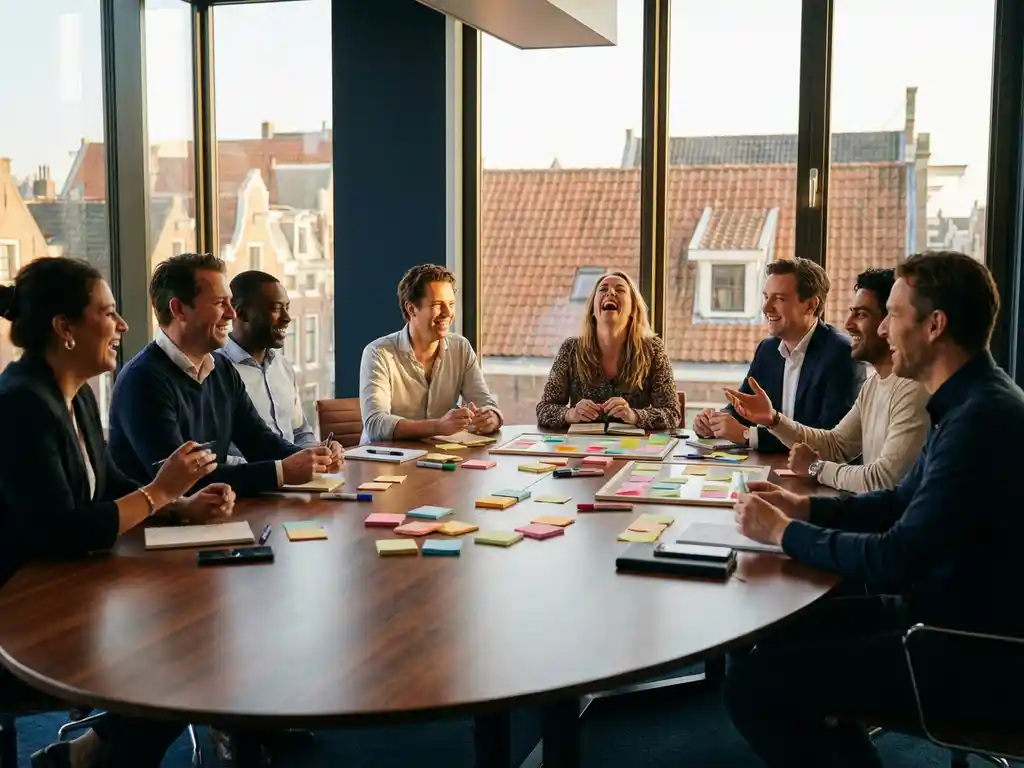
Leadership teams are asking tougher questions about team building than ever before. It is no longer enough to say a workshop was “fun” or that people seemed to enjoy themselves. Decision-makers want to know what changed, what improved, and how the investment connects to real business outcomes. That shift in thinking is actually a good thing, because well-designed team building workshops deliver results that go far beyond a pleasant afternoon away from the office.
The eleven team building workshop outcomes below are exactly the kind of results that resonate in boardrooms and leadership conversations. Whether you are planning your first corporate workshop or looking to make a stronger case for your next one, these outcomes give you a clear picture of the lasting value that great team building delivers.
Why leadership teams care about workshop ROI
Leadership teams invest in people because people drive performance. But every investment needs a rationale, and team building workshops are no exception. When a leadership team approves a budget for a workshop, they are looking for evidence that it will move the needle on communication, collaboration, culture, or all three.
The good news is that the outcomes of well-facilitated team building workshops align directly with the priorities already on leadership’s agenda. From reducing friction between departments to improving how teams handle change, the results speak the language leaders understand. The eleven outcomes below make that connection explicit.
1: Stronger communication across teams and departments
Siloed communication is one of the most persistent challenges in medium and large organizations. Teams focus inward, language and priorities diverge, and collaboration across departments becomes harder than it needs to be. A well-designed team building workshop creates shared experiences and shared language that bridge those gaps.
Interactive exercises, particularly those rooted in improvisation, require participants to listen actively, respond in real time, and adapt to others. Those are exactly the communication muscles that cross-departmental collaboration demands. Teams leave with a stronger instinct to reach across organizational boundaries rather than defaulting to their own corner of the business.
2: Higher employee engagement and participation
Engagement drops when employees feel like passive recipients of information rather than active contributors to their organization. Team building workshops flip that dynamic by putting participation at the center of the experience. When people are genuinely involved, they feel valued, and that feeling translates into sustained engagement back at work.
Workshops that use humor, creativity, and interactive formats are especially effective here. They signal to employees that the organization takes their experience seriously enough to invest in something genuinely energizing rather than another checkbox exercise.
3: Improved collaboration under pressure
Most teams collaborate reasonably well when conditions are calm. The real test comes under pressure, when deadlines tighten, stakes rise, and stress starts to affect judgment and communication. Team building workshops that simulate those conditions in a safe environment help teams develop the habits and trust they need to perform when it counts.
Improvisation-based exercises are particularly valuable for this outcome because they require quick thinking, mutual support, and collective problem-solving in real time. Teams that have practiced staying agile together are far better equipped to handle high-pressure moments in their actual work.
4: Faster onboarding of new team members
Onboarding is often treated as an administrative process, but the real challenge is cultural and relational. New team members need to understand how the team communicates, what norms exist, and how to build trust quickly. Team building workshops accelerate that process by creating shared reference points and genuine human connection early on.
When new employees experience a workshop alongside established colleagues, the social distance shrinks faster than it would through ordinary workplace interactions. That faster integration leads to quicker productivity and stronger retention in the critical early months.
5: Clearer and more confident internal communication
Many professionals struggle to communicate their ideas with clarity and confidence, not because they lack knowledge, but because they have never had structured practice doing so. Team building workshops that focus on storytelling, presentation, and delivery give participants practical tools they can use immediately.
The confidence that comes from practicing communication in a supportive, low-stakes environment carries directly into meetings, presentations, and day-to-day interactions. Over time, clearer internal communication reduces misunderstandings, speeds up decision-making, and improves the quality of collaboration across the organization.
6: Greater resilience during organizational change
Change is a constant in modern organizations, and how teams respond to it determines whether transformation succeeds or stalls. Teams that have built strong relationships and communication habits through workshops are better positioned to navigate uncertainty without losing cohesion or momentum.
Workshops that address change directly—helping participants reframe challenges, stay curious, and support one another through ambiguity—build a kind of organizational resilience that is difficult to develop through strategy documents alone. Human connection and shared experience are the foundation of a team that can bend without breaking.
7: A measurable boost in team morale
Morale is often treated as a soft outcome, but its effects on productivity, retention, and performance are very real. Teams with high morale communicate better, take more initiative, and recover more quickly from setbacks. A well-run team building workshop is one of the most direct ways to give morale a genuine and lasting lift.
The key word here is genuine. Morale improves when people feel seen, heard, and connected to their colleagues in a meaningful way. Workshops that create real laughter, real collaboration, and real moments of shared achievement deliver that experience in a way that translates back into the workplace.
8: Stronger trust between managers and employees
Trust between managers and their teams is foundational to everything else, from honest feedback to effective delegation. Yet it is often one of the hardest things to build through normal working relationships alone. Team building workshops create conditions in which managers and employees interact as equals, which is a powerful trust-building dynamic.
When a manager participates in the same exercises as their team, takes creative risks alongside them, and laughs at the same moments, the hierarchical distance softens. That shift in dynamic does not disappear when the workshop ends. It carries into the daily working relationship in subtle but significant ways.
9: Sharper creative thinking and problem-solving
Creative thinking is not a fixed trait. It is a skill that can be developed, and the right workshop environment is one of the best places to develop it. Exercises that encourage lateral thinking, spontaneous ideation, and playful experimentation stretch the creative capacity of participants in ways that structured work rarely does.
Teams that have practiced thinking differently together bring that expanded mindset back to their actual challenges. The result is a group that approaches problems with more curiosity, more openness to unconventional solutions, and more confidence in its collective ability to find a way forward.
10: Reduced conflict and better conflict resolution
Unresolved conflict is expensive. It drains energy, slows decision-making, and creates the kind of tension that makes talented people consider leaving. Team building workshops reduce the conditions that allow conflict to fester by improving communication, building empathy, and giving teams shared frameworks for navigating disagreement.
When people understand each other better and have practiced listening and responding constructively in a workshop setting, they are better equipped to handle real disagreements with less friction. Prevention is always more effective than resolution, and strong team building is one of the best forms of conflict prevention available.
11: Lasting cultural alignment across the organization
Culture is not a poster on the wall. It is the sum of how people actually behave, communicate, and treat one another every day. Team building workshops that connect participants to shared values and a shared sense of purpose contribute directly to the kind of cultural alignment that leadership teams work hard to achieve.
The most effective workshops do not just talk about culture. They embody it. When the experience itself reflects the values the organization wants to live, participants internalize those values through action rather than instruction. That is how culture shifts from aspiration to reality.
Make your next workshop count for leadership
The eleven outcomes above are not abstract ideals. They are concrete, measurable results that great team building workshops consistently deliver when they are designed with intention and facilitated by people who genuinely understand both people and organizations. Leadership teams that see these results do not ask whether team building is worth it. They ask how to do more of it.
At Boom For Business, we bring over 30 years of expertise in improvisation, comedy, and human connection to every corporate experience we design. Our approach combines professional facilitation with genuine energy and humor, creating workshops that deliver real results your leadership team will recognize and value. Here is what we offer:
- Masterclass Workshops focused on storytelling, communication, presentation skills, and innovative thinking, designed to create lasting behavioral change
- Team building programs that strengthen trust, collaboration, and creative thinking through interactive, humor-infused experiences
- Positive culture programs that help organizations align around shared values during periods of change or transformation
- Fully customized formats tailored to your organization’s specific challenges, goals, and team dynamics
Whether you are looking for a single impactful session or a longer-term partnership, we would love to help you design something your team will genuinely remember. Explore our Masterclass Workshops, discover our team building programs, or learn how we support positive culture development. Ready to get started? Visit Boom For Business and let us help you make your next workshop one that leadership will be talking about long after it ends.
Frequently Asked Questions
How do we measure the ROI of a team building workshop after it ends?
Start by identifying 2-3 specific business metrics that the workshop is designed to influence — such as employee engagement scores, cross-departmental project completion rates, or internal communication feedback. Gather baseline data before the workshop, then track changes at 30, 60, and 90 days post-event. Pairing quantitative data with structured manager observations or short pulse surveys gives leadership a clear, credible picture of impact.
How often should an organization run team building workshops to maintain results?
For most organizations, a quarterly cadence strikes the right balance between reinforcing skills and avoiding workshop fatigue. That said, the ideal frequency depends on factors like team size, rate of organizational change, and onboarding volume. A single well-designed annual workshop can deliver lasting results, but teams that engage consistently over time tend to build compounding benefits in communication, trust, and resilience.
What if some team members are skeptical or resistant to participating in a workshop?
Skepticism is completely normal, especially in teams that have experienced low-quality or checkbox-style workshops in the past. The best antidote is a well-facilitated experience that earns buy-in within the first 15 minutes — through genuine energy, relevance to real work challenges, and a format that respects participants' intelligence. Choosing a facilitator with a strong track record and a clear methodology goes a long way toward converting skeptics into advocates.
How do we choose the right type of workshop for our team's specific challenges?
Begin by identifying your team's most pressing pain point — whether that is siloed communication, low morale, onboarding friction, or navigating change — and look for a workshop format specifically designed to address that outcome. Avoid generic off-the-shelf programs when possible; the most effective workshops are tailored to your organization's context, culture, and goals. A good facilitator will ask diagnostic questions upfront to ensure the design matches your actual needs rather than a one-size-fits-all agenda.
Can team building workshops work effectively for remote or hybrid teams?
Absolutely. While in-person workshops tend to create deeper human connection, well-designed virtual and hybrid formats can deliver meaningful results in communication, trust, and creative thinking. The key is choosing interactive formats that are built specifically for remote engagement — not simply a live workshop translated to a video call. Breakout activities, collaborative storytelling exercises, and improv-based formats adapt well to virtual environments when facilitated by someone experienced in that medium.
What is the biggest mistake companies make when planning a team building workshop?
The most common mistake is treating the workshop as a standalone event rather than part of a broader people development strategy. A great workshop creates momentum, but that momentum needs to be reinforced through follow-up conversations, manager support, and opportunities to apply new skills back on the job. Companies that invest in pre-workshop alignment with leadership and post-workshop integration see significantly stronger and longer-lasting results.
How do we get leadership buy-in to approve the budget for a team building workshop?
Frame the proposal around outcomes that already appear on leadership's agenda — things like reducing employee turnover, improving cross-functional collaboration, or supporting a cultural transformation initiative. Use the eleven outcomes in this post as a reference point, and where possible, reference industry data on the cost of disengagement or unresolved conflict. Presenting a clear facilitation methodology and a credible provider with a proven track record also significantly increases the likelihood of approval.
Related Articles
- What preparation does an event host need before your event?
- How do team building activities reduce information overload?
- How do you think like an entrepreneur at work without overstepping your role?
- When is a team workshop the wrong solution for a communication problem?
- 9 storytelling techniques that help employees genuinely connect to brand values