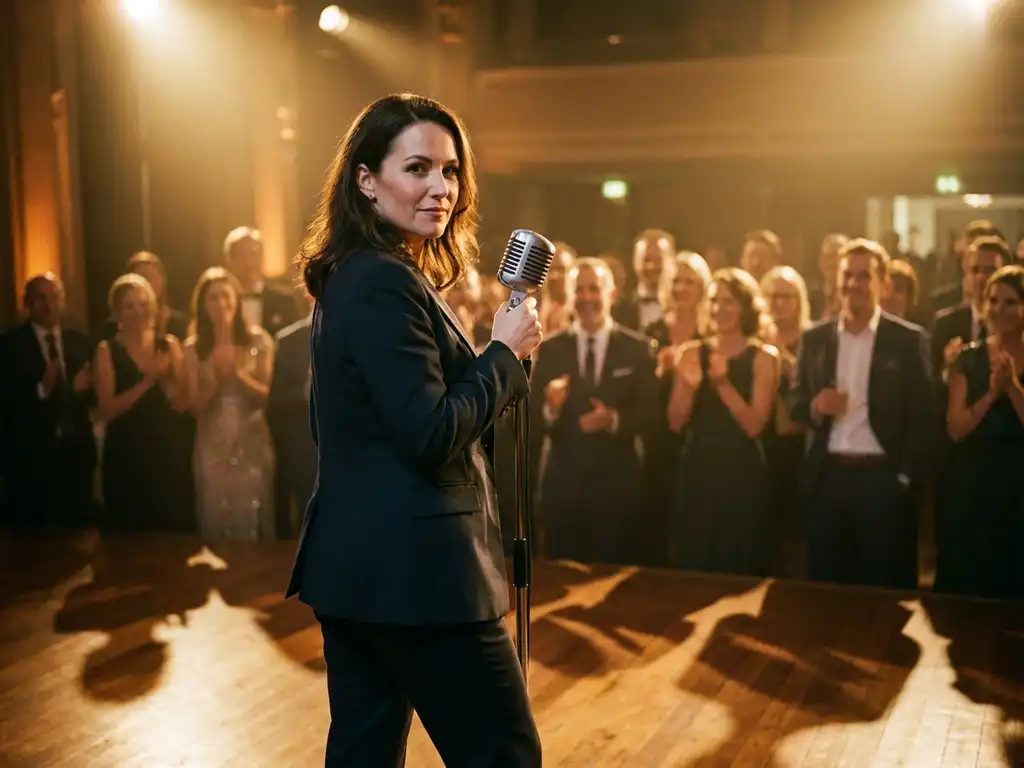
Internal events carry a lot of weight. Whether it’s a company-wide town hall, a leadership summit, or a departmental update session, these moments shape how employees feel about their organization, their leaders, and their work. Yet too often, they fall flat. The content is there, the budget is there, but something is missing. That something is usually skilled event moderation.
Professional event moderators do more than keep things on schedule. They create the conditions for genuine connection, clear communication, and meaningful participation. If you’re responsible for planning internal communication events and want to know whether event moderation could transform the employee experience at your next gathering, this article gives you direct answers.
What is event moderation, and how does it work?
Event moderation is the practice of guiding an event through a structured flow while keeping the audience engaged, ensuring speakers stay on track, and creating space for meaningful interaction. A professional event moderator acts as the connective tissue of an event, linking segments, managing energy, and making sure the program delivers its intended impact.
In practice, event moderation involves a range of responsibilities that go well beyond introducing speakers. A moderator prepares thoroughly before the event, understanding the goals, the audience, and the key messages that need to land. During the event itself, they manage timing, facilitate Q&A sessions, handle unexpected moments with composure, and adapt the tone in the room as needed. After each segment, they synthesize what was shared and create a bridge to what comes next, keeping the narrative coherent throughout.
For internal events specifically, moderation also involves reading the organizational culture. A skilled moderator knows when to inject lightness to break tension, when to slow down to let an important message sink in, and when to invite the audience into the conversation rather than letting them remain passive observers.
Why do so many internal events fail to engage employees?
Most internal events fail to engage employees because they are designed around content delivery rather than audience experience. Information is presented in a one-directional format, with little room for interaction, reflection, or genuine dialogue. Employees sit through presentations they could have received in an email, and the opportunity for real connection is lost.
Several patterns consistently undermine internal event engagement:
- Overloaded agendas that try to cover too much, leaving no time for anything to truly land
- Passive formats where employees watch rather than participate
- Weak transitions between speakers or segments that break momentum and lose attention
- Inconsistent energy across a long program, with no one managing the room’s rhythm
- Unclear purpose where employees leave unsure what they were supposed to take away
The disconnect between what leaders think they communicate and what employees actually receive is a well-documented challenge in organizational life. When internal events replicate this gap on a live stage, the result is disengagement, skepticism, and a missed opportunity to build trust. Professional event moderation directly addresses each of these failure points.
How does professional event moderation improve the employee experience?
Professional event moderation improves the employee experience by transforming passive attendance into active participation. A skilled moderator creates a sense of safety and energy that encourages employees to listen more openly, engage more honestly, and leave with a clearer sense of what the event meant for them personally and professionally.
The improvement shows up in several concrete ways. First, a moderator maintains consistent energy throughout the program, preventing the familiar mid-afternoon slump or the awkward silence after a heavy presentation. They read the room and adjust accordingly, using humor, pace changes, or direct audience engagement to keep people present.
Creating psychological safety for honest dialogue
One of the most underappreciated benefits of professional event moderation is its effect on psychological safety. When employees see a confident, warm, and credible moderator at the helm, they feel more comfortable asking questions, sharing reactions, and engaging with difficult topics. A moderator who handles a challenging question with grace signals to the whole room that honest participation is welcome.
Making messages stick
A professional moderator also helps key messages land with greater impact. Rather than allowing important ideas to get buried under the next slide deck, they pause, reflect, and reinforce. They summarize key points in plain language and connect them to the broader narrative of the event. This repetition and synthesis dramatically increase retention and meaning.
What’s the difference between a moderator and a regular event host?
The key difference between a moderator and a regular event host is depth of involvement. An event host introduces speakers and manages logistics. A moderator actively shapes the conversation, facilitates dialogue, responds to what is actually happening in the room, and takes responsibility for the overall quality of the audience experience.
A host follows a script. A moderator works with a framework but adapts constantly based on the energy, the content, and the needs of the moment. When a speaker runs long, a host waits awkwardly or rushes the introduction of the next segment. A moderator intervenes gracefully, preserves the program’s integrity, and keeps the audience unaware that anything was off track.
For internal corporate events, this distinction matters enormously. Employees are perceptive. They notice when an event feels managed versus when it feels alive. A professional moderator brings the kind of presence and skill that makes a program feel intentional, coherent, and genuinely engaging rather than just organized.
When should a company hire a professional event moderator?
A company should hire a professional event moderator whenever the stakes of an internal event are high enough that poor facilitation would cause real damage. This includes town halls addressing organizational change, leadership summits, all-hands meetings, cross-departmental conferences, and any event where employee trust, alignment, or motivation is on the line.
Specific situations that strongly call for professional moderation include:
- Events involving sensitive topics such as restructuring, mergers, or strategic pivots
- Programs with multiple speakers who need to be woven into a coherent narrative
- International or multicultural audiences where tone and nuance require extra care
- Events that include live Q&A, panel discussions, or interactive formats
- Large-scale gatherings where energy management across a full day is critical
Even smaller internal events benefit from professional moderation when the goal is genuine engagement rather than information delivery. If you want employees to walk away feeling heard, informed, and motivated, a moderator is not a luxury. It is a strategic investment in the outcome.
How do you choose the right moderator for an internal event?
Choosing the right moderator for an internal event comes down to three core criteria: cultural fit, experience with corporate audiences, and the ability to balance structure with spontaneity. The right moderator understands your organizational context, can adapt their style to your company culture, and brings enough experience to handle whatever the live event throws at them.
When evaluating potential moderators, consider the following:
- Relevant experience: Have they moderated events similar in format, size, and purpose to yours?
- Tone alignment: Does their natural communication style match your company’s culture?
- Preparation process: Do they invest time upfront to understand your goals, your audience, and your content?
- Flexibility: Can they handle a last-minute speaker change or an unexpected audience reaction without losing composure?
- Engagement techniques: Do they have a toolkit of methods for activating audience participation?
Avoid choosing a moderator based on name recognition alone. The best moderator for your event is the one who genuinely understands what you are trying to achieve and has the skills to make it happen in a live environment.
How Boom For Business Helps with Event Moderation
We bring over 30 years of expertise in performance, communication, and audience engagement to every internal event we support. Rooted in the world of Boom Chicago, Amsterdam’s internationally acclaimed comedy theater, we know how to hold a room, read an audience, and turn even the most complex corporate program into an experience that employees actually remember.
Here’s what working with us looks like in practice:
- Custom preparation: We invest time upfront to understand your event goals, your audience, and the messages that need to land
- Professional hosting and moderation: Our experienced moderators guide your program with energy, humor, and precision, keeping everything on track without feeling rigid
- Interactive formats: We design engagement into the structure of your event, not as an afterthought, so employees participate rather than just observe
- Communication skill-building: Through our Masterclass Workshops, we help your teams strengthen the communication and presentation skills that make internal events more effective from the inside out
- Culture-positive approach: We use business-friendly humor and improv techniques to create psychological safety and genuine connection, even when the topics are serious
Whether you are planning a town hall, a leadership summit, or a full-day conference, we help you create an internal event that employees walk away from feeling engaged, informed, and genuinely valued. Explore our positive culture programs and team-building experiences, or visit Boom For Business to find out how we can make your next internal event one that truly lands.
Frequently Asked Questions
How far in advance should we bring a moderator into the planning process?
Ideally, a professional moderator should be involved at least two to four weeks before the event, not just the day before. Early involvement allows them to shape the agenda structure, advise on timing, align with speakers, and understand the organizational context deeply enough to do their best work. The more complex or sensitive the event, the earlier the collaboration should begin.
Can a professional moderator help if we already have an internal host or MC lined up?
Yes, and this is actually a common setup. A professional moderator can work alongside an internal host, taking on the heavier facilitation responsibilities such as managing Q&A, bridging segments, and reading the room, while the internal host handles company-specific introductions or cultural moments. This hybrid approach combines insider credibility with professional facilitation skill.
What if our senior leaders want to run the event themselves — is a moderator still worth it?
This is one of the most important scenarios where a moderator adds value. Senior leaders are often deeply invested in the content but are not trained facilitators, which means they may inadvertently dominate the conversation, miss audience cues, or lose control of timing. A professional moderator takes the facilitation burden off their plate, allowing leaders to focus on their message while ensuring the overall experience remains sharp and engaging.
How do moderators handle sensitive or controversial topics that come up unexpectedly during Q&A?
Experienced moderators are specifically trained to navigate difficult moments without shutting down dialogue or letting things derail. They use techniques like reframing questions neutrally, acknowledging tension without amplifying it, and bridging back to the event's core purpose. Their composure in these moments actually reinforces psychological safety for the whole room, signaling that honest conversation is welcome and handled with care.
Does event moderation work for hybrid or virtual internal events, or is it mainly for in-person gatherings?
Professional moderation is just as critical — arguably more so — for hybrid and virtual events, where maintaining energy and engagement across different physical environments is significantly harder. A skilled moderator knows how to address both in-room and remote audiences simultaneously, manage digital Q&A tools effectively, and prevent the common problem of remote participants feeling like second-class attendees.
How do we measure whether professional event moderation actually made a difference?
The most direct way is through post-event surveys that measure employee sentiment, message retention, and overall experience — ideally benchmarked against previous events without professional moderation. You can also track qualitative signals such as the volume and quality of questions asked during Q&A, informal feedback from attendees, and whether the key messages surface in follow-up conversations or team meetings in the days after the event.
What's a realistic budget expectation for hiring a professional event moderator?
Moderator fees vary widely based on experience, event length, preparation requirements, and geographic market, but it helps to think of the cost relative to your total event investment. If your company is spending tens of thousands on venue, production, and travel, professional moderation typically represents a small percentage of that budget while having an outsized impact on the return. Rather than asking whether you can afford a moderator, the more useful question is whether you can afford the cost of a disengaged audience.