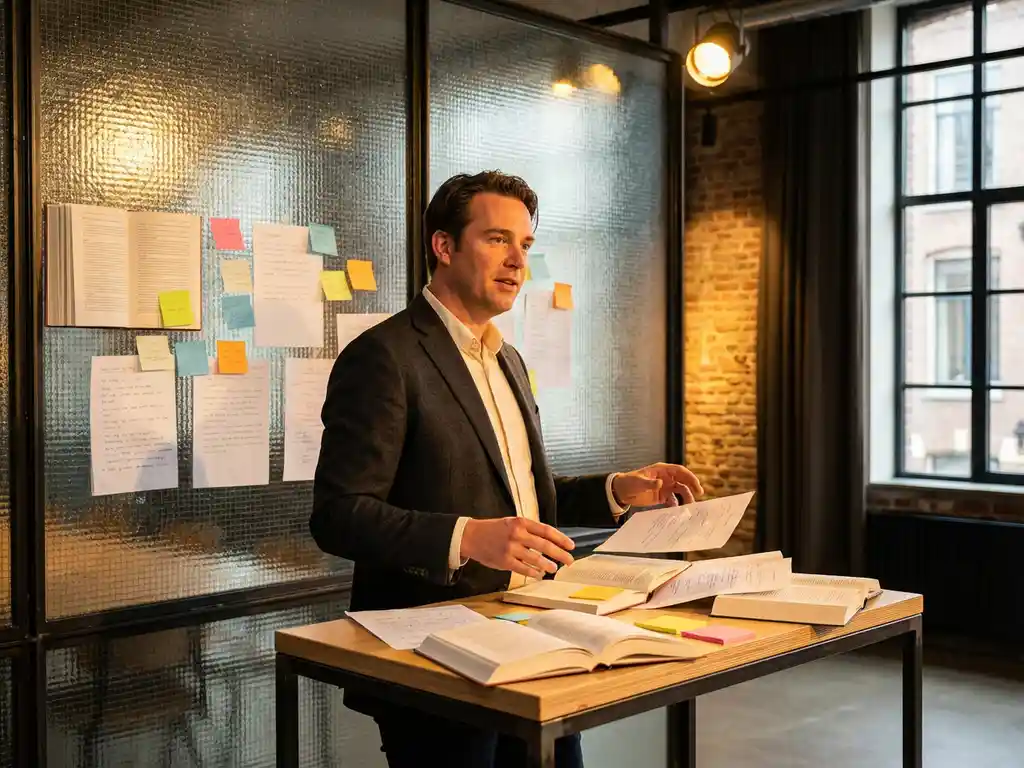
A great event presenter doesn’t need to be the smartest person in the room on every topic. What they do need is the ability to connect, guide, and energize an audience, regardless of the subject matter. Whether you’re planning a corporate conference, a leadership summit, or an internal company event, understanding how a professional event host prepares for unfamiliar territory can make all the difference between a forgettable session and one that truly lands.
This article answers the most common questions about event presenter preparation, covering everything from research strategies to the moments when hiring a professional event host is simply the smarter choice.
What does an event presenter actually do?
An event presenter guides an audience through a program by introducing content, managing transitions, energizing the room, and keeping everything on track. Their role is not to deliver expert knowledge, but to facilitate the flow of information, maintain engagement, and ensure every moment of the event feels purposeful and connected.
Think of the event host as the connective tissue of a program. They welcome speakers, set the tone, manage timing, handle unexpected moments, and make sure the audience stays with them from opening to closing. A skilled conference presenter reads the room, adjusts their energy when attention dips, and creates a sense of occasion that no slide deck alone can achieve.
Beyond logistics, a great event moderator builds atmosphere. They bring warmth, clarity, and sometimes humor to moments that might otherwise feel flat. This human presence is what transforms a schedule of speakers into a cohesive, memorable experience.
Why can a presenter succeed without being a topic expert?
A presenter can succeed without topic expertise because their core skill is communication, not content mastery. Audiences don’t expect the host to know everything. They expect them to be clear, engaging, and trustworthy. A skilled event host creates the conditions for experts to shine, rather than competing with them on knowledge.
In fact, some of the most effective corporate event hosts deliberately approach topics from a place of genuine curiosity rather than authority. This keeps their questions authentic, their transitions natural, and their energy relatable. When a host pretends to know more than they do, audiences often sense it. When they’re honest about their role as a guide rather than a guru, credibility actually increases.
Professional event hosts also bring something that subject-matter experts often lack: the ability to translate complex information for a general audience. They act as a bridge between the specialist on stage and the people in the seats, making content accessible without dumbing it down.
How does an event presenter research an unfamiliar topic?
An event presenter researches an unfamiliar topic by focusing on the audience’s perspective rather than trying to become an expert. The goal is to understand the key themes, the language used in the field, the questions the audience is likely to have, and the emotional stakes of the subject—not to master every detail.
A practical research process typically includes:
- Briefing calls with organizers and speakers to understand the event’s goals, key messages, and the expertise level of the audience
- Reading introductory materials such as speaker bios, presentation summaries, or background documents provided by the client
- Identifying the three to five core concepts that will recur throughout the day, so transitions feel informed and intentional
- Preparing smart questions that a curious, engaged audience member might ask, rather than technical deep dives
- Learning the vocabulary of the field, including acronyms, key names, and phrases, so nothing catches them off guard on stage
The best event hosts treat preparation as audience advocacy. They research not to perform expertise, but to serve the people in the room as effectively as possible.
What techniques help a presenter stay confident on unfamiliar ground?
Presenters stay confident on unfamiliar ground by clearly anchoring their role, preparing strong questions, and embracing transparency. Confidence doesn’t come from knowing everything; it comes from knowing exactly what your job is and doing it well, even when the topic is new.
Several techniques make a real difference in practice:
- Owning the role of guide, not expert: Framing yourself as the audience’s representative and asking the questions they want answered removes the pressure to perform knowledge you don’t have
- Using bridging phrases: Lines like “Let’s explore that further” or “I want to make sure everyone’s following this” buy time and keep the conversation moving naturally
- Preparing for silence: Having a few go-to questions or light observations ready for moments when a panel stalls or a session runs short prevents panic and keeps energy steady
- An improvisation mindset: Staying present and responsive rather than rigidly following a script allows the presenter to adapt when things don’t go to plan
Improvisation, in particular, is a powerful tool for event hosts. The ability to listen deeply, respond in the moment, and make unexpected situations feel intentional is a skill that separates good hosts from truly memorable ones.
What mistakes do presenters make when hosting outside their expertise?
The most common mistake presenters make when hosting outside their expertise is overcompensating by pretending to know more than they do. This leads to vague statements, awkward pauses when challenged, and a loss of credibility with an audience that often includes genuine experts in the room.
Other frequent mistakes include:
- Underpreparing: Assuming that general hosting skills are enough without doing topic-specific research leaves the presenter flat-footed during transitions and Q&A moments
- Asking closed questions: Yes/no questions kill conversation. Presenters who haven’t prepared well often default to these, which stalls panels and reduces audience engagement
- Ignoring the audience: Focusing too much on the script or the speakers and losing sight of the room’s energy is a classic sign of an underprepared host
- Failing to brief properly: Not taking the time to align with organizers and speakers before the event means the host often misses context that would have made their introductions and transitions far more effective
The good news is that all of these mistakes are avoidable with the right preparation process and the right mindset going in.
When should you hire a professional host instead of an internal speaker?
You should hire a professional event host when the success of your event depends on consistent energy, neutral facilitation, or a level of polish that internal speakers may not be able to sustain across a full program. Internal speakers are valuable for content, but managing an entire event’s flow is a different skill set entirely.
Consider a professional conference presenter when:
- Your event involves multiple speakers or sessions that need seamless transitions
- The audience includes senior leaders, external clients, or international guests, where first impressions matter
- You need someone who can handle unexpected moments, technical issues, or difficult Q&A sessions without breaking the event’s momentum
- Your internal team is already stretched managing logistics and content delivery
- You want the event to feel distinctly different from a standard internal meeting
A professional host brings neutrality, energy management, and audience connection that is difficult to replicate with someone who is also responsible for content or has a stake in the outcome. They can focus entirely on making the experience work for the room.
How Boom For Business Helps You Prepare and Present with Impact
We understand that great events don’t happen by accident. They require skilled facilitation, genuine audience connection, and the kind of energy that keeps people engaged from the first moment to the last. At Boom For Business, we bring over 30 years of professional performance and corporate event experience to every program we host and every team we train.
Whether you need a professional event host to guide your next conference or you want to build these skills within your own team, we have the expertise to help. Here’s what we offer:
- Professional corporate event hosting: Our experienced hosts prepare thoroughly for every topic, bring genuine energy to every room, and ensure your event flows with purpose and impact
- Presentation and communication masterclasses: Our Masterclass Workshops use improvisation and storytelling techniques to help your people present with confidence, even on unfamiliar ground
- Team building through communication: Our team building programs strengthen the collaboration and communication skills that make events and internal presentations more effective across the board
- Culture and change facilitation: When your event is part of a larger transformation, our positive culture programs help you communicate change in ways that genuinely resonate with your people
If you want your next event to feel energized, well hosted, and truly memorable, we’d love to talk. Reach out to us, and let’s build something your audience won’t forget.