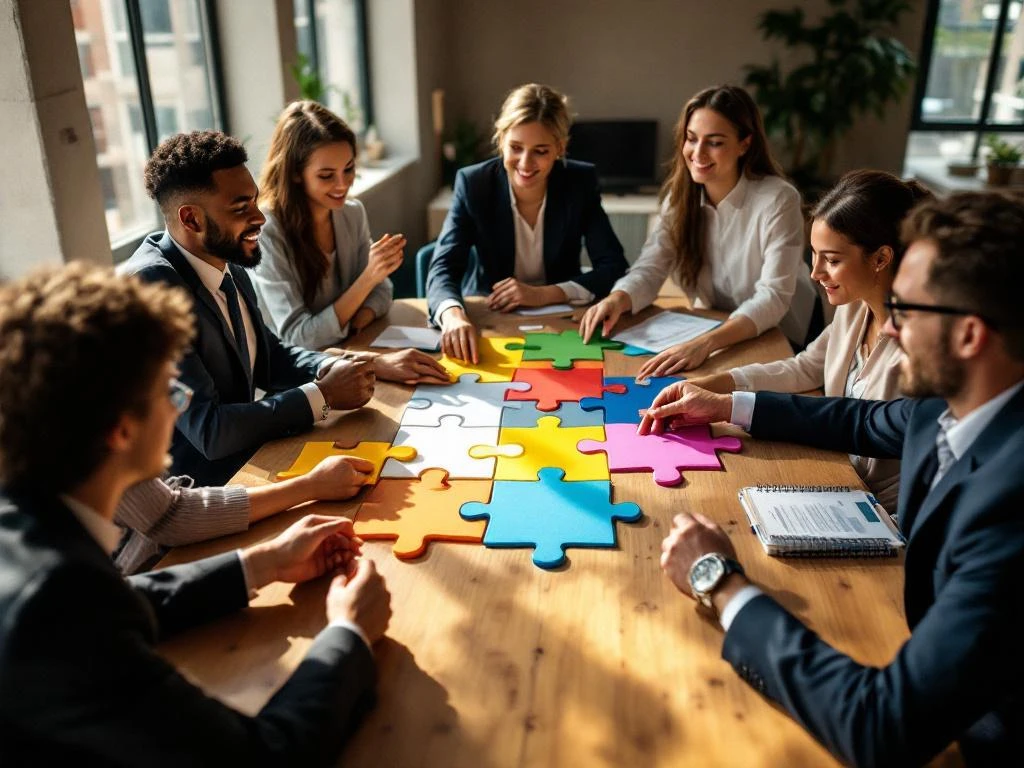
Customising team-building programmes for different departments involves assessing each team’s unique communication styles, work pressures, and collaboration challenges. Effective customisation requires understanding whether you’re working with creative teams who thrive on brainstorming activities or analytical departments that prefer structured problem-solving exercises. The key lies in matching activities to departmental cultures while addressing specific pain points that affect daily productivity and workplace relationships.
What makes department-specific team building more effective than generic programmes?
Department-specific team building works better because each department operates with distinct communication patterns, stress triggers, and collaboration needs that generic programmes cannot address effectively. When you tailor activities to match how teams naturally work together, participants engage more authentically and apply lessons directly to their daily challenges.
Creative departments such as marketing and design teams often communicate through visual concepts and brainstorming sessions. They respond well to fun team-building activities that encourage spontaneous thinking and creative expression. Meanwhile, analytical departments such as finance or IT prefer structured approaches with clear objectives and measurable outcomes.
The effectiveness also stems from addressing department-specific stressors. Sales teams face constant pressure to meet targets and benefit from activities that build resilience and mutual support. HR departments deal with sensitive interpersonal issues and need exercises that strengthen emotional intelligence and conflict resolution skills. When team-building activities align with these realities, participants see immediate relevance to their work environment.
Generic programmes often fall flat because they treat all teams identically, missing opportunities to strengthen the specific dynamics that make each department successful. Customised approaches acknowledge that what motivates an accounting team differs significantly from what energises a creative agency team.
How do you assess what each department actually needs from team building?
Effective assessment begins with structured observation of how departments currently communicate, collaborate, and handle challenges during regular work activities. This involves conducting brief interviews with team members at different levels, observing meeting dynamics, and identifying recurring friction points that affect productivity and morale.
Start by surveying team members about their biggest collaboration challenges, preferred communication styles, and what they wish worked better in their daily interactions. Ask specific questions about how decisions are made, how conflicts typically arise, and what would make their work relationships more effective.
Observe natural team interactions during regular meetings or project discussions. Notice who speaks up, how ideas are shared, whether remote team members participate equally, and how the team responds to pressure or tight deadlines. These observations reveal authentic team dynamics that surveys might miss.
Interview department leaders about their team’s strengths, recurring challenges, and strategic goals. Understanding management perspectives helps identify gaps between leadership expectations and team realities. Look for patterns in feedback, performance reviews, or project outcomes that suggest specific areas needing attention.
Consider the department’s role within the broader organisation. Customer-facing teams need different skills from internal support teams. Team-building activities should address how each department’s unique position affects its collaboration needs and stress patterns.
What are the key differences between team building for creative versus analytical departments?
Creative departments thrive with open-ended activities that encourage experimentation and spontaneous collaboration, while analytical teams prefer structured exercises with clear parameters and measurable outcomes. This fundamental difference shapes every aspect of how you design and facilitate team-building experiences.
Creative teams such as marketing, design, or content departments respond well to activities that mirror their natural brainstorming processes. They enjoy challenges that allow multiple solutions, encourage bold ideas, and celebrate unconventional thinking. Photo challenges around the city, improvisation exercises, or collaborative storytelling activities align with their comfort zone while building stronger working relationships.
Analytical departments such as finance, engineering, or data teams prefer activities with defined rules, clear success metrics, and logical problem-solving elements. They engage more readily with puzzle-solving challenges, strategic games, or activities that require systematic thinking and process improvement. These teams appreciate it when team-building exercises connect directly to workplace efficiency or skill development.
Communication styles also differ significantly. Creative teams often communicate through visual aids, metaphors, and emotional expression. Their team building should include activities that strengthen these natural communication patterns. Analytical teams typically prefer direct, fact-based communication and benefit from exercises that improve clarity and reduce misunderstandings in technical discussions.
Success metrics vary between these department types. Creative teams measure success through innovation, idea generation, and creative collaboration. Analytical teams focus on efficiency improvements, error reduction, and streamlined processes.
Which team-building activities work best for remote and hybrid departments?
Remote and hybrid departments benefit most from activities that create equal participation opportunities for all team members, regardless of location. Effective virtual team-building activities focus on shared experiences that work seamlessly across different technologies and time zones while building genuine connections between distributed team members.
Interactive online challenges work particularly well for hybrid teams. Virtual scavenger hunts where team members find items in their home offices, online escape rooms that require collaborative problem-solving, or digital photo challenges that showcase different locations create shared experiences without requiring physical presence.
Hybrid meeting formats require careful attention to ensure remote participants feel equally included. Activities should avoid relying heavily on physical props or spatial arrangements that disadvantage virtual attendees. Instead, focus on discussion-based exercises, shared-screen activities, or challenges that use common household items everyone can access.
Asynchronous elements can strengthen team building for distributed teams across different time zones. Create ongoing challenges that team members contribute to over several days, shared digital boards where everyone adds ideas or photos, or collaborative projects that build team connection over time rather than requiring simultaneous participation.
Technology considerations matter significantly for remote team-building success. Choose platforms that work reliably for all team members, provide clear instructions for any required tools, and always have backup plans for technical difficulties. The most engaging activities are often the simplest ones that focus on human connection rather than complex technology.
How do you measure success differently across various department types?
Success metrics should align with each department’s primary work objectives and natural collaboration patterns. Sales teams measure success through improved communication during client interactions and increased mutual support during challenging periods. Creative departments focus on enhanced idea-sharing and more innovative collaborative output.
For analytical departments such as finance or IT, success indicators include clearer communication protocols, reduced project misunderstandings, and improved efficiency in collaborative tasks. These teams appreciate concrete measures such as fewer revision cycles, faster decision-making processes, or better cross-functional project coordination.
Customer service departments measure team-building success through improved peer support during difficult interactions, better knowledge-sharing, and stronger resilience during high-stress periods. Their success metrics often relate to maintaining positive team morale while handling challenging external pressures.
Leadership teams require different success measures focused on strategic alignment, clearer communication cascades, and improved decision-making processes. Success might include better meeting efficiency, more effective conflict resolution, or stronger unified messaging to their respective departments.
Long-term success measurement involves observing natural team interactions over several weeks following team-building activities. Look for sustained changes in communication patterns, increased voluntary collaboration, and improved team resilience during normal workplace challenges rather than relying solely on immediate post-activity feedback.
How Boom For Business helps with customised team-building programmes
We create department-specific team-building experiences that address each team’s unique communication styles, work pressures, and collaboration challenges. Our approach combines professional assessment techniques with engaging activities designed to strengthen workplace relationships and improve daily team dynamics.
Our customised team-building process includes:
- Comprehensive departmental assessment through surveys, interviews, and observation
- Tailored activity design that matches your team’s natural working style
- Professional facilitation that adapts to creative, analytical, or hybrid team preferences
- Flexible formats accommodating remote, hybrid, and in-person team configurations
- Follow-up evaluation using department-specific success metrics
Drawing from over 30 years of experience with international corporations, we understand that effective team building requires more than generic activities. Whether your marketing team needs creative collaboration exercises or your finance department requires structured problem-solving challenges, we design experiences that resonate with your team’s professional culture while building stronger working relationships.
Ready to create a team-building experience that truly fits your department’s needs? Contact us to discuss how we can design customised activities that strengthen your team’s collaboration and communication in ways that matter to your daily work success.
Frequently Asked Questions
How long should I wait after a team-building session to see meaningful changes in department dynamics?
Most departments show initial improvements in communication and collaboration within 2-3 weeks after a well-designed team-building programme. However, sustainable changes in team dynamics typically develop over 6-8 weeks as new behaviours become integrated into daily routines. Look for early indicators like increased voluntary collaboration or improved meeting participation, then assess deeper changes in conflict resolution and cross-team communication after two months.
What should I do if some team members resist participating in department-specific team-building activities?
Start by understanding the root of their resistance through private conversations—some may have had negative experiences with generic programmes or feel the activities don't match their work style. Address concerns by explaining how the activities directly relate to their daily challenges and emphasise voluntary participation in more personal sharing elements. Consider offering alternative roles like observer or facilitator for highly reluctant participants while ensuring the activities remain engaging for willing participants.
Can I combine different departments in one team-building session, or should they always be separate?
Cross-departmental team building works best when departments regularly collaborate on projects and need to improve their working relationships. However, start with department-specific sessions first to strengthen internal dynamics, then design cross-departmental activities that focus on shared challenges like communication between creative and analytical teams. Mixed sessions should address specific inter-departmental friction points rather than generic relationship building.
How do I justify the cost of customised team-building programmes to senior management?
Present customised team building as a targeted solution to specific productivity challenges rather than a general employee perk. Quantify current costs of poor collaboration—such as project delays, revision cycles, or employee turnover—and demonstrate how department-specific activities address these issues. Include metrics like improved project completion times, reduced conflict resolution needs, or enhanced employee engagement scores that directly impact business outcomes.
What's the ideal frequency for conducting department-specific team-building sessions?
Most departments benefit from intensive team-building sessions every 6-12 months, with shorter reinforcement activities quarterly. High-stress departments like sales or customer service may need more frequent sessions (every 4-6 months), while stable analytical teams might only require annual programmes with occasional skill-specific workshops. The key is maintaining momentum without creating programme fatigue—regular brief check-ins work better than infrequent lengthy sessions.
How can I adapt team-building activities for departments with high staff turnover?
Focus on establishing strong onboarding integration processes and creating activities that quickly bring new team members into existing dynamics. Design modular team-building elements that can be repeated for new hires without boring existing staff, such as mentorship challenges or role-rotation exercises. Emphasise building systems and communication protocols that remain stable despite personnel changes, rather than activities that rely heavily on long-term relationship building.