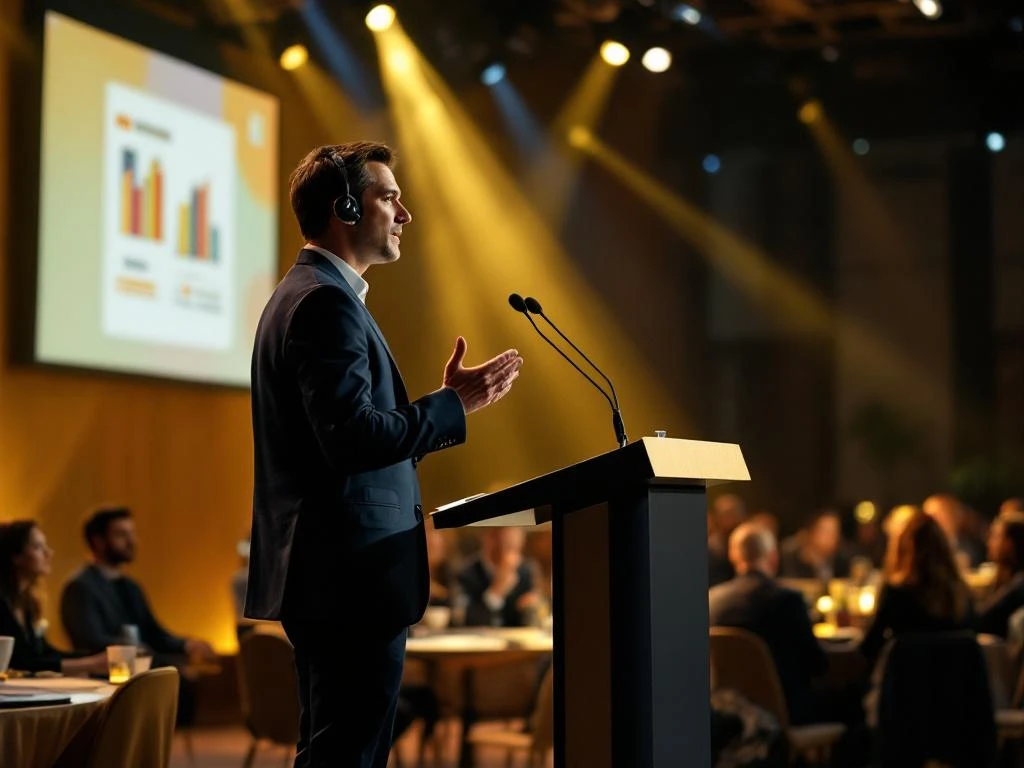
A professional event host serves as the central orchestrator of conferences, managing audience engagement, program flow, speaker transitions, and real-time coordination to ensure seamless experiences. They combine presentation skills with adaptability to maintain energy and professionalism throughout multi-hour events. Professional hosts handle everything from opening remarks to crisis management, making them essential for successful corporate conferences.
What exactly does a professional event host do at conferences?
A corporate event host manages the entire conference experience from start to finish, serving as the primary point of contact between speakers, the audience, and event organizers. They coordinate program timing, introduce speakers with relevant context, facilitate smooth transitions between sessions, and maintain audience engagement throughout the day.
The role extends far beyond simple introductions. Professional hosts arrive early to coordinate with technical teams, review speaker notes, and understand the event’s objectives. During the conference, they monitor audience energy levels, adjust pacing as needed, and handle unexpected changes gracefully. They also facilitate networking breaks, manage question-and-answer sessions, and ensure the event stays on schedule.
A skilled event presenter brings expertise in reading room dynamics and adapting their approach accordingly. They understand when to inject energy through interaction, when to allow serious moments to breathe, and how to guide conversations back on track during panel discussions. This level of professional event moderation requires experience that goes well beyond basic public speaking skills.
How does a professional host keep conference audiences engaged throughout the day?
Professional hosts maintain audience engagement through strategic energy management, interactive elements, and dynamic presentation techniques that prevent attention fatigue during long conference sessions. They use audience participation, storytelling, and well-timed breaks to sustain interest and involvement throughout the entire event.
Energy management starts with understanding natural attention spans and conference flow. Experienced hosts recognize when audiences need mental breaks and incorporate brief interactive moments, polls, or movement opportunities. They vary their vocal delivery, use strategic pauses, and employ appropriate humor to re-energize rooms when focus begins to wane.
Interactive techniques include live polling, audience questions, small group discussions, and networking activities that break up passive listening periods. Professional hosts also create connections between different sessions, helping audiences understand how various speakers and topics relate to their overall conference experience.
The most effective event hosts prepare multiple engagement strategies and adapt them based on real-time audience feedback. They monitor body language, participation levels, and room energy to determine which techniques will be most effective at different points throughout the day.
What’s the difference between a conference host and a regular event moderator?
A professional conference host provides comprehensive event leadership and audience engagement, while a regular moderator typically focuses on managing individual sessions or panels. Conference hosts coordinate entire events with broader responsibilities for program flow, energy management, and overall attendee experience throughout multi-session gatherings.
Training requirements differ significantly between these roles. Professional conference hosts often have backgrounds in performance, communication, or extensive event management experience. They understand improvisation, crisis management, and advanced audience psychology. Regular moderators may have subject matter expertise but lack the comprehensive hosting skills needed for full event coordination.
The scope of responsibilities sets these roles apart clearly. Conference hosts manage opening ceremonies, speaker introductions, transitions between all sessions, networking facilitation, and closing remarks. They maintain responsibility for overall event energy and timing. Moderators typically focus on individual panels or discussions, managing questions and keeping specific sessions on track.
The skill sets required also vary considerably. Professional hosts need versatility to handle diverse audiences, technical problems, and unexpected situations while maintaining composure and professionalism. They must seamlessly shift between formal presentations and casual interactions, adapting their style to match different speakers and session types throughout the event.
When should companies hire a professional host instead of using internal staff?
Companies should hire professional hosts for high-stakes conferences, international events, complex multi-session programs, or when internal staff lack the specialized skills needed for comprehensive event moderation. Professional hosting becomes essential when event success directly impacts company reputation, client relationships, or significant business outcomes.
International conferences particularly benefit from professional hosts who understand cultural nuances and can navigate diverse audiences effectively. They bring experience working with speakers from different backgrounds and can adapt their communication style to ensure all attendees feel included and engaged throughout the event.
Complex events with multiple speakers, panel discussions, and varied session types require the coordination skills that professional hosts provide. They manage timing across numerous moving parts, handle speakers’ technical requirements, and maintain program flow even when individual sessions run long or encounter problems.
Budget considerations often favor professional hosts for larger events where the cost of poor execution far exceeds hosting fees. When conferences involve significant travel expenses, venue costs, and executive time investment, professional hosting helps ensure maximum return on the overall event investment through superior execution and attendee satisfaction.
How do professional hosts handle unexpected situations during conferences?
Professional hosts manage unexpected situations through improvisation skills, technical problem-solving experience, and crisis management techniques developed through extensive event work. They maintain composure while quickly assessing problems and implementing solutions that keep events moving forward smoothly without disrupting the overall attendee experience.
Technical difficulties represent common challenges that experienced hosts navigate routinely. They work closely with audio-visual teams, understand backup systems, and can engage audiences during equipment failures. Professional hosts often have contingency entertainment or discussion topics ready to maintain engagement while technical issues are resolved behind the scenes.
Speaker-related problems require diplomatic handling and quick thinking. When speakers arrive late, cancel at the last minute, or exceed time limits, professional hosts adjust schedules gracefully while keeping audiences informed and engaged. They can facilitate impromptu discussions, extend networking breaks, or reorganize session orders without creating confusion.
Audience management skills become crucial during controversial discussions or disruptive situations. Experienced hosts redirect difficult conversations, handle inappropriate questions diplomatically, and maintain respectful environments even when topics become heated. Their event host training includes techniques for de-escalating tensions while preserving productive dialogue.
How Boom For Business helps with professional event hosting
We provide exceptional professional event hosting services that transform corporate conferences into memorable, engaging experiences. Drawing from over 30 years of expertise and our unique comedy theater background, our professional hosts bring unmatched energy, humor, and seamless flow to every corporate gathering.
Our comprehensive event hosting solutions include:
- Experienced Professional Hosts: Skilled presenters with backgrounds in improvisation and storytelling from our internationally acclaimed comedy theater
- Customized Event Coordination: Tailored approaches that match your conference objectives, audience, and company culture
- Multi-Format Expertise: Seamless management of in-person, digital, and hybrid conference formats
- Crisis Management Skills: Real-time adaptability and problem-solving to handle any unexpected situations
- Audience Engagement Mastery: Proven techniques to maintain energy and participation throughout long conference sessions
Our hosts expertly manage conferences, award ceremonies, panels, and large corporate gatherings, ensuring each event runs smoothly while maintaining audience engagement throughout. We specialize in creating atmospheres that keep attendees invested while delivering your message with maximum impact.
Ready to elevate your next conference with professional hosting that combines business expertise with dynamic energy? Contact us to discuss how our experienced hosts can transform your corporate event into an engaging, memorable experience that truly resonates with your audience.
Frequently Asked Questions
How far in advance should I book a professional event host for my conference?
Book your professional event host at least 6-8 weeks before your conference to ensure availability and allow adequate preparation time. Popular hosts often have busy schedules, especially during peak conference seasons (spring and fall). Early booking also provides time for pre-event consultations, script reviews, and coordination with your speakers and technical team.
What information should I provide to a professional host before the event?
Provide your host with detailed speaker bios, session objectives, audience demographics, company background, and any specific messaging or branding requirements. Include the event timeline, technical setup details, and contact information for key stakeholders. The more context you provide about your goals and audience expectations, the better your host can tailor their approach to your specific event.
Can a professional host work effectively with virtual or hybrid conference formats?
Yes, experienced professional hosts excel at virtual and hybrid formats by adapting their engagement techniques for digital audiences. They use interactive polls, breakout room facilitation, chat monitoring, and camera presence skills to maintain energy across different platforms. Many hosts have specialized training in virtual event technology and understand how to keep remote attendees engaged throughout online sessions.
What happens if my event runs over schedule or speakers need extra time?
Professional hosts excel at real-time schedule management and will work with you to prioritize content and adjust timing as needed. They can compress transitions, facilitate shorter networking breaks, or diplomatically manage speaker time limits while maintaining event flow. Experienced hosts always prepare flexible contingency plans and communicate changes clearly to keep attendees informed without creating confusion.
How do professional hosts prepare for industry-specific conferences they may not be familiar with?
Professional hosts conduct thorough research on your industry, review relevant terminology, and often schedule pre-event calls with subject matter experts or key speakers. They focus on understanding audience expectations and industry culture rather than becoming technical experts themselves. Their strength lies in facilitating discussions and managing event flow while letting your speakers provide the specialized content expertise.
What's the typical cost range for hiring a professional conference host?
Professional conference hosting fees typically range from $2,000-$8,000 per day depending on the host's experience, event complexity, and duration. Factors affecting pricing include event size, preparation requirements, travel needs, and whether it's a single day or multi-day conference. Most companies find this investment worthwhile when compared to the total conference budget and the risk of poor execution affecting attendee satisfaction.
How can I measure the success of hiring a professional host for my conference?
Measure hosting success through post-event surveys focusing on attendee engagement, session flow, and overall event experience ratings. Track metrics like audience participation levels, networking activity, and feedback about transitions between sessions. Compare these results to previous events and monitor whether attendees stayed engaged throughout the entire day rather than leaving early or appearing distracted during sessions.